Table of Content
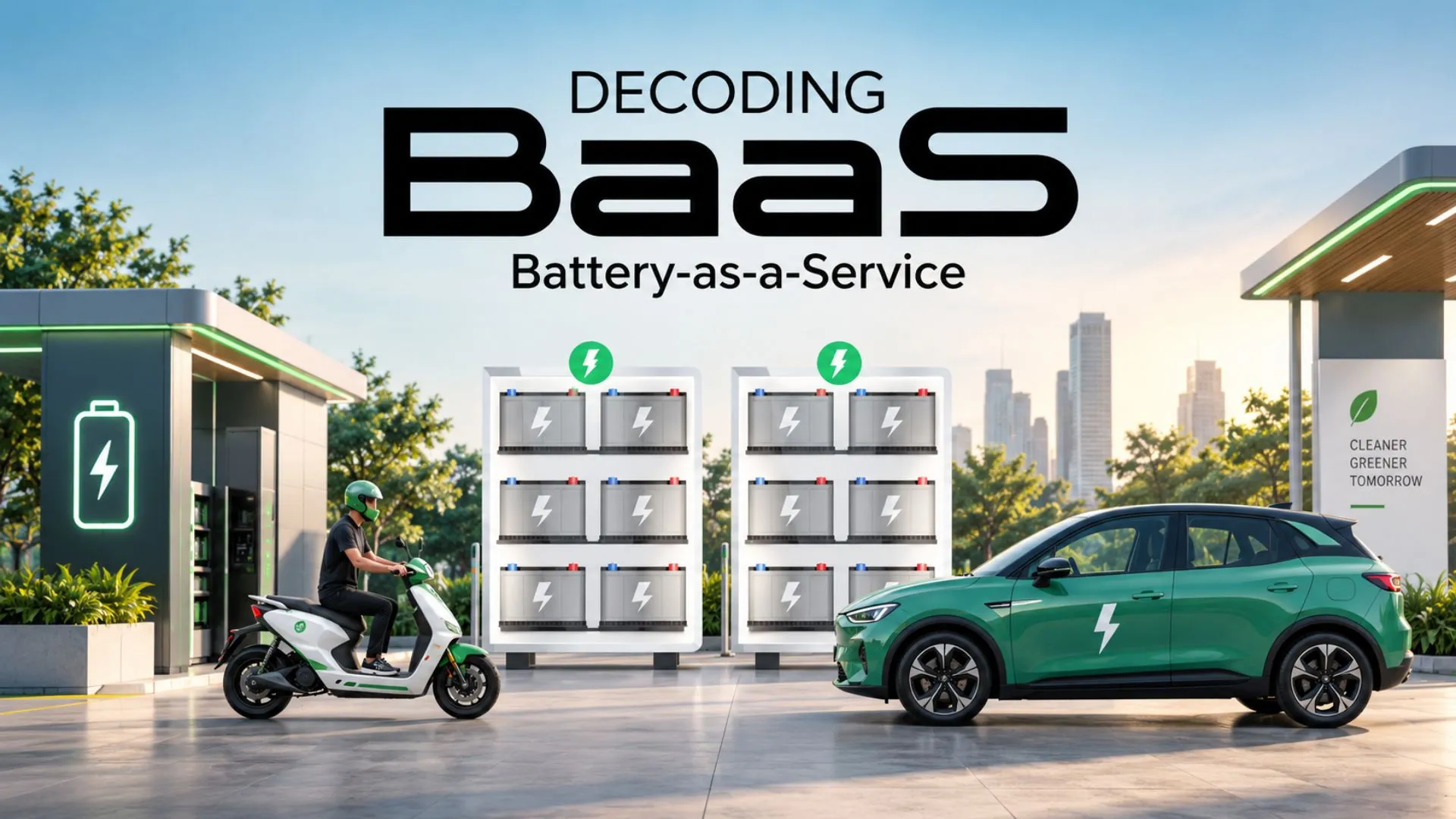
▼BaaS (Battery as a Service) arrives at a moment when electric vehicle buyers across India are running into the same wall, the battery. It's expensive, it inflates the price of an EV well beyond what a comparable petrol or diesel car costs, and it degrades with age, leaving owners uneasy about what a replacement pack might eventually cost them. The industry hasn't ignored this problem, and the direction it's taking is already reshaping how EVs are priced and sold across the country.
What Is BaaS (Battery as a Service)?
.jpg)
Battery as a Service is a rental-based model where the battery is separated from the electric vehicle's purchase price entirely. Here's what that actually means for a buyer: you purchase the car at a lower cost because the battery isn't bundled in, and then you pay separately, on a subscription or per-kilometre basis, to use it.
The battery itself stays owned by the service provider, whether that's the automaker or a finance partner, and that provider takes on the responsibility of maintaining it and replacing it if it fails. A useful way to think about it: it works much like buying a phone outright and paying a separate monthly bill for the network that powers it. The hardware is yours, the service running it isn't.
Also Read: NHAI AI Upgrade: 1033 Highway Helpline Gets Smarter
What the BaaS Model Brings
This is where the model genuinely changes the ownership equation. Here's what's actually on offer once a buyer opts into a BaaS scheme:
- Reduced ex-showroom price: The car is priced without the battery, which brings the entry cost down substantially.
- Battery subscription plans: Owners pay a monthly fee tied to how far they plan to drive, with most plans carrying a minimum kilometre commitment.
- Provider-managed maintenance: Battery health, servicing, and replacement are handled by the service provider, not the owner.
- Battery swapping access: In fleet and commercial use cases, depleted batteries can be exchanged for fully charged ones at swapping stations instead of waiting to recharge.
How Does BaaS Actually Work?
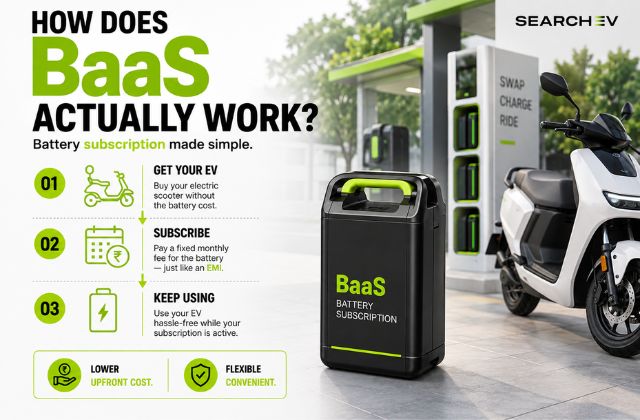
The mechanics follow a fairly simple sequence, and depending on the manufacturer or service provider, it plays out in one of two ways.
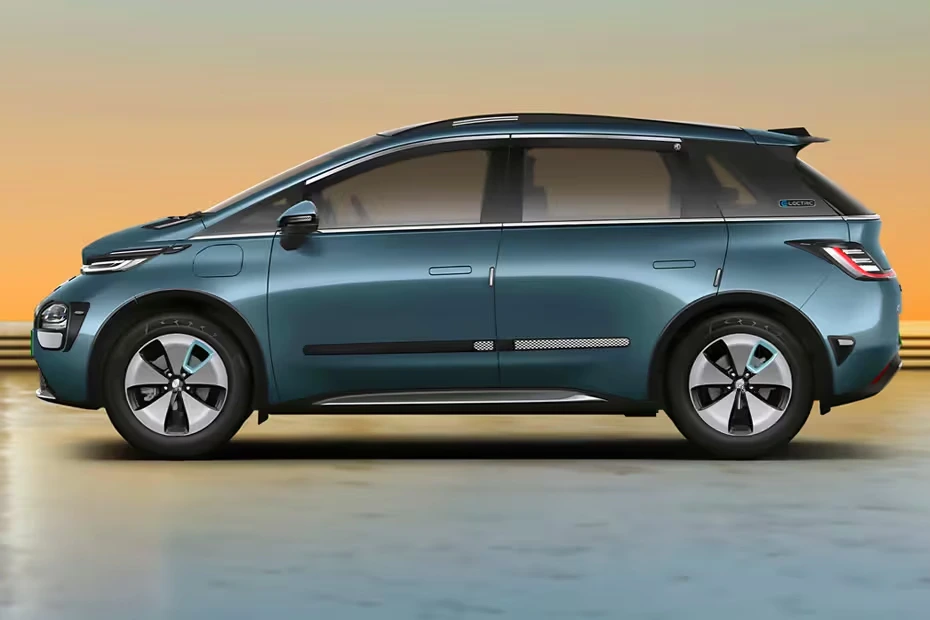
Battery subscription is the model most private EV buyers in India will encounter. Owners pay monthly based on their expected driving distance, and nearly every plan comes with a minimum kilometre slab, often around 1,500 km, that has to be paid for regardless of whether it's actually driven. The MG Comet EV is a clear example of this in practice: under its BaaS scheme, the car starts at roughly ₹4.99 lakh plus ₹3.2 per kilometre, which works out to a subscription cost of at least ₹4,800 a month at the minimum slab.
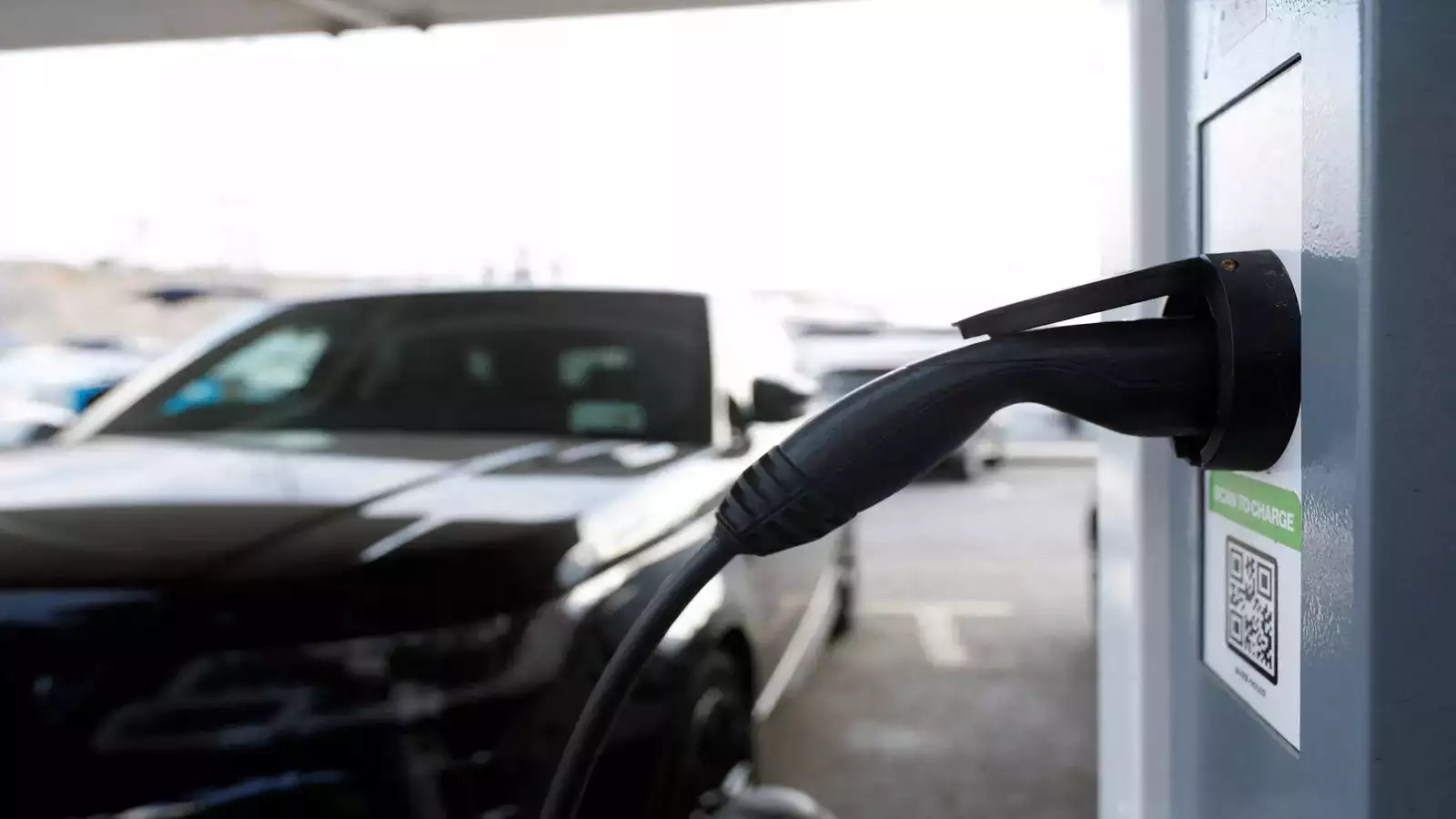
Battery swapping adopts a different method. Instead of charging the battery, the empty pack is swapped for a charged one at a battery swapping station, so the downtime is virtually zero. Though there hasn't been any battery swapping in India in cars yet but it doesn't mean that it is not being used plenty elsewhere in the commercial sector, delivery operators or gig-drivers of two- and three-wheelers.
Honest Note
This is the part buyers genuinely need to weigh before getting drawn in by the lower price tag: BaaS is not automatically the cheaper option for everyone. It's built around affordability at the point of purchase, but the long-term cost depends entirely on how much the car is driven. Treating the lower upfront number as the full picture, without factoring in years of per-kilometre charges, is where a lot of buyers end up misjudging the deal.
BaaS: Current Ownership vs. Subscription Model
Since BaaS is still a relatively new option in the Indian market, the clearer way to understand its value is to compare it directly against traditional, full battery ownership.
|
Factor |
Traditional Ownership |
With BaaS |
|---|---|---|
|
Upfront cost |
Higher, battery included |
Lower, battery excluded |
|
Monthly expense |
None beyond charging |
Subscription or per-km fee |
|
Battery maintenance |
Owner's responsibility |
Provider's responsibility |
|
Best suited for |
High-mileage, long-term owners |
Low-to-moderate mileage drivers, fleets |
|
Resale process |
Simple, standard resale |
Requires lease transfer or battery buyout |
|
Technology upgrades |
Requires new vehicle purchase |
Sometimes available within subscription |
The real value here isn't any single benefit that stands out on its own, it's that BaaS shifts battery risk away from the individual buyer entirely. That matters a great deal for first-time EV owners who have no prior experience managing a high-value, depreciating component.
Also Read: Why Are Renault Duster Sales Falling? Nissan Tekton Factor
Advantages of Battery as a Service
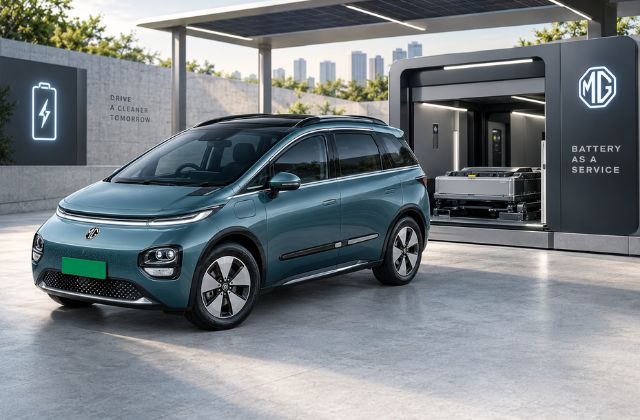
- Small initial cost: The MG Comet EV, for example, is priced from just ₹4.99 lakh with BaaS as compared to the ₹7.50 lakh of the same vehicle without it, a significant price difference for budget buyers.
- No battery replacement worries: Servicing and eventual replacement are built into the provider's responsibility, not the owner's.
- Upgradability: With the advancements made in battery technology, some users can upgrade to more advanced battery packs without purchasing a brand-new car.
- Buyback options: There are many manufacturers who provide buyback options with their BaaS plans so that the users can pay a lower price for a vehicle and then sell it later at fair price.
- Predictable costs for businesses: Fleet operators and delivery companies get stable, forecastable monthly running costs.
What to Watch Out For
- High-mileage driving can flip the math: Anyone covering more than roughly 15,000 km a year may end up paying more through per-km charges than they would have spent buying the battery outright.
- Minimum monthly payments apply regardless of use: Most plans require payment for a baseline distance, whether it's driven or not.
- Resale gets more complex: A new buyer either has to take over the existing battery lease or negotiate a separate purchase.
- Finance partner terms aren't in the owner's control: Subscription conditions are usually set by a third-party financier, not the car owner.
Electric Cars With BaaS in India
BaaS is still an emerging concept in the Indian market, but adoption is steadily expanding across manufacturers.
|
Electric Car |
With BaaS Price |
Without BaaS Price |
|---|---|---|
|
MG Comet EV |
₹4.99–7.36 lakh + ₹3.2/km |
₹7.50–9.56 lakh |
|
Tata Punch EV |
₹6.49 lakh + ₹2.6/km |
₹9.69 lakh |
|
MG Windsor EV |
₹9.99–13.60 lakh + ₹3.9–4.5/km |
₹14.10–18.60 lakh |
|
Maruti Suzuki e Vitara |
₹10.99–14.51 lakh + ₹3.99–4.39/km |
₹15.99–20.01 lakh |
|
Kia Carens Clavis EV |
₹12.84–15.94 lakh + ₹3.3/km |
₹17.99–21.99 lakh |
|
MG ZS EV |
₹13–15.51 lakh + ₹4.5/km |
₹17.99–20.75 lakh |
Where Is BaaS Headed?
As electric vehicles move deeper into India's mass market, BaaS is likely to become a standard part of the ownership conversation rather than a niche workaround. Wider swapping infrastructure, better battery chemistry, and more finance partners entering the space should make the model increasingly flexible over the next few years. In a market where upfront EV cost remains one of the biggest hurdles to adoption, this is one of the more practical levers the industry has for pushing electric mobility forward.
Conclusion
BaaS (Battery as a Service) addresses two of the biggest obstacles inhibiting adoption in India, the costly initial purchase and the worries about who owns the battery, by taking the battery completely out of the equation. It is suitable for low- or moderate-mileage users, novice EV buyers, and fleet operators looking for consistent running costs. Meanwhile, for those that drive long distances or want to actually own their battery, the purchase of traditional batteries over time may still prove cheaper. As the technology and finance ecosystem around BaaS continues to mature, it's shaping up to be a genuinely central piece of India's electric mobility future.
Karan Bhatia
Karan Bhatia is an automobile expert and reviewer with 8+ years of experience test-driving cars, bikes, and EVs. He provides honest, detailed, and practical reviews that highlight performance, design, safety, and value for money. His expert insights help readers make confident choices when buying their next vehicle.