Table of Content
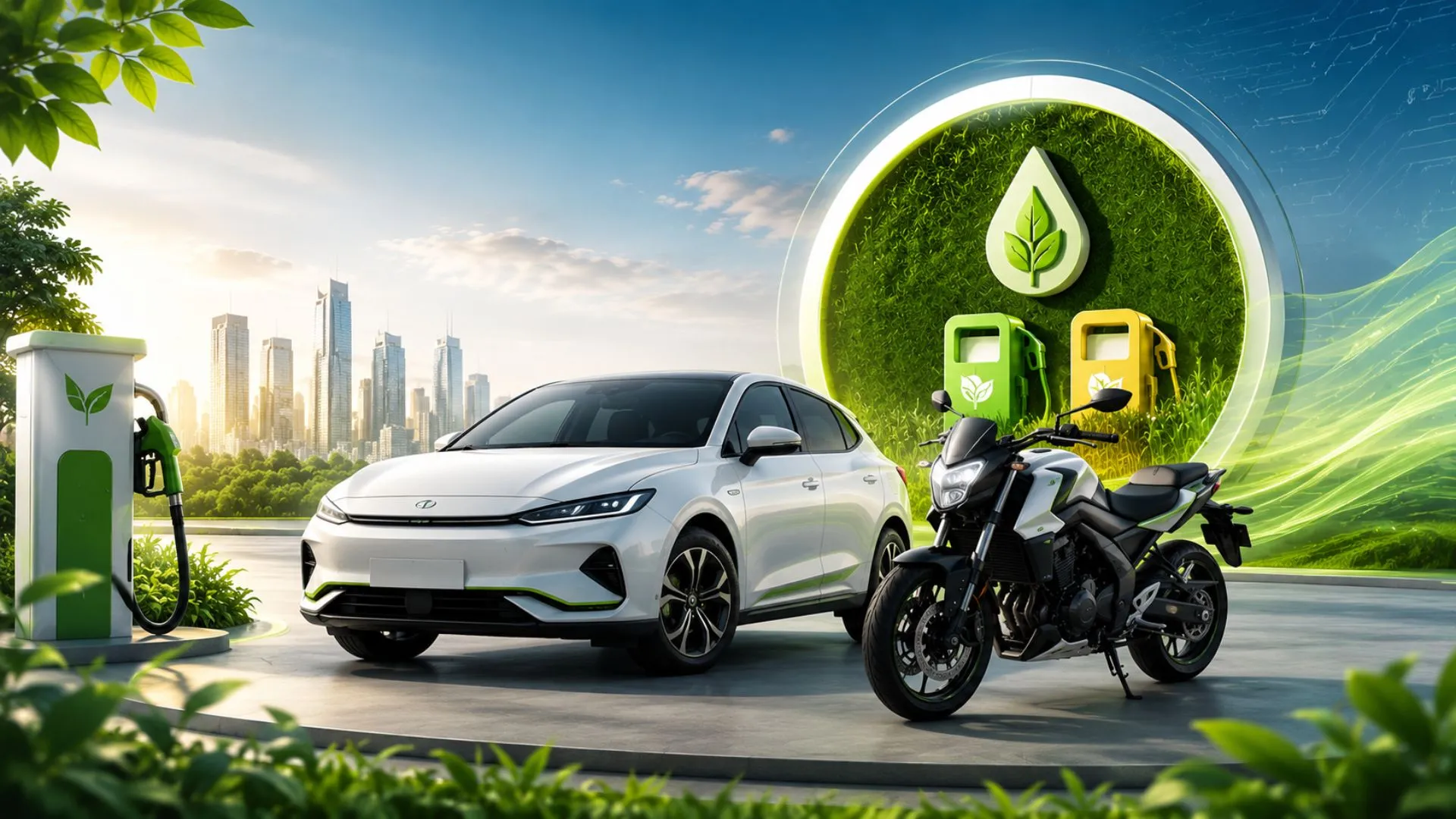
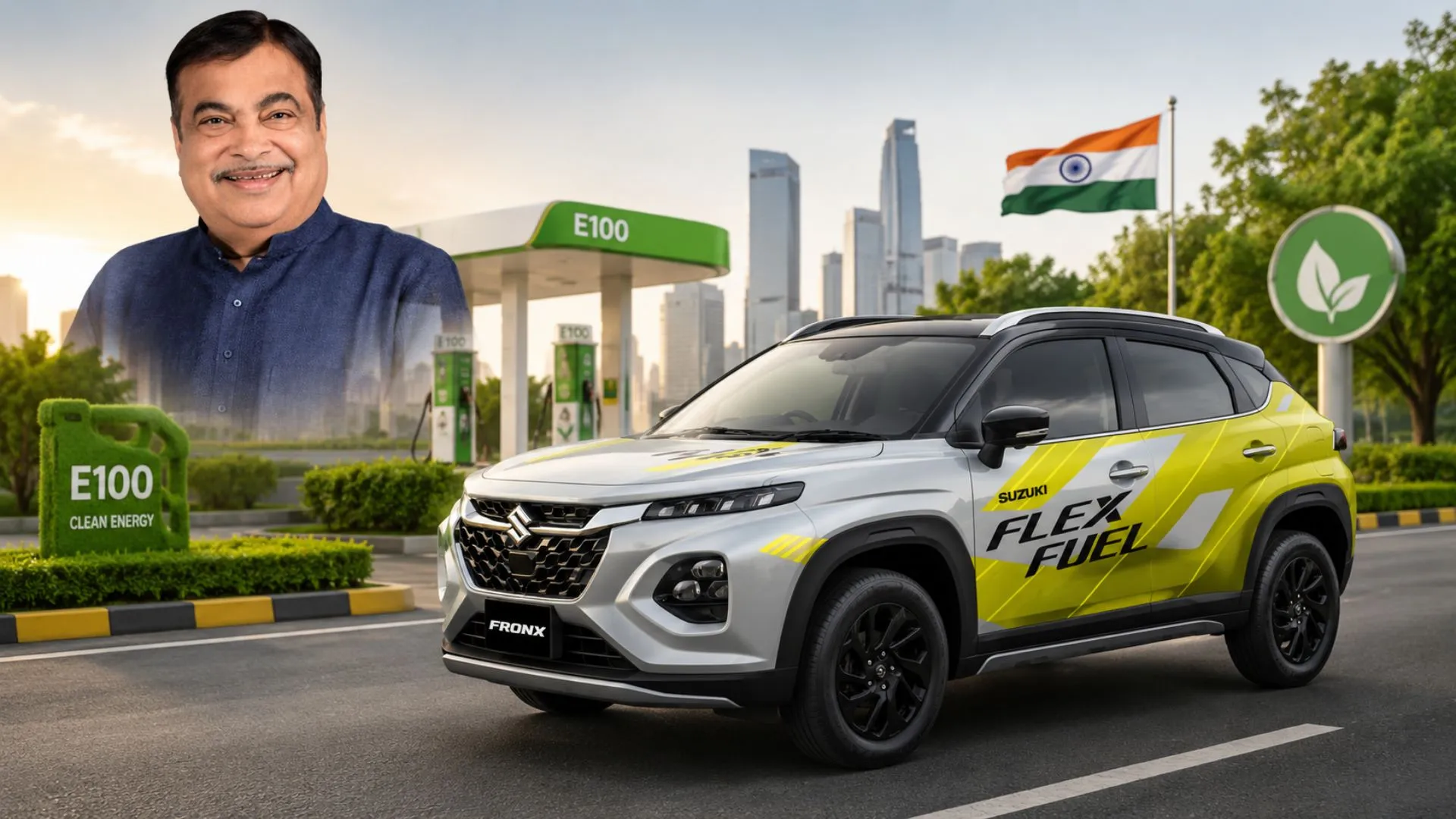
▼Flex Fuel Vehicles are officially entering India's mainstream, with Union Minister Nitin Gadkari confirming that Maruti Suzuki, followed by Toyota, Mahindra, and Tata Motors, will showcase their E100-compatible FFV lineup on World Environment Day, June 5, 2026. The minister also stressed the urgent importance of switching to sustainable mobility, naming ethanol, EVs, and hydrogen as the three fuels powering India's automotive future.
What Gadkari Announced
In his latest address, the honourable minister outlined India's clear three-fuel mobility roadmap going forward:
|
Fuel Type |
Current Status in India |
Government Priority |
|---|---|---|
|
Ethanol (E100) |
FFV showcase confirmed on June 5, 2026 |
Highest |
|
Electric (EV) |
Active adoption already underway |
Highest |
|
Hydrogen |
Government pilot testing stage |
High |
Gadkari specifically named Maruti Suzuki as the lead OEM at the showcase, with Toyota, Mahindra, and Tata Motors all confirmed to follow with their own FFV offerings.
Which Models Are Expected
Maruti Suzuki
Maruti is widely expected to headline the World Environment Day showcase. Two models remain in active speculation:
- Fronx FFV: Previously showcased at the Japan Mobility Show as an FFV concept, making it the strongest production debut candidate
- Wagon R FFV: Heavily speculated given its high-volume, mass-market positioning in the entry-level commuter segment
From our speculation, if the Fronx was already shown internationally as an FFV concept, it is the more likely choice for a production reveal on June 5.
Toyota
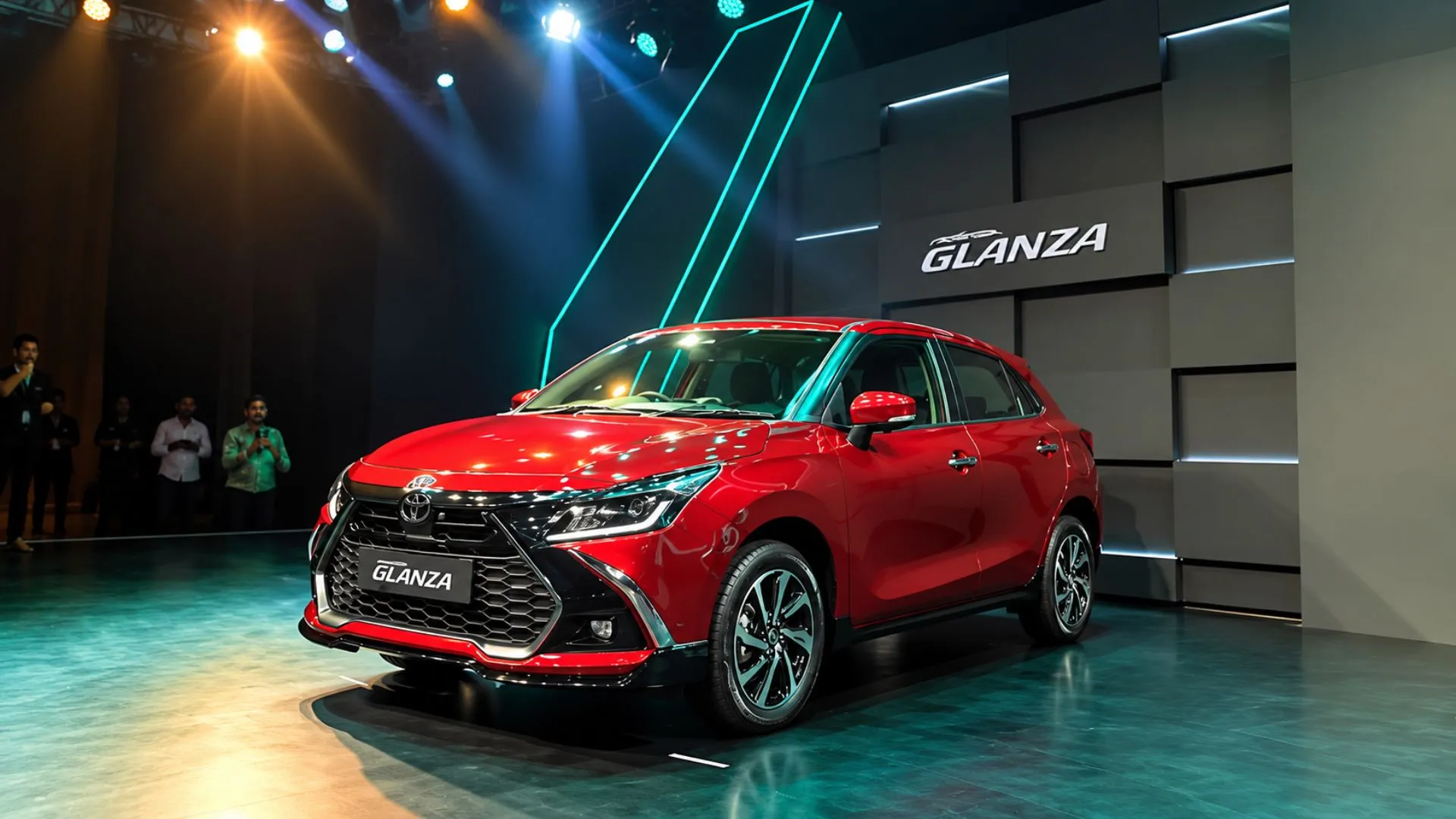
Given the deep Maruti-Toyota platform-sharing arrangement in India, Toyota's participation at the showcase is near-certain. The most probable FFV entrant is the Urban Cruiser Taisor FFV, built on the same platform as the Fronx. Expect an announcement that closely follows whatever Maruti confirms first.
Mahindra and Tata Motors
Both brands are confirmed participants on June 5. Specific model names are yet to be officially revealed by either OEM. Expect an update around the same time, which should give a clearer picture of their individual FFV product strategies heading into 2026.
How Flex Fuel Vehicles Work
Unlike a standard petrol car limited to E20 blending, a Flex Fuel Vehicle is engineered to run on any ethanol-petrol combination, from pure petrol (E0) to pure ethanol (E100):
- Corrosion-resistant fuel lines, fuel injectors and fuel tanks can still handle high-ethanol blends pretty well, even if the stuff inside is a bit rough on materials.
- Real time ECU sensors then read the exact ethanol-petrol ratio and tweak the combustion settings on their own, so it sort of self regulates while you drive.
- On top of that, the fuel map does a re calibration too, adjusting ignition timing and injection volumes, aiming for steady efficiency across the full range of blend levels. And there is no real infrastructure penalty, because FFVs can basically refuel at a standard petrol pump, with whatever blend is there at that moment.
- This kind of engineering flexibility makes FFVs especially interesting for India, since ethanol availability right now varies quite a lot between states and regions.
This engineering flexibility makes FFVs especially well-suited for India, where ethanol availability currently varies significantly across states.
FFV vs CNG vs EV vs Petrol
|
Parameter |
Petrol |
CNG |
Flex Fuel (E100) |
Electric (EV) |
|---|---|---|---|---|
|
Fuel cost per km |
Rs.7-Rs.9 |
Rs.2.5-Rs.3.5 |
Rs.3-Rs.4 (est.) |
Rs.1-Rs.1.5 |
|
Infrastructure availability |
Pan-India |
Urban-strong |
Growing |
Growing |
|
Environmental impact |
High emissions |
Moderate |
Low (bio-based) |
Lowest |
|
Government backing |
None |
Indirect |
Policy-driven |
FAME scheme |
|
Fuel flexibility |
Petrol only |
CNG only |
Any ethanol blend |
Charging only |
For buyers located in states with strong ethanol supply chains, Maharashtra, Uttar Pradesh, Karnataka, FFVs present a compelling long-term cost advantage as E100 infrastructure continues expanding nationally.
Hydrogen Cars Under Testing
Alongside the FFV showcase announcement, Gadkari also confirmed that hydrogen-powered vehicles are currently undergoing comprehensive government pilot tests on Indian roads. Two models are being actively evaluated:
- Toyota Mirai, a globally recognized hydrogen fuel cell sedan sort of thing, is being tested, specifically for Indian road and climate conditions, in real terms it’s tuned and evaluated for how it behaves out there.
- Hyundai Nexo, a hydrogen-powered SUV that’s basically under parallel government evaluation right now , like not fully decided yet or anything.
Both vehicles emit only water vapour as a byproduct of operation. Expect a formal update on hydrogen viability for India's roads shortly after the World Environment Day showcase.
Why This Move Makes Sense for India
India's push toward Flex Fuel Vehicles is as much a strategic economic decision as it is an environmental one:
- India spends over Rs.12 lakh crore annually on crude oil imports, ethanol is fully domestically produced
- Sugarcane and corn farmers benefit directly from rising domestic ethanol demand across states
- India's push toward Flex Fuel Vehicles is as much a strategic economic decision as it is an environmental one:
- India spends over Rs.12 lakh crore annually on crude oil imports, ethanol is fully domestically produced
- Sugarcane and corn farmers benefit directly from rising domestic ethanol demand across states
- Ethanol costs approximately Rs.65-70 per litre versus petrol at Rs.97+ per litre in 2026, real monthly savings for drivers
- India is targeting E20 blending by 2025 and full E100 capability across the network by 2030
- A domestically sourced fuel supply directly insulates India from global crude oil price shocks
- E100 ethanol burns significantly cleaner than fossil petrol, delivering meaningful tailpipe CO2 reductions
Key Takeaways for Car Buyers
For buyers considering a new vehicle purchase ahead of the June 5 FFV showcase, here is what matters most right now:
- FFV buyers get full fuel flexibility, run on petrol when ethanol is unavailable, switch seamlessly when it is
- Maruti Fronx and Wagon R are the most likely first-mover FFV models available to retail buyers in India
- Maharashtra, Uttar Pradesh, and Karnataka will offer the best ethanol availability for early FFV adopters
- Ethanol at Rs.65-70 per litre versus petrol at Rs.97+ means significant running cost savings for high-mileage commuters
- Hydrogen vehicles remain at pilot stage in India and are not yet a retail consumer option in 2026
Conclusion
Flex Fuel Vehicles are no longer some distant idea on India’s automotive horizon, the June 5 showcase kind of marks when they drift from policy pages to actual showroom space. With Maruti, Toyota, Mahindra, and Tata all confirmed for the World Environment Day reveal, plus hydrogen pilots running in parallel it feels like the multi fuel mobility future is arriving faster than most expected, not that people had much time to prepare. For buyers, this becomes the alternate fuel talk they have been waiting on, and honestly it’s about time.
Also Read This |
|
|---|---|
|
Tata Tiago Revealed Ahead of Official Price Announcement on 28 May |
|
Neha Mehlawat
Neha Mehlawat is an automotive journalist and industry analyst with 10+ years of experience covering cars, bikes, and mobility trends. She tracks the latest launches, technology upgrades, and policy changes in the auto sector, delivering sharp insights that help readers stay ahead in the fast-evolving world of automobiles.