Table of Content
▼- What These Fuel Grades Actually Are
- E20 Petrol: The New Normal That Snuck Up on Everyone
- What E20 actually does well:
- The mileage reality, without the spin:
- Where older cars need attention:
- E85: The Game-Changer That Just Got Real
- The honest mileage math:
- Where E85 stands in 2026:
- E100: India's Five-Year Vision, Not a 2026 Decision
- Head-to-Head: Full Comparison
- Two Kinds of Buyer, Two Very Different Answers
- Where E20 is the only practical answer:
- Where E85 starts making sense:
- Where E100 sits:
- Conclusion
Something seemed to shift at the petrol pump in April 2026, kind of quietly, no real announcement at the nozzle and still millions of Indian drivers felt it the hard way, through mileage drops, quick social media complaints, and mechanics scratching their heads during routine service visits.
What actually changed was the fuel itself. E20 became basically the only petrol you could get at India’s 90,000-plus fuel stations, and then just two months later on June 5, right on World Environment Day, the government rolled out E85. At the same time Maruti Suzuki also revealed the Wagon R Flex Fuel as India’s first production flex-fuel passenger car. So now the question that keeps coming up, for every driver, every car buyer, every fleet manager, is basically one and the same: in the whole E20 vs E85 vs E100 vs Petrol talk, which blend will really work for you right now, not in theory?
The answer, honestly, is not the same for everyone. It depends on when you bought your car, where you live, and how much you drive. Let us break it down properly.
What These Fuel Grades Actually Are
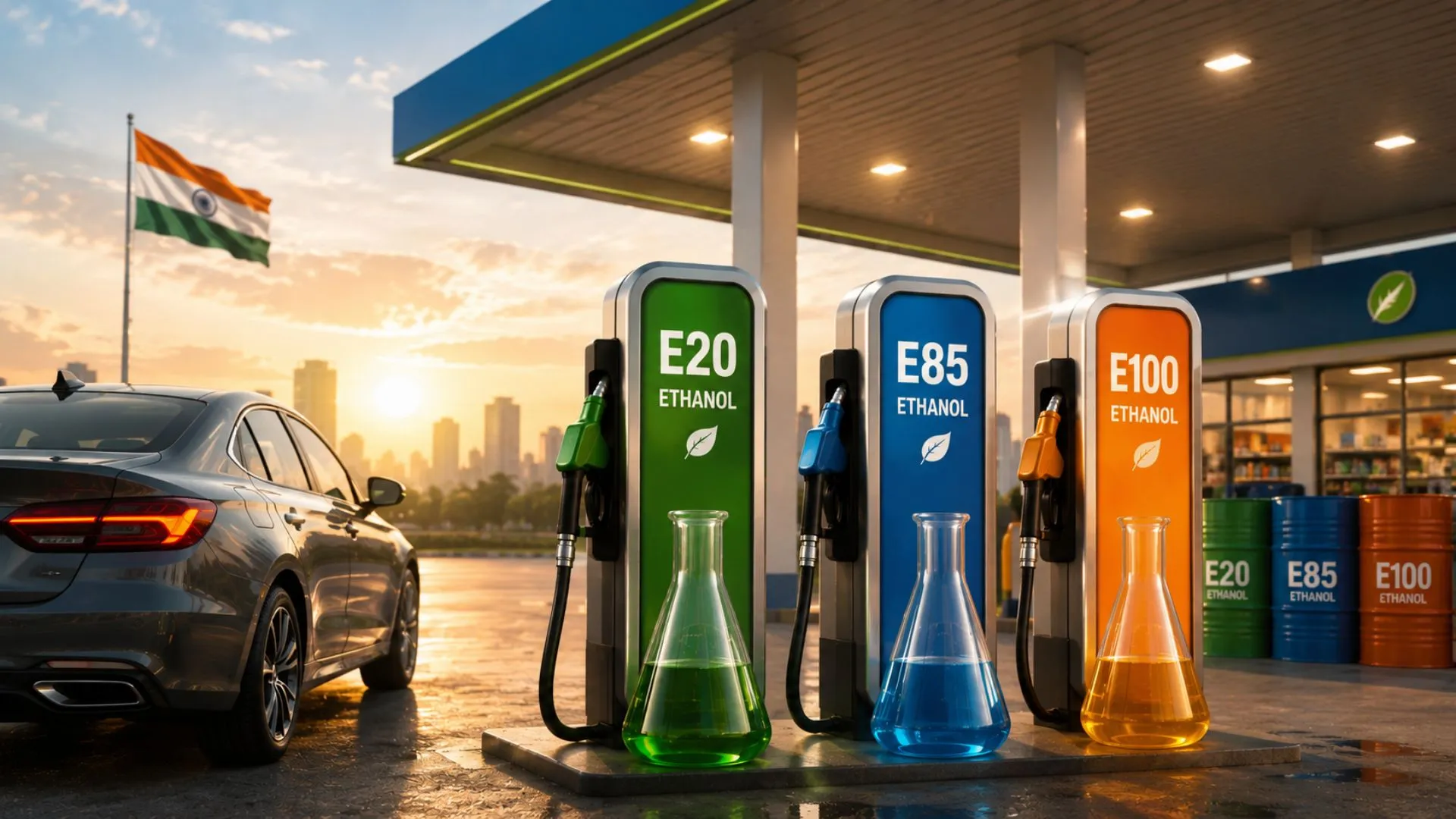
Before the comparison, the basics, because the naming is genuinely misleading. E20 is not premium petrol. E100 is not pure alcohol. Here is what each one actually contains:
|
Fuel |
Ethanol % |
Petrol % |
Status in India (June 2026) |
|---|---|---|---|
|
Petrol (E0) |
0% |
100% |
Phased out at public pumps |
|
E20 |
20% |
80% |
Mandatory nationwide from Apr 2026 |
|
E85 |
85% |
15% |
Launched Jun 5, 50–100 pumps live |
|
E100 |
93–95% |
5–7% solvents |
Pilot only ~50–100 locations |
One thing worth noting: E100 contains 5–7% petrol and solvents to help with cold starts, prevent freezing, and keep the flame visible in case of fire. E20, from April 2026, must meet a minimum 95 RON octane rating, up from the older 91–92, which matters for engine performance more than most people realize.
Also Read: What is Flex Fuel Vehicles in India 2026 Complete Guide
E20 Petrol: The New Normal That Snuck Up on Everyone
If you filled up at a petrol pump anywhere in India after April 2026, you were already running E20. There was no announcement at the nozzle, kind of. It just became the default. And that is exactly why the mileage complaints exploded on social media, millions of drivers noticed something was off but could not pinpoint what had changed.
What E20 actually does well:
- Cuts CO₂ and carbon monoxide emissions by up to 35% versus older petrol
- 95 RON means better knock resistance and smoother combustion in modern engines
- India has saved ₹1.84 lakh crore in forex since 2014 through the ethanol blending programme
The mileage reality, without the spin:
For cars made after April 2023, the drop is 2–8%. ARAI pegs it at 1–6% in controlled conditions; real-world tests by an expert on the Dzire, Tata Punch, Hyundai Creta, and Skoda Kylaq showed up to 7–8%. For pre-2022 BS4-era vehicles, a expert survey of over 50,000 owners found that 1 in 2 reported a drop, with 25% of those owners seeing mileage fall by more than 20%, you know. That is not a small number when you are filling up twice a week.
Where older cars need attention:
- Rubber seals, fuel hoses, and injectors on E5/E10-era vehicles face accelerated wear over time
- Close to 80% of vehicles sold in the last 15 years fall in that older-blend category
- A fuel system inspection at the next service is a low-cost fix that prevents far more expensive injector damage
E85: The Game-Changer That Just Got Real
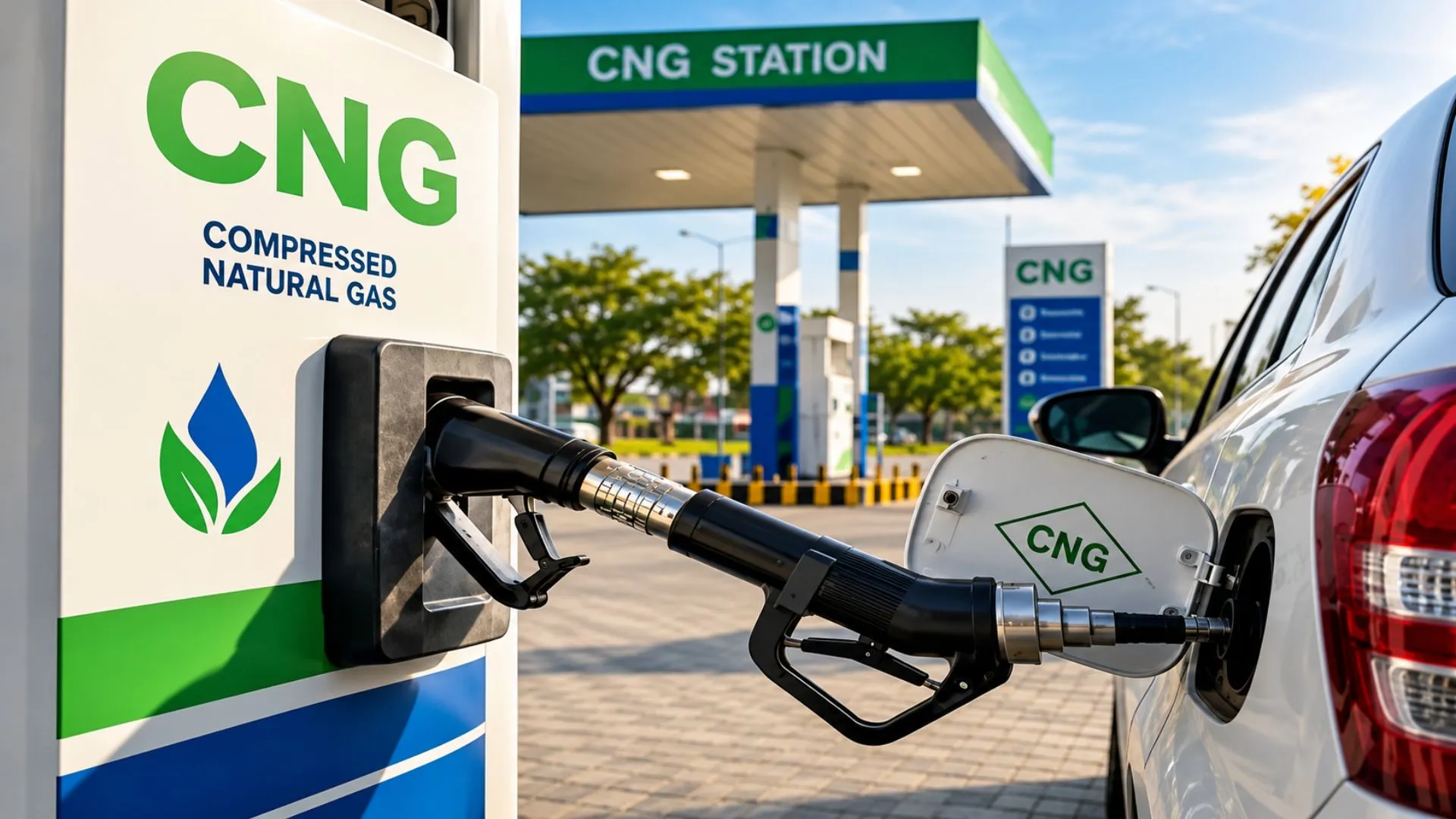
E85 is not really like a “stronger” version of E20. It is a completely different fuel category, and that split is huge, like, in practice. You cannot just pour E85 into a normal petrol car , or even one that’s E20 compliant. You need a flex-fuel vehicle, plus a specially calibrated ECU, a high-flow fuel pump, larger injectors , and ethanol resistant seals across the whole fuel system.
The Maruti Suzuki Wagon R Flex Fuel, launched on June 4, 2026, is now basically India’s only production flex fuel passenger car. And when you do the engineering for E85/E100, that step adds something like ₹50,000 to ₹1 lakh in total costs on a four-wheeler, so it’s not exactly small. Meanwhile the Hero Splendor+ Flex Fuel has a much more modest premium, around ₹5,153, for two wheelers, and that feels a lot less heavy.
The honest mileage math:
E85 has 28–32% lower energy density than petrol. That translates directly to a 28–32% drop in kilometres per litre, no ECU calibration can fix the physics here. For E85 to genuinely save money on a per-kilometre basis, the price gap over petrol needs to exceed 30%. The government has signalled pricing will be significantly below petrol, E100 is being discussed at ₹82–87 per litre versus Delhi petrol's ₹102-plus, but at that 18–20% differential, the per-km cost math is still borderline, actually.
Where E85 stands in 2026:
- 50–100 dispensing stations live right now, mostly Delhi-NCR and Mumbai-Pune-Nagpur corridor
- Target of 500 stations by December 2026
- Longer-term target of 5,000 stations across major cities by end of 2027
E100: India's Five-Year Vision, Not a 2026 Decision
E100 is the end-state, Brazil's model, eventually, on Indian roads. The Tata Punch Flex Fuel, shown at Bharat Mobility Expo 2025, is engineered to handle it. Brazil's flex-fuel vehicles accounted for 74.4% of new light vehicle registrations in 2025, running on E27 as standard pump fuel. India is aiming for that trajectory, kind of, but it is genuinely years behind.
At E100, mileage drops 27–30% versus petrol. Proposed pricing of ₹82–87 per litre places it at 80–85% of petrol's price, but Brazil's consumers only switch to ethanol when it is priced below 70% of petrol (the famous "70% rule"). India has not crossed that threshold, which means E100 does not have a compelling financial case for private buyers in 2026, honestly.
Also Read: What It Actually Costs to Own a Mercedes-Benz E-Class in India
Head-to-Head: Full Comparison
|
Parameter |
E20 |
E85 |
E100 |
|---|---|---|---|
|
Mileage drop vs petrol |
2–8% (new cars); up to 20% (old) |
28–32% |
27–30% |
|
Pump availability |
Pan-India |
50–100 pumps |
~50 pilot pumps |
|
Vehicle compatibility |
All post-Apr 2023 cars |
Flex-fuel only |
Flex-fuel only |
|
Approx. price/litre |
₹102+ (same as petrol) |
Below petrol (TBD) |
~₹82–87 (proposed) |
|
Engine changes needed |
None |
Major (₹50k–1L for 4W) |
Same as E85 |
|
CO₂ reduction vs E0 |
Up to 35% |
Higher |
Highest |
Two Kinds of Buyer, Two Very Different Answers
Where E20 is the only practical answer:
- Every driver in India have already in your tank
- Post-2023 car owners are sorted; the car was engineered for this
- Pre-2022 owners should monitor, service, and accept slightly higher running costs
Where E85 starts making sense:
- High-mileage users in Delhi-NCR, Mumbai, Pune, or Nagpur with access to pilot pumps
- Buyers choosing the Wagon R Flex Fuel or any FFV entering the market this year
Where E100 sits:
- A 2027–2028 consideration, once 5,000 stations are live and pricing is locked
- Not a practical factor in any 2026 buying decision
Conclusion
E20 vs E85 vs E100 vs Petrol, when you lay it all out cleanly, is really a question about timing. E20 is already your reality, you are running it, your mileage has shifted slightly, and the only question is whether your older car needs a service to handle it properly.
E85 is genuinely exciting and just became real, but it needs 500 pumps and confirmed pricing before it changes how most Indian drivers calculate running costs. E100 is where India is going, not where it is. And like pure petrol (E0) is kinda already a thing of the past at the pump. The smart move in 2026 is to understand what is really in your tank today, manage your existing car accordingly. And if you are buying new, then consider an FFV only if you live along the E85 corridor and you plan to keep the car for at least five years.
Frequently Asked Questions
Karan Bhatia
Karan Bhatia is an automobile expert and reviewer with 8+ years of experience test-driving cars, bikes, and EVs. He provides honest, detailed, and practical reviews that highlight performance, design, safety, and value for money. His expert insights help readers make confident choices when buying their next vehicle.