Table of Content
▼Hybrids vs. Plug-in Hybrids has become one of the most searched car-buying questions in India this year, as New Energy Vehicles gain real traction and buyers weigh self-charging convenience against the longer range a plug-in setup can offer.
The answer to whether a strong hybrid or a plug-in hybrid makes more sense really depends on your charging access, your driving pattern, and how much weight you place on long-term running costs versus day-to-day convenience.
Understanding How Strong Hybrids Work
A strong hybrid pairs a regular petrol engine with a small battery, typically sitting between 1 kWh and 1.5 kWh, that charges itself through regenerative braking and the engine rather than through an external plug. That's the core appeal here, there's nothing to install and nothing to remember to plug in.
- The battery enables short EV-only bursts, usually in stop-start traffic.
- It also assists the engine during hard acceleration, easing the load on the motor.
- No charging port, no dedicated wiring, no change to your existing routine.
- Ownership feels identical to a regular petrol car, just with noticeably better mileage.
The Plug-in Hybrid Reality Check
Plug-in hybrids, or PHEVs, take a genuinely different approach under the skin. These come with a much larger battery, often 20 kWh or more, paired with a dedicated traction motor, and they're built to be plugged in regularly rather than left to self-charge.
- Once the battery runs low, the engine kicks in, either to recharge it through a generator motor or to drive the traction motor directly.
- Some plug-in hybrids function as Range Extender EVs, where the engine's only real job is topping up the battery.
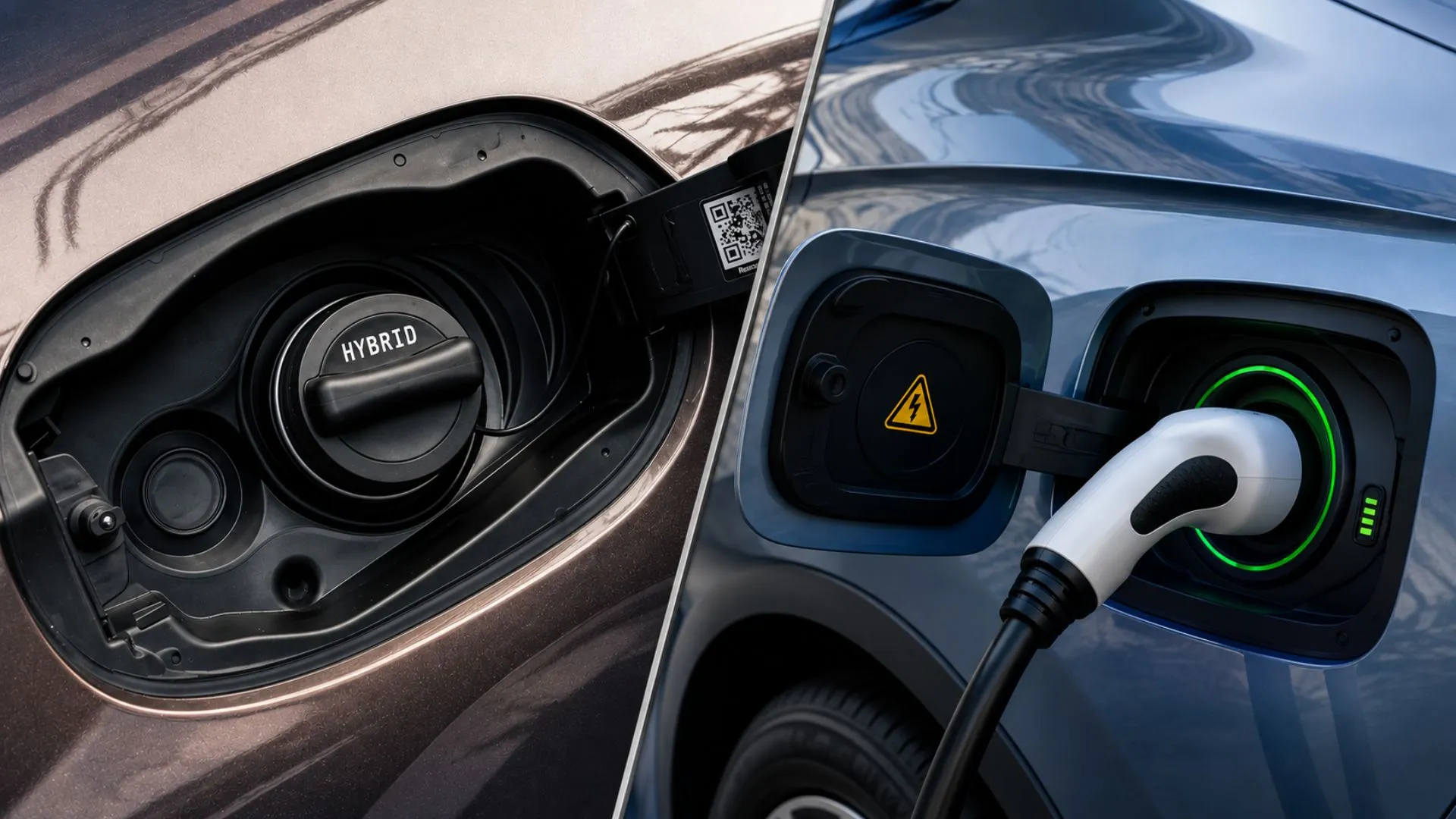
- Every PHEV comes with a dedicated charging port, and the car is genuinely built around an EV-first driving character.
- Charging infrastructure at home or work isn't optional here, it's what the entire efficiency case depends on.
Range and Cost Comparison
|
Factor |
Strong Hybrid |
Plug-in Hybrid (PHEV) |
|
Battery Capacity |
1 kWh to 1.5 kWh |
20 kWh or more |
|
Charging Requirement |
Not required, self-charging |
Requires a dedicated charging point |
|
Typical Total Range |
500km to 700km |
1,000km or more |
|
Infrastructure Change |
None |
Home or office charging point needed |
|
Running Cost |
Moderate, engine still does most of the work |
Lower per-km, but only when charged regularly |
|
Risk Factor |
Minimal |
Efficiency drops sharply if left uncharged |
Plug-in hybrids do have a longer range from a theoretical perspective, spanning over 1,000 km with a full charge and a full fuel tank. However, this is only achievable if the hybrid is charged regularly. When the battery pack is not charged regularly, there are two consequences: One is that the battery pack starts to degrade, causing a loss of efficiency in fuel consumption, since the car is hauling around a heavier, uncharged battery while the engine does the heavy lifting.
A strong hybrid, by comparison, stays consistent at 500km to 700km regardless of your charging habits, simply because there aren't any charging habits to maintain.
Decision Framework: Which One Fits You
This isn't a question with one universal answer, it genuinely depends on your specific circumstances.
Choose a strong hybrid if you:
- Don't have consistent access to a home or office charging point.
- Have an unpredictable commute with frequent unplanned trips.
- Want better mileage without changing anything about how you currently drive.
- Would rather not depend on charging infrastructure that's still catching up in most cities.
Choose a plug-in hybrid if you:
- Can install reliable charging access at home or at work.
- Aren't in a rush to buy, since more mass-premium PHEVs are expected to launch soon.
- Have a fixed, plannable daily routine that lets you charge consistently.
- Want near-EV running costs for short trips while keeping the engine as a long-range safety net.
According to industry trends, mass-premium NEVs including plug-in hybrid SUVs, are set to arrive in the Indian market over the coming months, so buyers currently undecided have a genuine reason to wait and compare before committing.
Conclusion
The hybrids vs. plug-in hybrids debate in 2026 doesn’t really come down to which setup looks more advanced, it comes down mostly to whether you’ve got charging access and how predictable your everyday route is. Strong hybrids stay the simpler, infrastructure-free pick for people who want flexibility, while plug-in hybrids sort of reward folks who can charge on a steady basis, with that genuinely longer electric range and lower running costs. So the most sensible move is just to look honestly at your own charging situation and commute pattern, not only choose based on what powertrain is trending.
Karan Bhatia
Karan Bhatia is an automobile expert and reviewer with 8+ years of experience test-driving cars, bikes, and EVs. He provides honest, detailed, and practical reviews that highlight performance, design, safety, and value for money. His expert insights help readers make confident choices when buying their next vehicle.