Table of Content
▼- The Foundation of Electric Bike Law in India
- Do Electric Bikes Need a Licence in India?
- No Licence Needed If:
- A licence is mandatory if:
- Registration & Number Plate Rules
- Documents Required for Registration:
- Insurance, Helmet & Road Use Rules
- State-Wise Road Tax & Registration Benefits for 2026
- PM E-Drive Scheme Subsidy Update for 2026
- Delhi EV Policy 2026
- Conclusion
Electric bike laws in India have undergone a sharp transformation heading into 2026, and every rider, whether a daily office commuter or a weekend EV enthusiast, simply cannot afford to be uninformed. With over 19.19 lakh electric two-wheelers already sold under the PM E-Drive scheme alone, the legal and regulatory framework governing these vehicles is more relevant, and more consequential, than ever before.
This complete guide breaks down the RTO rules, licence requirements, registration process, state-level benefits, and the latest subsidy updates for 2026, everything in one place.
The Foundation of Electric Bike Law in India
The most essential aspect of electric bike laws in India needs to be understood first. The Central Motor Vehicles Rules (CMVR) defines two distinct categories for electric two-wheelers because their motor power output and top speed determine their classification.
|
Category |
Top Speed |
Motor Power |
Licence Required |
Registration Required |
|---|---|---|---|---|
|
Low-Speed EV |
≤ 25 km/h |
≤ 250W |
No |
No |
|
High-Speed EV |
> 25 km/h |
> 250W |
Yes |
Yes |
Your license registration and insurance requirements depend on this one specific distinction. The three most common commuter scooters used by Indian riders, which include the Ola S1 and Ather 450X and TVS iQube, belong to the high-speed category and need complete adherence to the Motor Vehicles Act of 1988.
Also Read: 2026 KTM 1390 Super Duke RR Unveiled with 187 HP Power
Do Electric Bikes Need a Licence in India?
The answer is completely dependent on which category your electric two-wheeler belongs to.
No Licence Needed If:
- The vehicle produces 250W or less power output
- The vehicle operates at speeds below 25 kilometers per hour
- The vehicle meets CMVR exemption criteria, which an authorized testing agency has confirmed.
A licence is mandatory if:
- The power output exceeds 250W
- A speed of more than 25 km/h.
- If it falls under a motor vehicle as stated in the Motor Vehicles Act, 1988.
Electric bikes require drivers to possess a valid two-wheeler driving licence, which they must obtain through their examination. The minimum age requirement for riding this vehicle is 18 years. The RTO system does not impose age restrictions on low-speed models, although local authorities reserve the right to establish their own rules.
Registration & Number Plate Rules
When it comes to high-speed e-bikes, the registration process at the Regional Transport Office (RTO) is similar to that of conventional two-wheelers.
Documents Required for Registration:
- Sales invoice from the dealer
- Valid insurance policy
- Address proof and identity proof
- Form 20, application for registration
The registration process provides your electric bike with three main items.
- The first item is a registration certificate.
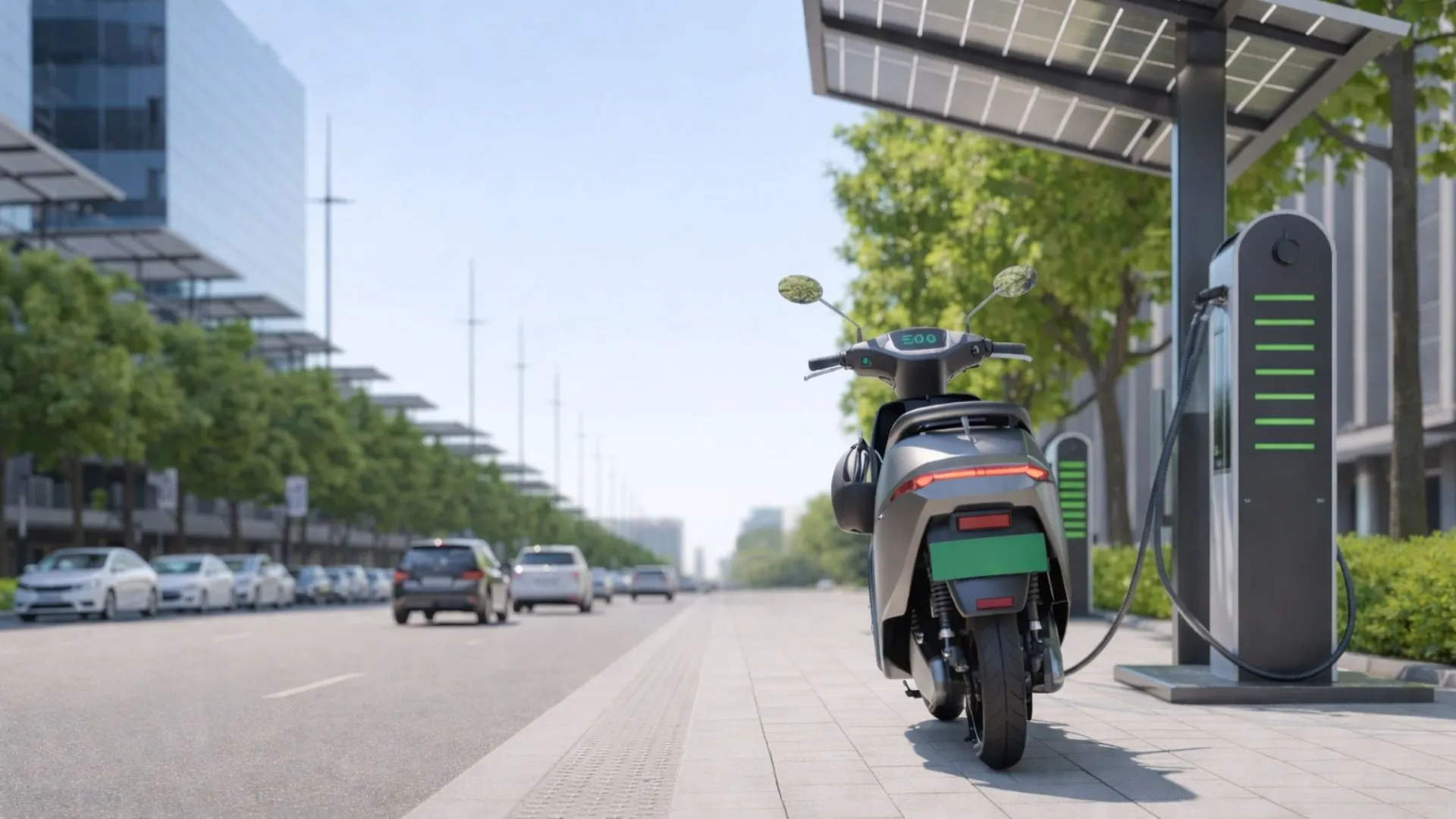
- The second item is a green-background number plate with white letters, which serves as the exclusive EV identifier in India.
- The third item is an HSRP (High-Security Registration Plate), which has been required since April 1, 2019.
Low-speed electric bikes (vehicles that operate at speeds below 25 kilometers per hour and consume less than 250 watts of power) do not require any form of registration or number plate display or HSRP compliance.
Insurance, Helmet & Road Use Rules
The rules, which most riders ignore, create the conditions where penalties become most frequent.
- Third-party insurance is mandatory for all registered (high-speed) electric bikes under the Motor Vehicles Act
- The absence of valid insurance leads to three consequences which include fines and claim rejection and vehicle seizure.
- Helmet wearing is strictly mandatory for high-speed EVs and strongly advised even for low-speed models
- Low-speed EVs are not permitted on highways or major expressways, restricted to city roads and local corridors only
State-Wise Road Tax & Registration Benefits for 2026
The national framework of the Motor Vehicles Act establishes guidelines which each state uses to develop their specific incentive programs. The following information provides a summary of the upcoming events for 2026.
|
State |
EV Benefit |
Validity |
|---|---|---|
|
Maharashtra |
100% road tax + registration fee waived |
EV Policy 2025 onwards |
|
Delhi |
Road tax + reg fee exempt (price < ₹2.25L) |
Delhi EV Policy 2026 |
|
Tamil Nadu |
100% road tax + registration fee exempt |
Statewide |
|
Telangana |
100% road tax + registration fee exempt |
Valid till Dec 31, 2026 |
|
Gujarat |
50% cut on road tax and registration fees |
Check local RTO |
|
Karnataka |
One-time lifetime tax system for EVs |
All EV types |
The latest transport rules for your state can be found on the official transport website, which you should check before making any purchases because the rules change frequently without prior notice.
Also Read: Scrambler Bikes History, Types & Evolution Explained
PM E-Drive Scheme Subsidy Update for 2026
The PM Electric Drive Revolution in Innovative Vehicle Enhancement program, which serves as India's main electric vehicle initiative, received its first major update in 2026 when the program introduced mandatory information requirements for all vehicle purchasers.
|
Parameter |
Detail |
|---|---|
|
Subsidy Deadline |
Extended to July 31, 2026 (was March 31, 2026) |
|
Subsidy Rate |
₹2,500 per kWh |
|
Cap Per Vehicle |
₹5,000 |
|
Price Eligibility |
The ex-factory price must not exceed ₹150,000. |
|
Max Vehicles Covered |
24.79 lakh electric two-wheelers |
|
Units Already Sold |
19.19 lakh e-2Ws (as of January 27, 2026) |
The government has started to decrease its financial support for electric vehicles which demonstrates its new approach to market-based electric vehicle adoption. Buyers looking to benefit from the current rates must act before the July 2026 deadline.
Delhi EV Policy 2026
In terms of electric two-wheeler incentives offered on the state level, Delhi possesses the most aggressive programme in all of India as of 2026.
|
Year of Purchase |
Maximum Subsidy |
Per kWh Rate |
|---|---|---|
|
Year 1 |
₹30,000 |
₹10,000/kWh |
|
Year 2 |
₹20,000 |
₹6,600/kWh |
|
Year 3 |
₹10,000 |
₹3,300/kWh |
Delhi provides a scrappage incentive of ₹10,000 for people who trade in their BS4 or older petrol and diesel vehicles to acquire electric two-wheelers. The ex-showroom price of the new EV must be under ₹2.25 lakh to qualify.
Conclusion
The understanding of electric bike regulations in India has become necessary for riders who want to ride electric bikes throughout the changing landscape of 2026. The legal and financial protection you need comes from understanding all requirements, which start at 250W/25 km/h and include state-specific rules and the PM E-Drive subsidy deadline, which ends on July 2026.
Also Read This |
|
|---|---|
Frequently Asked Questions
Tanya Bhargava
Bike Blogger & Moto Content Creator. Tanya Bhargava is a passionate two-wheeler expert with 6+ years of experience in reviewing scooters, commuter bikes, and performance motorcycles. Her content blends real-world ride reviews, buyer guides, and industry updates tailored for Indian riders.