Table of Content
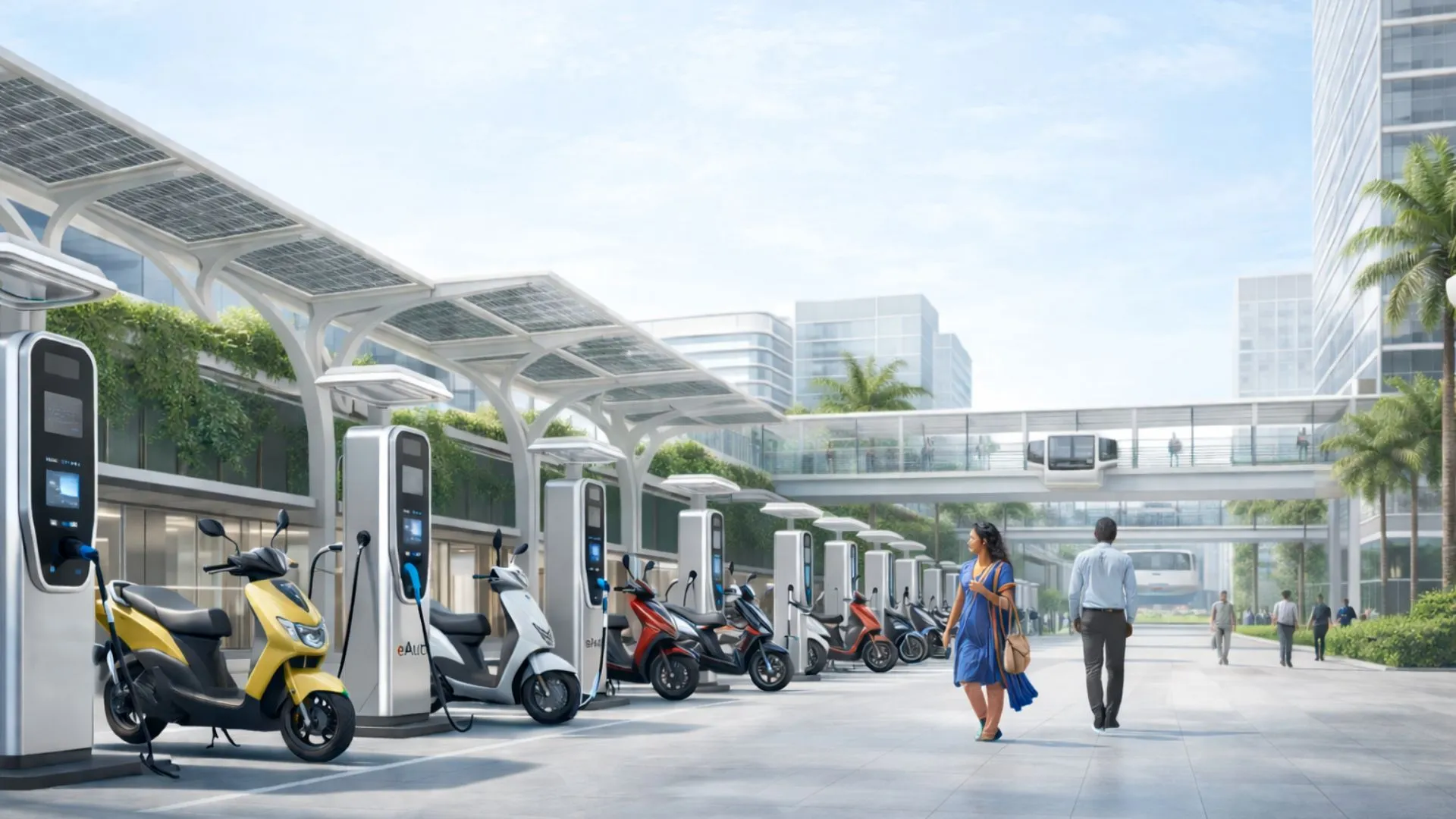
▼Every e-bike charging station in India today is a marker of how far the country’s electric mobility journey has come and how far it still needs to go. India’s public charging infrastructure has grown 4x in just 15 months, crossing 29,277 public charging stations as of August 2025. Electric two-wheelers are leading this charge, registering 19.1% growth in FY24-25 and accounting for 7.8% of total vehicle sales.
The existing gap demonstrates actual existence. India needs 1.32 million charging stations to support 50 million electric vehicles, which will be operational by 2030. The existing system provides 1 charger for every 235 electric vehicles, which does not meet the international standard that allows 20 vehicles to share 1 charger. The good news? Government schemes and private networks are closing this gap fast.
This guide breaks down everything from cities, networks, and charging costs to how to find a station near you.
1. Government Push PM E-DRIVE & FAME-II
The Indian government is heavily backing investments in EV infrastructure.
|
Scheme / Parameter |
Details |
|---|---|
|
PM E-DRIVE Total Outlay |
₹10,900 crore |
|
Budget for Public Chargers |
₹2,000 crore |
|
Charger Target by March 2026 |
22,100 stations |
|
City Mandate |
1 charger per 3×3 km grid |
|
Highway Mandate |
1 charger every 25 km |
|
Extended Benefit |
E-bike incentives till 31st July 2026 |
|
Two-Wheelers Covered |
~24.79 lakh advanced-battery EVs |
What this means in real life: Subsidized stations from IOCL and BPCL and HPCL charge customers between ₹8 and ₹18 per kWh, which makes their pricing more affordable than private networks. The commuter passes that you use create a measurable monthly cost difference for you.
Also Read: Suzuki Burgman 400 Showcased in India After 125 Launch
2. Top Cities with E-Bike Charging Stations
India's charging infrastructure reaches its highest concentration in metropolitan areas. The following comparison shows the charging infrastructure distribution across major cities.
|
City |
Key Infrastructure |
Standout Stat |
|---|---|---|
|
Bengaluru |
ChargeZone’s largest hub (210 chargers, 4 MW); BESCOM 99% uptime |
1 charger per 150 EVs |
|
Mumbai |
Tata Power EZ Charge + Magenta solar stations, Jio-bp Sakinaka hub |
58 superfast chargers at 2.7 MW |
|
Delhi / NCR |
Jio-bp Dwarka hub, fast chargers every 5 km planned |
90 EVs charging simultaneously |
|
Lucknow & Noida |
₹800 crore grid subsidy |
60% of UP’s charging points |
|
Hyderabad |
EVRE smart infra + Tata Power + Ather Grid |
Smart network coverage |
|
Chennai, Pune, Ahmedabad, Kolkata |
Jio-bp Pulse fast chargers active |
All four cities covered |
Bengaluru has established itself as the leading city for electric vehicle use in India. The city achieves its current charger-to-electric vehicle ratio because IT companies such as Infosys have converted their vehicle fleets to electric, and BESCOM provides almost uninterrupted electrical grid service.
3. Charging Types & Costs
This is the point where most e-bike owners face their biggest challenge. The three types of charging stations in India provide three different solutions to meet various customer requirements.
|
Type |
Power |
Charge Time |
Best For |
Cost / km |
|---|---|---|---|---|
|
AC Level 1 (Bharat AC-001) |
3.3 kW |
12–15 hours |
Home / overnight |
₹0.8–1.0 |
|
AC Level 2 |
7.4–22 kW |
2–8 hours |
Workplaces, malls |
₹1.5–2.0 |
|
DC Fast Charging |
25–60 kW+ |
60–90 mins (10–80%) |
Highways, urban hubs |
₹2.5–3.5 |
A few things worth knowing before you plug in:
- Riders doing 25–30 km daily can expect a monthly charging bill of roughly ₹400–₹600
- Charging during off-peak hours can cut costs by up to 20%
- Home charging remains the cheapest option by a clear margin
- DC fast chargers are built for speed, not savings
Battery Swapping The 2-Minute Fix
People who do not want to spend time waiting for charging stations should use the battery swapping service that Ola Electric, Sun Mobility, and Bounce Infinity provide. The service meets the needs of delivery riders and daily commuters who travel long distances because they need to work without interruptions.
Also Read: Bajaj Dominar 350 Launched at ₹2.03 Lakh with Price Cut
4. Major E-Bike Charging Networks in India
|
Network |
Cities / Towns |
Charger Count |
Best For |
|---|---|---|---|
|
Bolt.Earth |
1,800+ towns |
1 lakh+ |
Widest reach, peer-to-peer; 2W/3W/4W |
|
Tata Power EZ Charge |
Pan-India |
86,000 home + 5,300 public |
Most reliable; home + public + fleet |
|
ChargeZone |
400+ cities |
— |
Highway corridors, fast charging |
|
Jio-bp Pulse |
10+ major cities |
— |
High-speed up to 480 kW |
|
Ather Grid |
230+ cities |
— |
Open to all EVs, seamless payments |
|
IOCL + BPCL + HPCL |
National |
22,000 (target) |
Subsidized rates, fuel pump retrofit |
|
Statiq |
Pan-India |
7,000+ |
Real-time status, easy app access |
- Bolt.Earth wins on raw coverage, no other network reaches 1,800+ towns
- Tata Power EZ Charge is the most reliable end-to-end network for home and public charging combined
- ChargeZone is your best friend on long highway rides
- Jio-bp Pulse brings the most power density, up to 480 kW at flagship hubs
Other players worth watching like Servotech, Delta Electronics India, Kazam EV, and Alektrify.
5. Best Apps to Find an E-Bike Charging Station Near You
In 2026, it is very easy to find a charger; you just have to know which app to open.
|
App / Platform |
Best Feature |
Coverage |
|---|---|---|
|
Google Maps |
“EV charging station near me”, fastest real-time results |
Pan-India |
|
Tata Power EZ Charge |
QR code payment + slot booking |
Pan-India |
|
Bolt.Earth App |
24/7 support + booking for 2W/3W/4W |
1,800+ towns |
|
Jio-bp Pulse App |
Remote start/stop + UPI/card payments |
10+ cities |
|
PlugShare |
350,000+ global stations + user reviews |
Global + India |
|
Statiq App |
Live status updates for 7,000+ chargers |
Pan-India |
|
e-AMRIT Portal |
Government’s official charger locator |
Pan-India |
Pro Tip: Use PlugShare for honest user reviews and Google Maps for turn-by-turn navigation. Cross-referencing both before a highway ride will save you a lot of headaches.
6. What’s Coming in 2026 and Beyond
The EV charging market of India achieved 1.56 million charging stations in 2025 while projections estimate the market will expand at a 22.20% compound annual growth rate until 2035, when it will reach 11.58 million charging stations.
The following factors are determining the future path:
- Tata Power ChargeZone and state electricity boards are establishing highway fast-charging corridors as a joint project.
- Mumbai and Bengaluru cities are adopting solar-integrated charging stations as their preferred charging solution.
- Government regulations mandate battery swapping standardization for commercial fleet operations.
- PSU oil companies are implementing extensive petrol pump conversions while IOCL aims to establish 10000 EV charging stations.
- Ather Grid operates in over 230 cities to provide users with seamless access to multiple charging station networks.
Conclusion
India's e-bike charging system has expanded beyond its initial adoption stage to serve all types of users by 2026. City commuters charge their e-bikes at home during night time while highway riders use fast-charging corridors which include ChargeZone and delivery workers depend on quick battery swapping services. The government provides support for electric vehicle adoption through its PM E-DRIVE scheme and low-cost PSU charging stations. The private networks of Bolt.Earth and Tata Power EZ Charge are experiencing rapid expansion throughout urban areas and along major highways. The system is currently in development but it is expanding rapidly while it improves its intelligent capabilities and establishes electric mobility as the new standard.
Frequently Asked Questions
Tanya Bhargava
Bike Blogger & Moto Content Creator. Tanya Bhargava is a passionate two-wheeler expert with 6+ years of experience in reviewing scooters, commuter bikes, and performance motorcycles. Her content blends real-world ride reviews, buyer guides, and industry updates tailored for Indian riders.