Table of Content
▼- 1. The Standard Roller Chain (Unsealed)
- How It Works
- Pros & Cons
- Who Needs It?
- 2. The O-Ring Chain (Sealed)
- How It Works
- Pros & Cons
- Who Needs It?
- 3. The X-Ring Chain (Advanced Sealed)
- How It Works
- Pros & Cons
- Who Needs It?
- Comparison Table: Types of Motorcycle Chain
- How to Choose the Right Chain Specs
- 1. The Pitch (Size Matters)
- 2. Tensile Strength
- Pro Maintenance Tips for Any Chain Type
- Conclusion: Which One Should You Buy?
- Also Read This
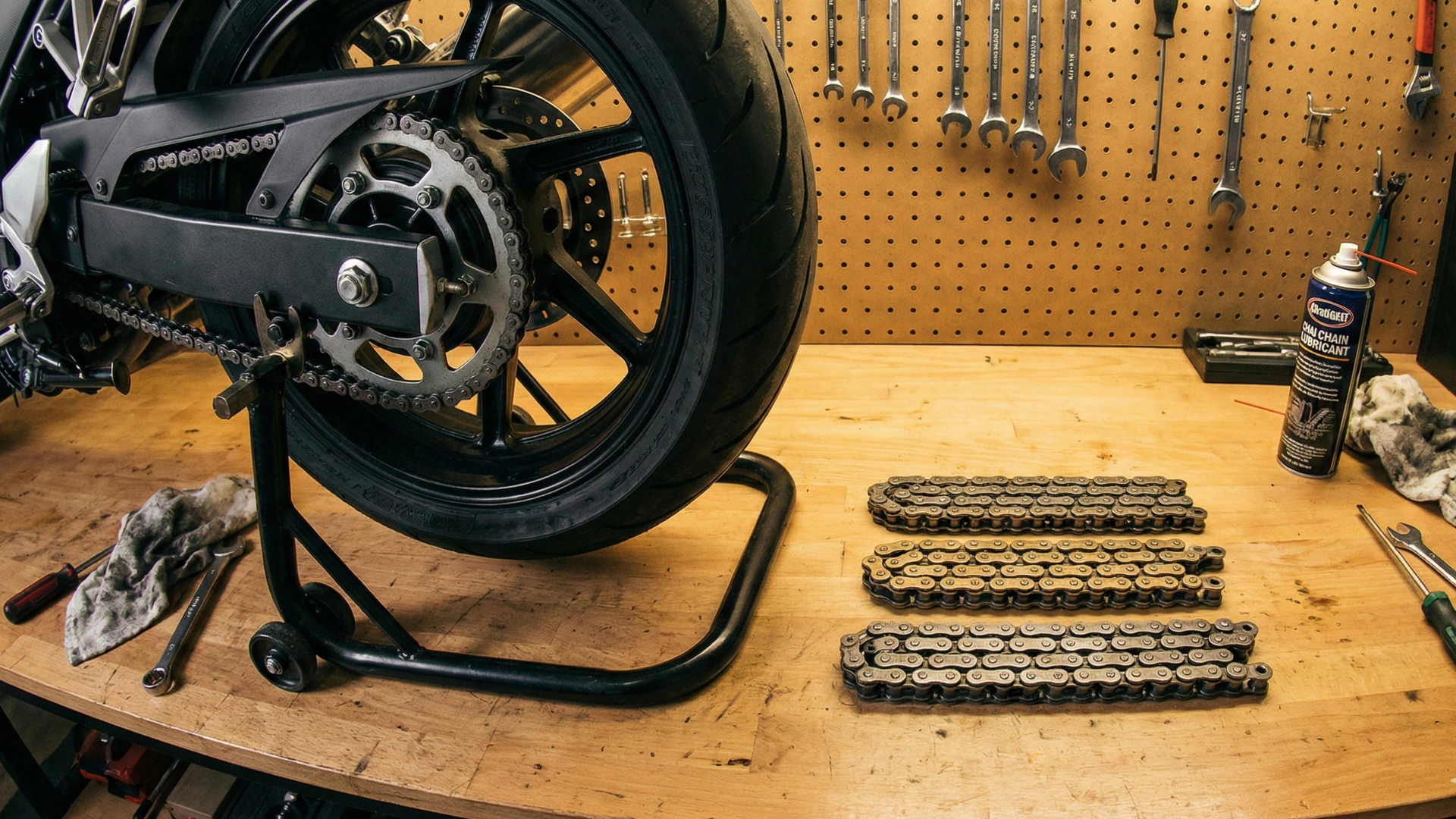
Every rider must understand the primary types of motorcycle chain to ensure peak performance and safety. The three main categories are the standard roller chain, the O ring chain, and the X ring chain. A standard chain is lightweight and affordable but requires frequent lubrication. The O ring chain features rubber seals to hold grease, offering better longevity for daily commuting. For high performance, the X ring chain provides superior sealing with reduced friction. Selecting the right type based on your bike displacement and riding environment is essential for a smooth and efficient ride.
Choosing the right component is not just about fitting the part; it is about matching the hardware to your riding style. Whether you are chasing lap times on a track, commuting through rain, or tearing up dirt trails, the technology holding your bike together matters. To help you navigate the parts counter like a pro, we are breaking down everything you need to know about the types of motorcycle chain and which one belongs on your machine.
1. The Standard Roller Chain (Unsealed)
The standard roller chain is the "original" design. It is the most basic type of bike chain available and has been around since the dawn of motorcycling.
How It Works
This chain consists of metal links, pins, and rollers—and that’s it. There are no rubber seals, gaskets, or internal grease pockets. It is simply metal spinning on metal. Because there are no seals to create drag, the rollers spin very freely.
Pros & Cons
- The Good: It has the lowest friction of any chain type, meaning it transfers the most horsepower to the rear wheel. It is also the cheapest option and very lightweight.
- The Bad: It requires obsessive maintenance. Because there are no seals, dirt and water can easily get inside the pins and grind the metal away. If you don't clean and lube it every 300 miles, it will "stretch" (wear out) very quickly.
Who Needs It?
- Vintage Bikes: Older bikes often have narrow clearance near the engine case where a wide sealed chain won't fit.
- Small Displacement / Off-Road: 125cc dirt bikes or pit bikes often use these because they don't rob horsepower.
- Drag Racers: When every fraction of a second counts, the zero-drag nature of a standard chain is an advantage.
2. The O-Ring Chain (Sealed)
In the 1970s, the O-ring chain changed the game. It addressed the biggest weakness of the standard chain: internal wear.
How It Works
Manufacturers insert tiny rubber donuts (O-rings) between the inner and outer side plates of the chain. These rubber rings serve two purposes:
- Seal Grease In: The factory injects vacuum-sealed grease around the pin and bushing. The O-ring keeps this lubricant trapped inside for the life of the chain.
- Keep Dirt Out: The O-ring prevents road grit, sand, and water from entering the critical wear points.
Pros & Cons
- The Good: Longevity. An O-ring chain typically lasts 2 to 3 times longer than a standard chain. It requires less frequent lubrication because the "internal" lube is sealed permanently.
- The Bad: Friction. As the chain spins, the compressed rubber O-rings drag against the metal plates. This creates resistance, which can slightly reduce horsepower and fuel efficiency.
Who Needs It?
- Commuters: If you ride daily and don't want to clean your chain every weekend, this is the standard choice.
- Budget-Conscious Riders: It offers better durability than a standard chain without the higher price tag of premium X-rings.
3. The X-Ring Chain (Advanced Sealed)
The X-Ring is the modern evolution of the sealed chain. Engineers realized that squishing a round O-ring creates too much drag, so they redesigned the seal profile.
How It Works
Instead of a round donut shape, the seal has an "X" or cross profile. This means the rubber touches the metal plates at two tiny points (lips) rather than one large, squashed surface.
This design allows the seal to twist slightly rather than just being compressed. The result is a seal that keeps grease in just as well (or better) than an O-ring but with significantly less friction.
Pros & Cons
- The Good: Best of both worlds. You get the extreme durability of a sealed chain with low friction figures that are closer to a standard chain.
- The Bad: Price. These are generally the most expensive types of motorcycle chain on the shelf.
Who Needs It?
- Sportbikes & Superbikes: High-performance machines need the durability to handle 150+ HP without losing power to chain drag.
- Adventure Tourers: If you are riding thousands of miles through rain and mud, the X-ring's superior sealing is essential.
Comparison Table: Types of Motorcycle Chain
To make it easy, here is a direct comparison of the three main types.
|
Feature |
Standard (Unsealed) |
O-Ring (Sealed) |
X-Ring (Advanced) |
|
Sealing |
None |
Good |
Excellent |
|
Friction (Drag) |
Very Low |
High |
Low |
|
Maintenance |
High (Lube frequently) |
Moderate |
Low |
|
Lifespan |
Short |
Long |
Very Long |
|
Price |
$ |
$$ |
$$$ |
|
Best Use |
Vintage, 125cc, Racing |
Daily Commuting |
Touring, Sport, ADV |
How to Choose the Right Chain Specs
Knowing the "type" (O-ring vs. X-ring) is only half the battle. You also need to match the chain's physical dimensions and strength to your specific bike.
1. The Pitch (Size Matters)
You will see numbers like 520, 525, or 530 on the box. This is not a "strength" rating; it is a physical measurement.
- The first digit (5) refers to the pitch (distance between pins).
- The last two digits (20, 25, 30) refer to the width of the chain.
Rule of Thumb: A 520 chain is lighter and narrower (common on 600cc bikes). A 530 chain is wide and heavy (common on 1000cc+ bikes). Never guess this number. Check your manual.
2. Tensile Strength
This is the breaking point of the chain. A chain designed for a 250cc bike might fit on a 1000cc bike, but it will snap under the torque.
- Always look for the CC rating on the chain box (e.g., "Rated for up to 900cc").
- If you ride a heavy bike or carry a passenger often, opt for a "Heavy Duty" version with higher tensile strength.
Pro Maintenance Tips for Any Chain Type
Regardless of which different types of bike chain you choose, neglect will kill them all. Here is how a mechanic keeps them alive.
- Lube it WARM: Always lubricate your chain after a ride, not before. The heat helps the lube penetrate the rollers. If you lube a cold chain before riding, centrifugal force will fling it all off instantly.
- Use Kerosene to Clean: Don't use gasoline or harsh solvents. They ruin rubber seals. Kerosene is the industry standard—it cuts grease but is safe for O-rings and X-rings.
- The "Slack" Check: A chain that is too tight is dangerous. It pulls on the countershaft and can ruin your engine seals or wheel bearings. A chain that is too loose can whip off the sprocket. Check your manual for the correct slack (usually 20mm–30mm).
Conclusion: Which One Should You Buy?
When you are scrolling through options online, simplify your decision based on your bike and riding style:
- Buy an X-Ring Chain if: You ride a modern sportbike, adventure bike, or tourer. The extra cost pays for itself in mileage and performance. It is the gold standard for types of motorcycle chain today.
- Buy an O-Ring Chain if: You are a commuter on a budget or restoring an older bike that doesn't need high-performance specs. It’s a solid, reliable workhorse.
- Buy a Standard Chain if: You are racing a small-displacement bike, riding a classic vintage machine with clearance issues, or have a dirt bike that gets washed after every single ride.
Your chain is the only thing connecting your engine's power to the road. Don't overthink the story—just get the right hardware for the job and keep it lubed. Ride safe.
Tanya Bhargava
Bike Blogger & Moto Content Creator. Tanya Bhargava is a passionate two-wheeler expert with 6+ years of experience in reviewing scooters, commuter bikes, and performance motorcycles. Her content blends real-world ride reviews, buyer guides, and industry updates tailored for Indian riders.