Table of Content
▼- 1. The Battery
- Battery & Electrical Quick Reference
- 2. Brake System
- 3. Drivetrain
- Drivetrain Wear vs. Riding Condition
- 4. Tyre Pressure & Condition
- Regular vs. E-Bike Specific Tyre Comparison
- 5. Motor Health
- How to Improve Electric Bike Range
- Electric Bike Maintenance Full Priority Checklist
- Warning Signs Your E-Bike Needs Immediate Attention
- Electric Bike Maintenance Schedule at a Glance
- Conclusion
Electric bike maintenance becomes complicated because riders experience problems during their ride when they encounter three specific equipment failures, which include dead batteries, grinding chains, and malfunctioning brakes. E-bikes require special maintenance because their weight and speed and electrical systems exceed the typical requirements of standard bike maintenance, which most users do not understand until they need to fix their bikes.
In 2026, battery packs lose capacity because of incorrect charging methods, while drivetrains experience double wear from motor torque, and hydraulic brakes develop hidden failures, which lead to unexpected increases in stopping distances.
This guide covers all of it, battery care, brakes, drivetrain, tyres, motor health, range tips, and a full priority checklist, so the problems never get that far. Follow it before the ride, not after the breakdown.
1. The Battery
Electric bike maintenance begins with one non-negotiable: get the battery management right before anything else fails around it. The battery accounts for a third or more of your e-bike's total cost. Getting it wrong costs more than every other mistake combined.
- Never let the battery discharge below 20% before charging. Deep discharge accelerates capacity loss faster than any other habit.
- Users should always utilize the original manufacturer's charger because third-party chargers provide faulty voltage, which causes battery cells to fail from internal damage.
- The battery must be charged to 50% to 60% before you remove it from the bike for extended winter storage or winter vacation periods.
- The ideal storage temperature is between 10°C and 20°C. The capacity of batteries stored in a hot garage or cold shed decreases permanently throughout time.
- A person should bring a cold battery into a building before they start charging it. Charging a battery that has been exposed to temperatures below zero results in internal lithium plating, which causes permanent damage to the cell.
- The companion app of your e-bike enables you to check the charge cycle count. The capacity of most lithium-ion batteries starts to decrease after they have completed between 500 and 1000 full charging cycles.
Also Read: Best Engine Oil for E20 Bikes in 2026 Problems & Protection Guide
Battery & Electrical Quick Reference
|
Situation |
Action |
|---|---|
|
Battery older than 3 years with reduced range |
Professional battery health test or cell replacement |
|
Charging port showing corrosion or discolouration |
Clean with contact cleaner and apply dielectric grease |
|
Range dropped more than 30% from original spec |
Full battery diagnostic at an authorized service centre |
|
Error code on display |
Identify code in manual before next ride |
|
Battery not charging past 80% |
BMS recalibration or cell replacement required |
2. Brake System
E-bikes are heavier and faster than standard Bikes. That combination places significantly higher demand on the braking system than most riders account for.
|
Brake Type |
Key Maintenance |
Frequency |
|---|---|---|
|
Hydraulic Disc |
Bleed + pad inspection |
Annually + Monthly |
|
Mechanical Disc |
Cable tension + pad check |
Monthly |
|
Rim Brakes |
Pad wear + rim condition |
Weekly |
- The procedure requires monthly brake pad thickness assessments through the caliper opening, and brake pads must be replaced when the friction material reaches 1mm or the designated wear indicator line because worn pads create rotor damage that results in expensive rotor repairs.
- The process requires annual hydraulic disc brake bleeding. The brake fluid develops a moisture content during its period of use, resulting in a decreased boiling point, which causes e-bike operators to experience unsafe braking performance.
- The process requires rotor cleaning with isopropyl alcohol, which needs to occur every two weeks. Braking performance decreases significantly when grease contamination occurs from chain lube or hand contact, which affects the effectiveness of new brake pads.
- The procedure requires you to test brake performance by pressing both brake levers until you reach the maximum strength level. The system requires immediate system maintenance when users notice sponginess or unusual travel or delayed response.
3. Drivetrain
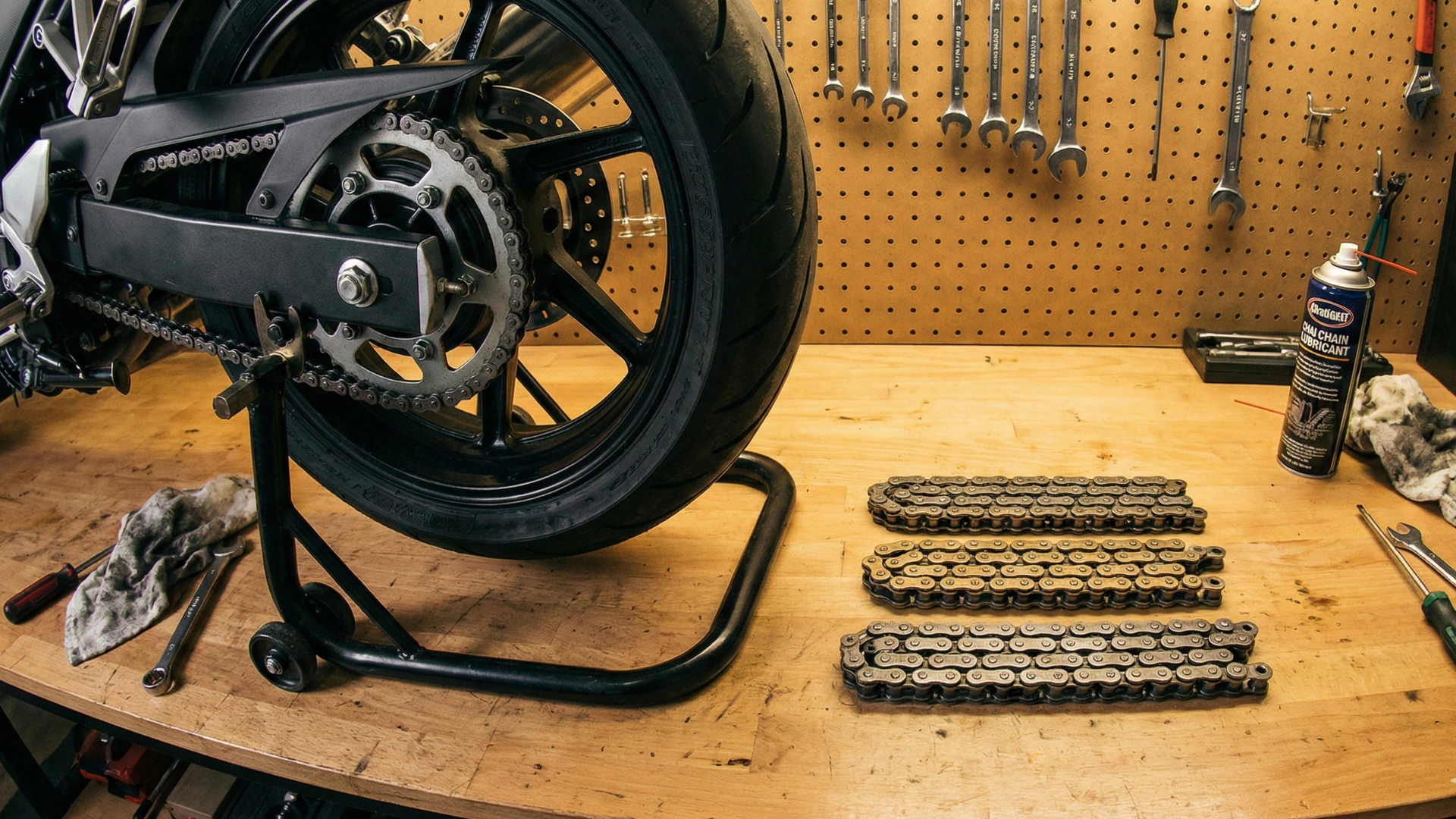
The high-torque motors that power e-bikes cause their operators to experience an unexpected rate of drivetrain damage during their inaugural test. A chain that would last 3,000 km on a standard bike may need replacement at 1,500 km on an e-bike.
- Establish a monthly schedule to check chain length using a chain checker tool. The chain needs replacement when its wear reaches 0.5% because a stretched chain destroys the cassette and chainring, which results in multiple replacement expenses for the entire system.
- The cleaning process for both the cassette and rear derailleur requires proper degreaser application which should occur every two to four weeks and increase in frequency when you utilize wet roads or trails.
- Use wet-formula chain lube in monsoon or wet conditions. Use a dry formula in dry weather. The incorrect lube selection leads to improper contamination, which causes materials to wear out at an accelerated rate.
- Check derailleur hanger alignment if you notice ghost shifting or chain drops. E-bike torque stresses the hanger more than regular riding and bends it gradually without any visible impact damage.
Also Read: Why to Keep Your Chain Clean: The Ultimate Guide to Bike Chain Maintenance
Drivetrain Wear vs. Riding Condition
|
Component |
Normal Wear Interval |
Heavy Use / City Traffic |
|---|---|---|
|
Chain |
1,500–2,000 km |
800–1,200 km |
|
Cassette |
3 chain replacements |
2 chain replacements |
|
Chainring |
2–3 cassette replacements |
1–2 cassette replacements |
|
Brake Pads (hydraulic) |
3,000–5,000 km |
1,500–2,500 km |
|
Brake Fluid |
Annual |
Annual (non-negotiable) |
4. Tyre Pressure & Condition
- Check tyre pressure before every long ride when the tyres are cold. The morning tyre pressure measurement shows correct tyre pressure which then increases throughout the day.
- The optimal pressure range for most e-bike tyres is 35–45 PSI. Underinflated tyres increase rolling resistance, which causes the motor to consume greater electrical power while driving the vehicle, which results in decreased operational distance between battery charges.
- After each ride, inspect the equipment to find any embedded glass, thorns, or sidewall cuts. E-bike tyres are heavier and carry more load than standard bicycle tyres, sidewall integrity matters more at these speeds.
- yre sealant needs to be applied inside tubes as the primary method to protect against punctures. The product can instantly seal holes which measure between 4 and 5 millimeters without requiring any street repairs.
- E-bike specific tyres from Schwalbe, Continental, or Kenda need to replace all worn-out tyres. Standard bike tyres lack the ability to handle the speed and weight distribution requirements needed for e-bikes.
Regular vs. E-Bike Specific Tyre Comparison
|
Feature |
Standard Bike Tyre |
E-Bike Specific Tyre |
|---|---|---|
|
Speed Rating |
Up to 25 km/h |
Up to 45 km/h |
|
Sidewall Reinforcement |
Standard |
Reinforced for heavier load |
|
Puncture Protection Layer |
Basic or none |
Multi-layer protection belt |
|
Rolling Resistance |
Low |
Optimised for motor assist |
|
Lifespan on E-Bike |
800–1,200 km |
2,500–4,000 km |
5. Motor Health
The e-bike motor exists as a factory-sealed component that needs to remain closed because users should not perform any opening, lubrication, or repair activities on it.
- The motor housing requires maintenance to ensure its cleanliness at all times. The motor housing area becomes blocked with mud and debris, which results in overheating and creates a path for debris to enter the bearing seals after traveling for thousands of kilometers.
- The process of listening for new sounds needs to occur after every few rides. A motor functions properly when it produces only minimal sound. The rider needs to stop using the equipment when they hear grinding or clicking or high-pitched whining because they must schedule a service inspection.
- The process of motor maintenance should take place through professional services which need to occur once every year. The technician will perform motor removal operations before executing complete housing cleaning procedures while conducting system diagnostics to check for error codes and service records.
How to Improve Electric Bike Range
The process of increasing charging range requires more than just improving battery performance because it needs all system components to function optimally.
- Riders should use pedal assist instead of using full throttle. Throttle-only riding consumes roughly double the energy of pedal assist at the same speed. The most efficient method to extend your range requires you to use only your legs to perform your task.
- The rider should maintain a cadence that exceeds 50 RPM. The combination of high cadence and low motor load results in better battery performance than slow pedaling with maximum assistance. E-bike applications typically show users their current cadence in real-time.
- The complete load should be reduced. The motor has to work harder on every incline because every extra kilogram of weight requires additional effort. The rider should eliminate all extra equipment, bags, and cargo before starting their extended journey.
- The rider needs to keep tyre pressure at the correct level. The range reduction through increased rolling resistance will occur when tyres exist underinflated by 5 PSI because it results in an 8-12% range decrease.
- The rider should create smooth tracks for their journey. E-bike users experience their worst energy performance when they need to stop suddenly and start again. The rider should forecast upcoming traffic situations and keep their speed throughout the journey.
- The rider should prepare their battery for use in cold temperatures through pre-heating. A lithium-ion battery that experiences cold temperatures will provide less energy output than a battery that maintains stable temperature conditions. The rider should bring it indoors for 30 minutes before a cold-weather ride.
Electric Bike Maintenance Full Priority Checklist
|
Check Item |
Frequency |
|---|---|
|
Battery charge level & connection |
Before every ride |
|
Tyre pressure (cold check) |
Before every long ride |
|
Brake lever response |
Before every ride |
|
Chain lubrication |
Weekly |
|
Battery contact pin cleaning |
Weekly |
|
Brake pad thickness |
Monthly |
|
Chain wear check |
Monthly |
|
Drivetrain deep clean |
Every 2–4 weeks |
|
Spoke tension & wheel trueness |
Monthly |
|
Motor housing cleanliness |
Monthly |
|
Hydraulic brake bleed |
Annually |
|
Firmware update check |
Every 6 months |
|
Professional full service |
Annually / Every 1,000 km |
Warning Signs Your E-Bike Needs Immediate Attention
Do not ignore these. Acting early prevents minor issues from becoming dangerous failures on the road.
- Unusual grinding, clicking, or high-pitched sounds from the motor or drivetrain
- Any error code on the display that you have not identified and resolved
- Spongy brake lever feel or noticeably increased stopping distance
- Visible battery swelling, unusual heat from the battery casing, or burning smell near electrical components
- Range dropping more than 30% from your normal riding baseline
- Chain skipping under load, especially on climbs or acceleration
- Wobbly wheel or grinding sensation through the pedals under motor assist
Electric Bike Maintenance Schedule at a Glance
|
Frequency |
Task |
|---|---|
|
Before Every Ride |
Tire pressure, battery level, brake response check |
|
Weekly |
Chain lubrication, bolt tightness, battery contact cleaning |
|
Monthly |
Brake pad thickness, chain wear, spoke tension |
|
Every 6 Months |
Full drivetrain clean, hydraulic brake bleed, firmware update |
|
Annually |
Professional tune-up, motor diagnostic, battery health check |
Conclusion
Electric bike maintenance does not require complex procedures. The practice of maintaining battery levels between 20% and 80% and conducting monthly brake pad inspections and replacing the chain before its failure together with these three habits. The practice of maintaining battery levels between 20% and 80% and conducting monthly brake pad inspections and replacing the chain before its failure together with these three habits.
Frequently Asked Questions
Tanya Bhargava
Bike Blogger & Moto Content Creator. Tanya Bhargava is a passionate two-wheeler expert with 6+ years of experience in reviewing scooters, commuter bikes, and performance motorcycles. Her content blends real-world ride reviews, buyer guides, and industry updates tailored for Indian riders.