Table of Content
▼The possibility of E10 fuel, which Indian buyers once relied on, making a comeback is now under internal government discussion, according to a report by The Indian Express. With E20 having been mandated as the baseline fuel since April 1, 2026, this development marks the first genuine signal that authorities are willing to consider diversifying fuel options rather than pushing ethanol content higher across the board.
What's Actually Happening Right Now
It's important to be precise about what this report actually confirms and what it doesn't. The government is holding internal discussions about reintroducing E10 as an option, to be offered alongside the current E20 baseline, not as a replacement for it.
- Status: Internal government discussions only
- Confirmation level: Not an official policy decision
- Proposed structure: E10 offered as an alternative alongside E20, not instead of it
The report itself notes that nothing can be confirmed unless it materializes into concrete paperwork, so this remains a discussion, not a decision.
Who's Behind This Push for Diversification
What is truly relevant in this progress is that the discussion is led by the right people. In a recent column, co-authored by a chief economic advisor, V. Anantha Nageswaran, a call has been made to a number of choices of blended ethanol that need to be offered to consumers. This is the first time that a senior government official has officially spoken of the necessity of diversifying fuel options, instead of sticking to the idea of E20.
This is important because it indicates changing attitudes on a rather high governmental level, though this has not turned into a particular policy yet.
The E20 Engine Damage Clarification
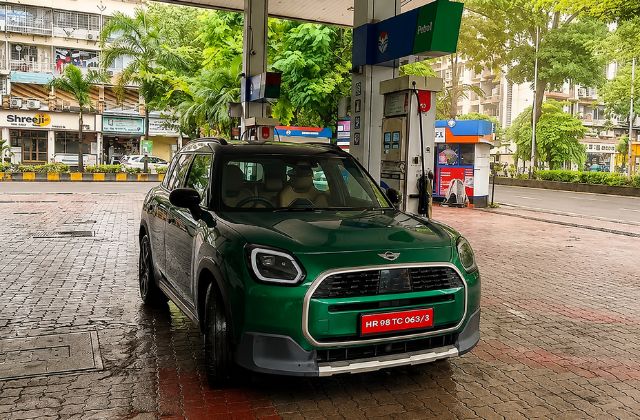
Alongside the E10 discussion, the center has also addressed a related controversy directly. Reports of E20-linked engine damage have been investigated, and the government has attributed the actual cause to fuel adulteration, not the higher ethanol content itself.
- Previous concern: E20's higher ethanol content was believed to be damaging engines
- Clarification from the administration: The real culprit was fuel adulteration, not ethanol mixing itself.
- Related news: The Society of Indian Automobile Manufacturers had brought up the sulfur contamination in EBP but pulled back the letter shortly afterwards.
This does not indicate that all the questions connected to ethanol have been solved, although the technical explanation has moved away from the ethanol fraction as the main cause.
Why E10 and E20 Can't Simply Coexist
Here's the part most coverage of this story is likely to skip over, and it's genuinely the most useful thing to understand if you're wondering why this isn't a simple switch to flip.
|
Requirement |
Why It's Needed |
|---|---|
|
Twin-tank storage |
Separate storage for E10 and E20 at each outlet |
|
Automated monitoring line |
Tracks blend accuracy for each fuel type separately |
|
Increased handling costs |
Additional infrastructure and monitoring add operational expense |
|
Retail outlet retrofitting |
Existing single-tank stations would need physical modification |
This is precisely why "bringing back E10" isn't as simple as an announcement, it requires genuine infrastructure investment across thousands of retail outlets nationwide before it could realistically become available at the pump.
E10 vs E20 vs E25: Where Things Stand
|
Fuel Type |
Current Status in India |
|---|---|
|
E10 |
Under internal discussion for possible reintroduction |
|
E20 |
Mandated baseline since April 1, 2026 |
|
E25 |
Rollout pushed back following public backlash |
The broader picture here is one of a government recalibrating its ethanol strategy in real time, E25 has been delayed, E20 remains the confirmed baseline, and E10 is now being discussed as a possible parallel option.
Conclusion
The reopened conversation around E10 fuel India consumers previously had access to reflects a genuine, if early, shift in government tone on ethanol policy. However, this remains firmly in the discussion stage, real-world rollout would require significant retail infrastructure investment, including twin-tank systems across OMC outlets, before E10 could genuinely return as an option. Until concrete policy paperwork emerges, this is a development worth watching, not one to plan around just yet.
Karan Bhatia
Karan Bhatia is an automobile expert and reviewer with 8+ years of experience test-driving cars, bikes, and EVs. He provides honest, detailed, and practical reviews that highlight performance, design, safety, and value for money. His expert insights help readers make confident choices when buying their next vehicle.