Table of Content
▼- Massive Financial Layout and Zero Road Tax Advantages
- Direct Purchase Subsidies via Direct Benefit Transfer
- Available Vehicle Incentives
- Mandatory Deadlines and the Transition of Combustion Engines
- Key Implementation Deadlines
- Substantial Cash Payouts for Scrapping Older Vehicles
- Commercial Fleet Targets and Infrastructure Support
- Conclusion
- Also Read This
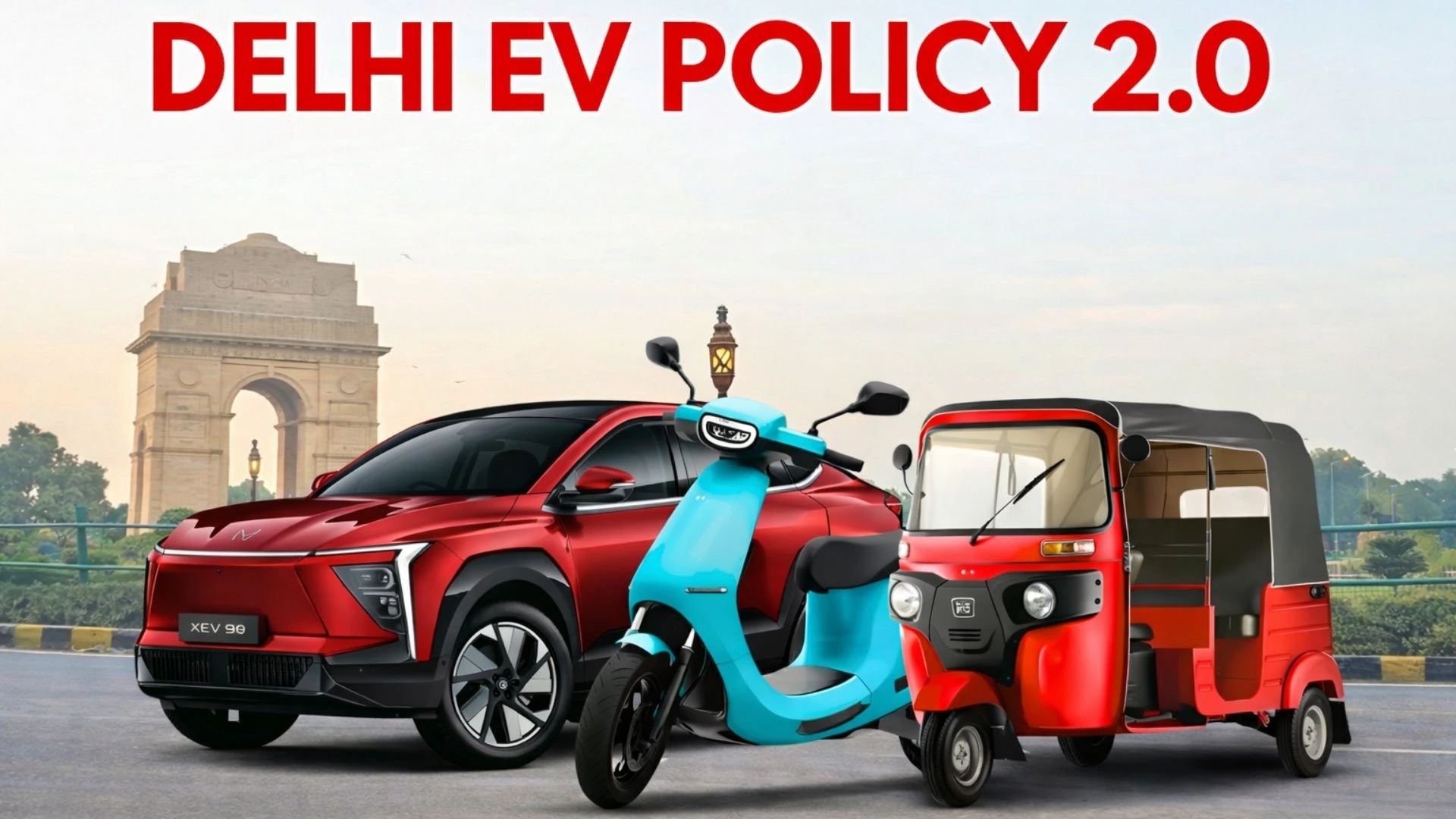
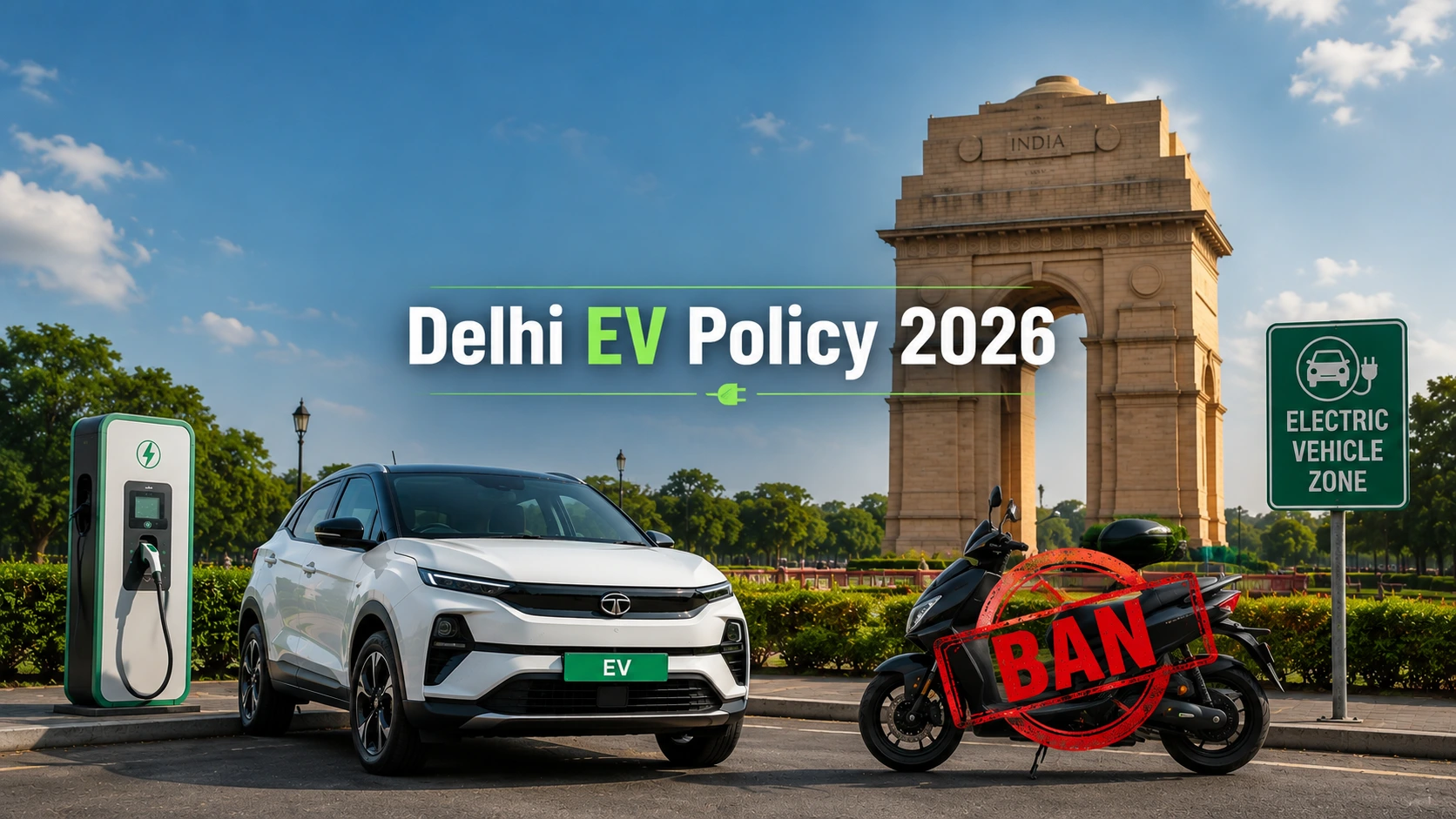
The Delhi EV Policy 2026 provides massive direct purchase subsidies up to Rs 100000 alongside a total 100 percent waiver on road tax and registration fees for electric vehicles. Backed by a historic Rs 7000 crore outlay active until March 31, 2030, this landmark framework aims to aggressively accelerate transport electrification across the national capital region.
Massive Financial Layout and Zero Road Tax Advantages
The Delhi Government has rolled out its updated master plan. Active until March 31, 2030, and supported by a massive Rs 7000 crore budget allocation, this framework provides a clear roadmap to phase out internal combustion engine alternatives.
The EV policy implements a 100 percent waiver on road tax and registration fees. However, a critical cap applies to passenger cars. The tax waiver is exclusive to electric cars priced up to Rs 30 lakh ex-showroom, while luxury models pay standard taxes.
Direct Purchase Subsidies via Direct Benefit Transfer
All financial rewards are routed straight to buyers through secure electronic systems using Direct Benefit Transfer. This transparent structure ensures faster processing timelines for green commuters.
Available Vehicle Incentives
- Electric Two Wheelers: Purchase rewards reaching up to Rs 30000 per vehicle.
- Electric Three Wheelers: Support packages providing up to Rs 50000.
- Light Commercial Vehicles: N1 electric trucks under 3.5 tonnes qualify for up to Rs 100000.
Mandatory Deadlines and the Transition of Combustion Engines
The policy does not just incentivize electric mobility; it sets hard timelines to restrict fossil fuel sales across specific commercial and commuter categories.
Key Implementation Deadlines
- January 1 2027: Complete restriction on new petrol, diesel, or CNG registrations for L5 category passenger and cargo auto rickshaws along with N1 commercial goods carriers.
- April 1 2028: The end of conventional commuter two-wheelers. From this precise date onward, all new two-wheeler registrations must be completely electric.
Substantial Cash Payouts for Scrapping Older Vehicles
To clear polluting machines, the government has dedicated over Rs 1500 crore toward vehicle scrappage incentives. Owners retiring an old combustion vehicle for an electric alternative receive major cash support.
The table below breaks down the financial frameworks provided across various model categories:
|
Vehicle Classification |
Direct Purchase Subsidy |
Cash Scrappage Incentive |
|
Electric Two Wheelers |
Up to Rs 30000 |
Rs 10000 |
|
Electric Three Wheelers |
Up to Rs 50000 |
Rs 25000 |
|
Passenger Four Wheelers |
Road Tax Waiver Only |
Rs 100000 |
|
Light N-1 Commercial Trucks |
Up to Rs 100000 |
Rs 50000 |
Commercial Fleet Targets and Infrastructure Support
Heavy transport remains a primary driver of urban winter smog. To counter this, the first 1000 heavy-duty N2 electric trucks bought get a ten-year exemption from local time restrictions.
School transport operations must also fulfill specific electrification benchmarks over the coming years:
- Year Two Milestone: Attain a 10 percent electric mix across the school fleet.
- Year Three Milestone: Scale up to a 20 percent electric composition.
- March 2030 Milestone: Fulfill a mandatory 30 percent electrification target.
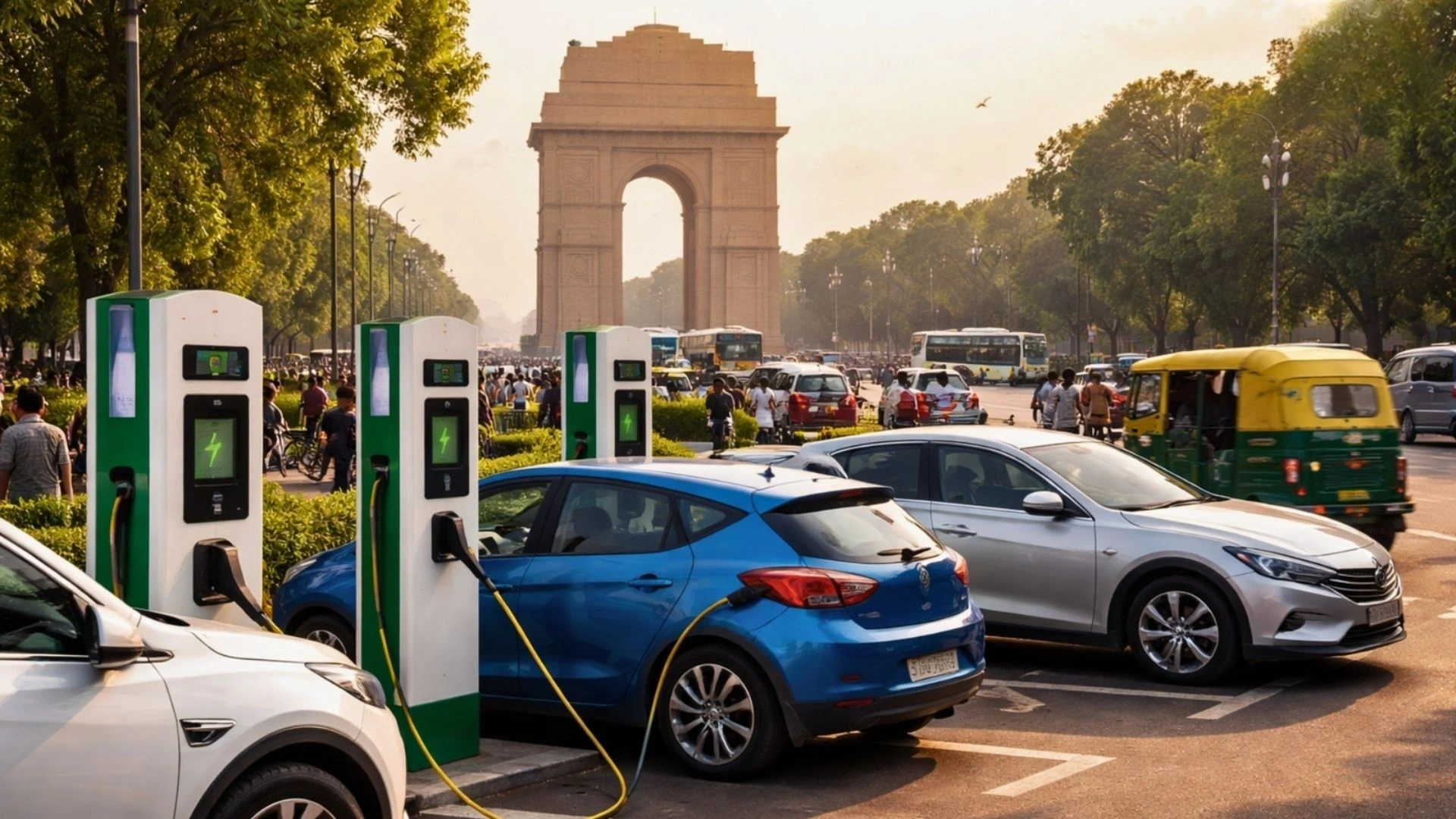
The state is targeting the installation of over 30000 active public charging points to permanently eliminate range anxiety.
Conclusion
The Delhi EV Policy 2026 establishes an ambitious standard for sustainable urban planning in India. By combining zero road tax benefits with heavy direct purchase subsidies and clear fossil fuel restriction deadlines, the government provides an actionable blueprint for a cleaner future.
Also Read This |
|
|---|---|
|
Renault Kwid Facelift Set for India Launch on July 3 with Fresh Update |
|
|
Delhi EV Policy 2.0: Who Will Get ₹1 Lakh Incentive and Tax Benefits |
|
Neha Mehlawat
Neha Mehlawat is an automotive journalist and industry analyst with 10+ years of experience covering cars, bikes, and mobility trends. She tracks the latest launches, technology upgrades, and policy changes in the auto sector, delivering sharp insights that help readers stay ahead in the fast-evolving world of automobiles.