Table of Content
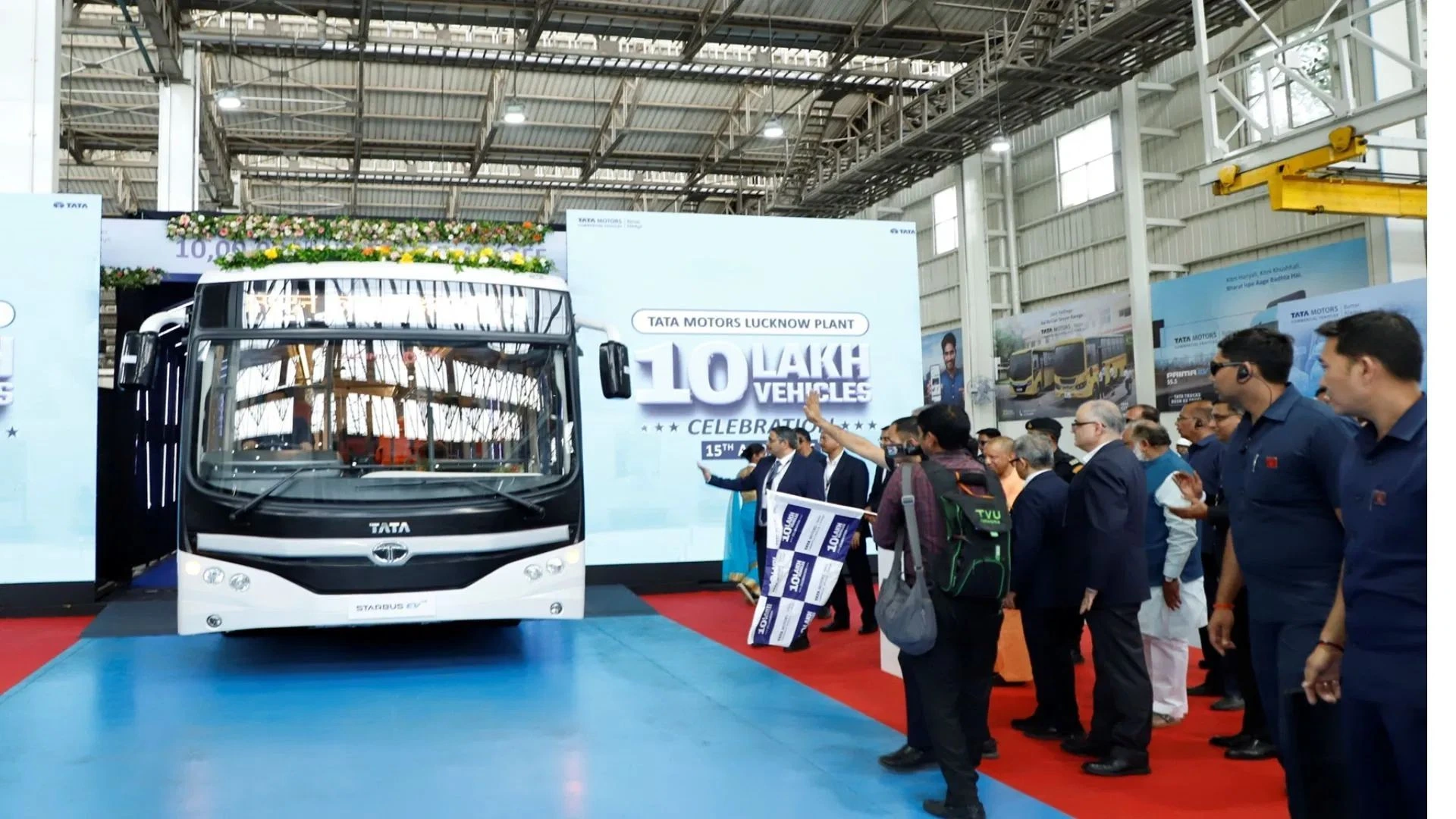
▼Tata Motors has officially scaled its Lucknow manufacturing operations to the 1-million-unit mark, cementing Uttar Pradesh's status as a premier automotive hub. A common real-world hurdle for large-scale manufacturing is the lag in transitioning legacy plants to green technology; this milestone provides an immediate fix by proving that 34-year-old facilities can be successfully retrofitted into 100% renewable-powered, water-positive EV hubs.
The Pivot to "Green" Commercial Architecture
Based on our technical breakdown of the event, the choice of a zero-emission electric bus for the 10 lakhth rollout was a deliberate strategic statement. While it took over three decades to reach the first million, Tata Sons Chairman N. Chandrasekaran indicated that the plant is now optimized to hit the 2-million mark by 2031.
The data suggests that the Lucknow facility has evolved from a traditional assembly line into a high-tech "Industry 4.0" hub. Spanning 600 acres, the plant now integrates robotics, AI-driven resource management, and assembly lines capable of handling diverse powertrains, including battery-electric and hydrogen fuel cells.
|
Key Metric |
Lucknow Plant Performance Data |
|
Milestone Reached |
1,000,000 Commercial Vehicles (April 2026) |
|
Target for 2031 |
2,000,000 Total Units (Next 10 Lakh in 5 years) |
|
Sustainability Status |
100% Renewable Energy & Water Positive |
|
Annual Capacity |
100,000+ Units per Year |
|
Workforce |
8,000+ Direct Employees |
Will the Lucknow Plant Lead India's Hydrogen Transition?
A high-intent question among industry analysts is: Does this milestone signal the end of diesel production in Lucknow? When examining the architecture of the plant’s current output, the answer is a nuanced "No," but the trajectory is clear. The facility is increasingly being utilized for Tata’s most advanced projects, including the "Prima E.55S" electric prime movers and experimental hydrogen-based vehicle platforms.
The government’s support for Uttar Pradesh as a manufacturing destination has created a conducive ecosystem. As the state moves toward a $1 trillion economy, the Lucknow plant serves as the testing ground for alternative fuel commercial vehicles (AFCVs) that will eventually replace aging diesel fleets across India.
How Does Industry 4.0 Impact Local Skill Development?
A significant challenge in rapid industrial scaling is the "skill gap" among the local workforce. To address this, Tata Motors has integrated "Kaushalya" and "Lakshya" training initiatives directly into the Lucknow ecosystem. This ensures that the 8,000+ employees are not just manual laborers but technicians capable of maintaining robotic welding systems and AI-monitored assembly lines.
- Automation Integration: Robotic paint booths and body-in-white shops have significantly improved production consistency.
- Workforce Diversity: The plant has seen a major push for inclusivity, with women and people with disabilities constituting a growing percentage of the technical staff.
- Ancillary Growth: The milestone supports a vast network of MSMEs and parts suppliers across Uttar Pradesh.
Strategic Ownership: Maximizing Lifecycle ROI for Fleet Operators
For state transport undertakings and private fleet owners, the shift toward electric buses manufactured in Lucknow offers a significant improvement in Total Cost of Ownership (TCO). While the upfront cost of an electric bus remains higher than diesel, the " Lucknow-built" e-buses are designed for high-utilization cycles where fuel and maintenance savings add up rapidly.
To ensure the best ROI for your fleet:
- Leverage Institutional Orders: Utilize state-backed incentives for EV procurement to lower the initial capital expenditure.
- Monitor Battery Health: Use the plant’s integrated telemetry systems to track real-time battery degradation and energy consumption.
- Adopt Circular Practices: Take advantage of Tata’s "Re.Wi.Re" (Responsible Waste Initiative) units for environmentally responsible disposal and recycling of old ICE fleets.
The Verdict
Tata Motors reaching 10 lakh units in Lucknow is not just a production tally—it is the birth of a green manufacturing powerhouse. For investors and policymakers, this achievement proves that sustainable, zero-emission manufacturing at scale is no longer a "future" goal, but a present-day reality in the heart of Uttar Pradesh.
Also Read This |
|
|---|---|
|
VinFast VF MPV 7 Launched at ₹24.49 Lakh with 517 km Range |
|
|
Tata Intra EV Pickup Launched At Rs 11.95 Lakh With 211 Km Range |
Tata Motors Unveils Prima 3540K The Most Powerful Tipper from the Brand |
|
Kia India Starts Summer Service Camp with Free 20-Point Check |
Delhi EV Policy 2.0: Who Will Get ₹1 Lakh Incentive and Tax Benefits |
Neha Mehlawat
Neha Mehlawat is an automotive journalist and industry analyst with 10+ years of experience covering cars, bikes, and mobility trends. She tracks the latest launches, technology upgrades, and policy changes in the auto sector, delivering sharp insights that help readers stay ahead in the fast-evolving world of automobiles.