Table of Content
▼- Understanding the Pricing Structure
- MG ADAPT Platform: The Foundation for Both
- Range and Powertrain: The Core Difference
- Charging and Energy Technology
- Seating, Interior and Exterior
- Shared interior highlights
- Shared exterior highlights
- Variant-Wise Pricing Breakdown
- Hector Tomahawk EV (Outright Purchase)
- Who Should Consider Which Version?
- Hector Tomahawk EV
- Hector Tomahawk PHEV
- Conclusion
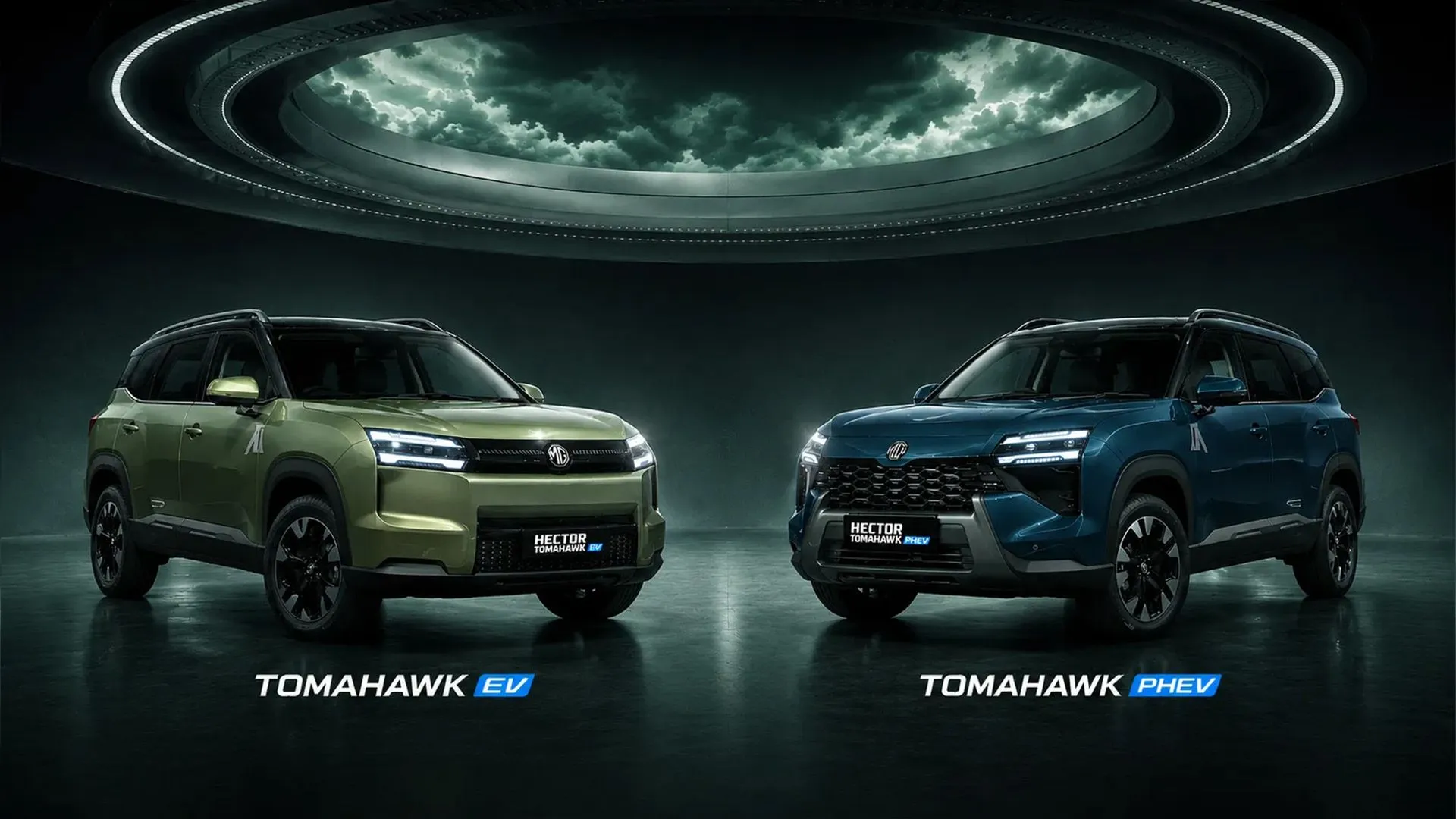
The MG Hector Tomahawk EV and MG Hector Tomahawk PHEV rivalry is shaping up to be one of the most interesting internal battles within JSW MG Motor India's own line-up. Both versions are now launched, but with genuinely different pricing structures and powertrain philosophies, one built for buyers ready to go fully electric and the other for those wanting electric driving with petrol backup.
Here's a comprehensive look at what separates these two and why both deserve serious consideration.
Understanding the Pricing Structure
Both versions come with two distinct purchase routes: outright purchase and Battery-as-a-Service (BaaS), so pricing needs careful reading before you compare anything else.
|
Version |
BaaS Price |
Outright Purchase Price |
|---|---|---|
|
Hector Tomahawk EV |
Rs. 13.99 Lakh onwards |
Rs. 19.49 Lakh onwards |
|
Hector Tomahawk PHEV |
Rs. 21.79 Lakh onwards |
Rs. 25.69 Lakh onwards |
Under the BaaS scheme, the vehicle price drops significantly, but buyers pay a separate battery rental of Rs. 4.90 per km. This lowers the upfront cost considerably but shifts ongoing costs to a per-kilometer basis, worth calculating carefully against your expected annual mileage before choosing this route over outright purchase.
MG ADAPT Platform: The Foundation for Both
Both the EV and PHEV are built on MG's all-new ADAPT architecture, the company's first electrified vehicle platform designed specifically to support both pure-electric and plug-in hybrid configurations without compromising either. The reason that MG has been able to run two different types of powertrains with the same nameplate is due to the flexibility that comes with their platform.
It is precisely this versatility that makes the new-age EV makers stand tall among those trying to use an old-age platform to put in electric powertrains.
Also Read: BMW i5 LWB 2026: Specs, Features and Launch Explained
Range and Powertrain: The Core Difference
This is where the two versions genuinely diverge in philosophy.
|
Specification |
Hector Tomahawk EV |
Hector Tomahawk PHEV |
|---|---|---|
|
Powertrain |
69.2kWh LFP battery, single motor |
1.5-litre NA petrol + 20.5 kWh battery |
|
Power |
201 bhp |
198bhp (combined) |
|
Torque |
310Nm |
230Nm (combined) |
|
0-100 km/h |
8.2 seconds |
Not specified |
|
EV-only range |
517km (MIDC) |
115km (EV-only) |
|
Fuel efficiency |
Not applicable |
40kmpl (claimed) |
|
Fast charging |
30-80% in ~35 minutes (90kW DC) |
Not specified |
The EV is built for buyers who want to go fully electric and never touch a petrol pump again, its 517 km MIDC range comfortably covers most weekly driving without needing a mid-week charge. The PHEV offers a genuinely different value proposition, 115km of pure-EV range for daily commuting, backed by a petrol engine for longer trips, eliminating range anxiety entirely while still delivering meaningfully lower running costs than a conventional petrol SUV.
Charging and Energy Technology
The EV version brings some genuinely advanced charging capabilities that go beyond what most rivals in this segment offer:
- V2L (Vehicle-to-Load): It offers an ability to provide power to the external gadgets and machines from a car battery.
- V2H (Vehicle-to-Home): It has the ability to return power to your home, which is something quite rare when it comes to this price point.
- V2V (Vehicle-to-Vehicle): Lets the Tomahawk EV charge another electric vehicle
- CCS2 connector with support for up to 90kW DC fast charging
The PHEV doesn't need this charging ecosystem to the same extent, since its petrol engine acts as the range extender, but it can still be charged via a standard plug for its smaller 20.5kWh battery.
Seating, Interior and Exterior
Both versions are offered as genuine three-row SUVs, with the EV giving buyers more flexibility, five-seat and seven-seat configurations, while the PHEV closely mirrors the EV's layout on the same ADAPT platform.
Shared interior highlights
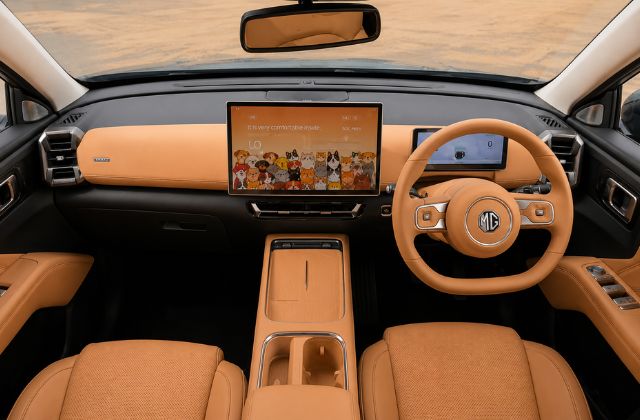
- 15.6-inch touchscreen infotainment system
- 8.8-inch digital instrument cluster
- Panoramic sunroof and ventilated front seats
- Wireless Android Auto and Apple CarPlay
- Powered tailgate and ambient lighting
Shared exterior highlights
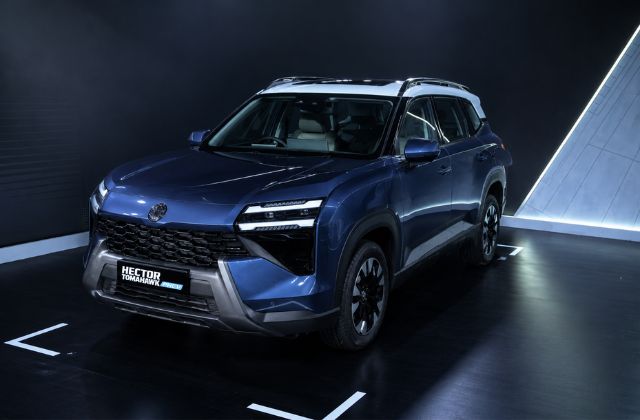
- LED projector headlamps with LED daytime running lights
- Illuminated MG logo and two-tone rear bumper
- Wraparound LED taillights
- 18-inch dual-tone alloy wheels
Also Read: BMW X1 LWB vs Audi Q3: Full Comparison
Variant-Wise Pricing Breakdown
Hector Tomahawk EV (Outright Purchase)
|
Variant |
Seating |
Price (Ex-showroom) |
|---|---|---|
|
Excite |
Seven-seat |
Rs. 19.49 Lakh |
|
Exclusive |
Seven-seat |
Rs. 21.99 Lakh |
|
Essence |
Seven-seat |
Rs. 23.49 Lakh |
|
Essence |
Five-seat |
Rs. 22.99 Lakh |
Variant-wise BaaS pricing for both EV and PHEV hasn't been announced separately yet.
Who Should Consider Which Version?
Hector Tomahawk EV
This SUV meets the needs of those who want to keep running costs low and have home charging available but do not take any road trips of more than 500 km without any charging.
Hector Tomahawk PHEV
This is appropriate for individuals who prefer driving with electric power to travel short distances but want to have the option of petrol for longer distances.
Conclusion
It’s not about whether the MG Hector Tomahawk EV is better than the MG Hector Tomahawk PHEV but about which of these vehicles suits your convenience in terms of charging access, driving patterns, and comfort level. Both are built on the same capable ADAPT platform, share a genuinely feature-rich cabin, and offer flexible purchase structures through BaaS. The EV makes the strongest case for buyers ready to commit fully to electric ownership, backed by genuinely advanced V2H and V2L technology, while the PHEV offers a smart, lower-risk entry point for buyers not quite ready to leave petrol behind entirely.
Frequently Asked Questions
Aakash Mehra
Automotive Journalist & Car Reviewer. Aakash Mehra is a seasoned automotive journalist with over 9 years of experience in car journalism and consumer-focused reviews. Having test-driven more than 550+ vehicles, he delivers detailed comparisons, expert insights, and unbiased advice to help readers confidently choose the right car.