Table of Content
▼- Step 1: Know Your EV's Real-World Highway Range
- Step 2: Plan Your Route and Map Every Charging Stop
- Step 3: Understand Charger Types and What Your EV Supports
- Step 4: Follow the 20–80% Charging Strategy
- Step 5: Drive Efficiently to Maximize Your Range
- Best EV Road Trip Routes in India (2026)
- EV Road Trip Cost vs Petrol: Real Numbers for 1,000 km
- Conclusion
Planning a long road trip in EV feels complicated until you actually sit down and figure it out. The range anxiety, the charging stops, the what-ifs, it all sounds like a lot. But the reality on Indian roads today is far simpler. The Tata Nexon EV handles the Delhi–Agra–Jaipur loop with two stops. The Mahindra BE 6 goes from Mumbai to Goa on a single charge. Even the Tata Punch EV covers a 250 km highway leg without stress, as long as the leg is planned right.
Once you understand five basics, real highway range, smart leg planning, charger types, the 20 to 80 percent charging rule, and efficient driving, the rest falls into place on its own. This guide covers all five with actual numbers for the most popular EVs on Indian roads right now.
Step 1: Know Your EV's Real-World Highway Range
Never trust the manufacturer's claimed range as your planning number. Real-world Indian highway conditions, heat, speed, AC load, and terrain, reduce claimed range by 15–30%.
Realistic highway range for popular Indian EVs:
|
EV Model |
Claimed Range |
Real Highway Range (90 km/h) |
|
Tata Tiago EV |
315 km |
240–260 km |
|
Tata Punch EV (Long Range) |
421 km |
330–360 km |
|
Tata Nexon EV 45 |
489 km |
370–410 km |
|
Tata Curvv EV |
502 km |
390–425 km |
|
Hyundai Creta Electric (51.4 kWh) |
473 km |
370–400 km |
|
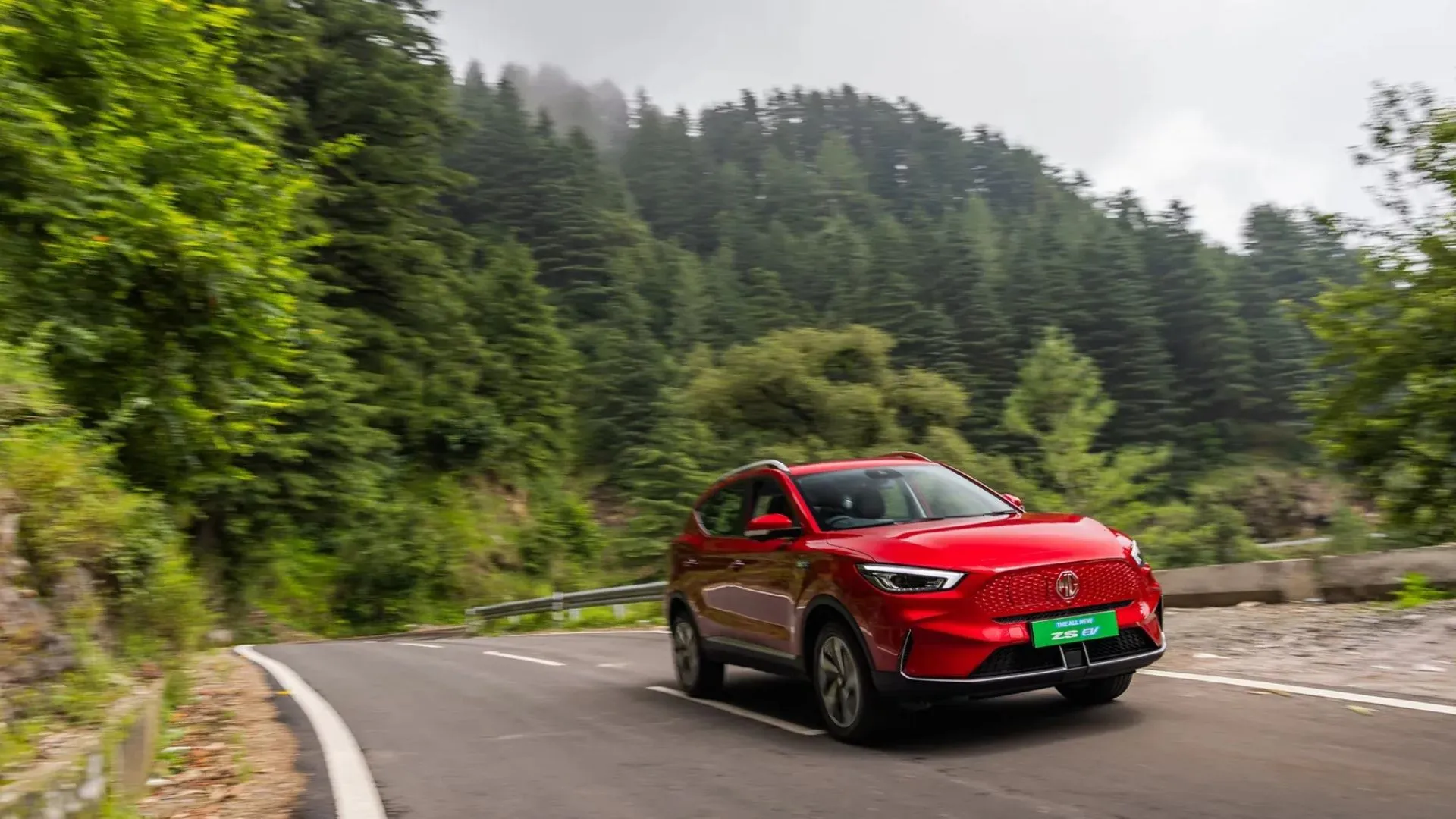
MG ZS EV |
461 km |
355–385 km |
|
Mahindra BE 6 |
682 km |
520–560 km |
|
Tata Harrier EV |
538 km |
420–460 km |
|
Kia EV6 |
528 km |
410–450 km |
Key factors that drain your EV faster on highways:
- Speed: A Mahindra BE 6 at 120 km/h uses 25–30% more battery than at 90 km/h
- AC usage: Running AC in a Hyundai Creta Electric on a hot day reduces range by 30–50 km
- Terrain: Uphill sections through Western Ghats drain battery faster, plan for 20% extra loss
- Weight: Every extra 100 kg reduces range by 5–8%, remove unnecessary boot load
Step 2: Plan Your Route and Map Every Charging Stop
Route planning for an EV trip is not just about the destination. It is about engineering smart legs that end at reliable chargers.
Leg length guide by EV category:
|
EV Category |
Ideal Leg Length |
Best EVs in This Category |
|
Budget EVs |
180–220 km |
Tata Tiago EV, Citroen eC3, Punch EV (Standard) |
|
Mid-Range EVs |
250–320 km |
Nexon EV 45, Creta Electric, MG ZS EV, Curvv EV |
|
Premium Long-Range EVs |
380–450 km |
Mahindra BE 6, Harrier EV, Kia EV9, BMW iX |
Three-Station Rule, always identify:
- Primary charger: your planned stop with verified availability
- Backup A: within 10–15 km of primary, different network
- Backup B: within 20–25 km, even if slower AC charging
Step 3: Understand Charger Types and What Your EV Supports
Not all charging stops are the same. Knowing your EV's charging capability is critical for planning accurate stop durations.
DC Fast Charging Speed Comparison:
|
EV Model |
Max DC Charging |
10–80% Time |
|
Mahindra BE 6 / XEV 9e |
175 kW |
~20 min |
|
Tata Harrier EV |
150 kW |
~30 min |
|
MG ZS EV |
76 kW |
~42 min |
|
Tata Curvv EV |
70 kW |
~40 min |
|
Tata Nexon EV 45 |
50 kW |
~56 min |
|
Tata Punch EV |
50 kW |
~56 min |
|
Hyundai Creta Electric |
50 kW |
~60 min |
|
Citroen eC3 |
30 kW |
~57 min |
What to carry in your EV kit bag:
- Standard portable charging cable (supplied with all EVs)
- Type 2 AC charging cable
- 45-foot 16A extension cord for dhaba or resort emergencies
- Bharat AC adapter for older charging infrastructure
- Phone power bank
Step 4: Follow the 20–80% Charging Strategy
This is the single most important rule for long EV trips. DC fast charging operates at full speed between 10–80%. After 80%, the charging rate slows sharply to protect battery health.
Practical application:
- The Tata Nexon EV 45 at 80% gives you around 390 km of available range, which is comfortably enough for a 300 km leg.
- The Mahindra BE 6 at 80% sits at around 545 km, so a 400 km leg is no problem at all.
- The Hyundai Creta Electric with the 51.4 kWh battery at 80% gives you 378 km, so plan your legs between 270 and 300 km.
- The Tata Punch EV Long Range at 80% gives you around 336 km, making 240 to 260 km legs the sweet spot.
Step 5: Drive Efficiently to Maximize Your Range
Your driving style directly impacts how far you go on every charge.
Recommended driving settings by EV:
|
EV Model |
Best Highway Mode |
|
Tata Nexon EV / Punch EV / Curvv EV |
Eco mode + Regen Level 2 |
|
Mahindra BE 6 / XEV 9e |
Range mode + Regen Level 3 |
|
Hyundai Creta Electric / Ioniq 5 |
Eco mode + i-Pedal |
|
Kia EV6 / EV9 |
Eco mode + Auto Regen Smart |
|
MG ZS EV / Windsor EV |
Eco mode + Regen Level 3 |
|
BMW iX |
Efficient mode + Adaptive Regen |
Best EV Road Trip Routes in India (2026)
|
Route |
Distance |
Best EV for This Route |
Charging Stops |
|
Delhi–Agra–Jaipur |
700 km loop |
Tata Punch EV, Nexon EV, Creta Electric |
2–3 stops |
|
Mumbai–Goa |
590 km |
Mahindra BE 6, Curvv EV, Creta Electric |
1–2 stops |
|
Bengaluru–Mysore–Coorg |
270 km |
Tata Tiago EV, Citroen eC3, Punch EV |
1 stop |
|
Delhi–Rishikesh |
250 km |
Nexon EV 45, Altroz EV, XUV400 Pro |
1 stop |
|
Chennai–Pondicherry (ECR) |
160 km |
Any EV including MG Comet EV |
0–1 stop |
|
Delhi–Ladakh |
2,000+ km |
Mahindra BE 6, Harrier EV, Kia EV6 |
8–10 stops |
EV Road Trip Cost vs Petrol: Real Numbers for 1,000 km
|
Vehicle |
Cost Basis |
1,000 km Cost |
|
Petrol car (15 km/l, ₹103/L) |
Fuel only |
₹6,867 |
|
Tata Nexon EV 45 |
₹18/kWh DC fast charge |
₹3,000 |
|
Mahindra BE 6 |
₹18/kWh DC fast charge |
₹2,400 |
|
Hyundai Creta Electric |
₹18/kWh DC fast charge |
₹3,240 |
|
Tata Punch EV |
₹18/kWh DC fast charge |
₹3,150 |
Savings per 1,000 km trip: ₹3,500–₹4,500 vs petrol.
Add toll waivers for EVs on select highways like Atal Setu in Maharashtra and the savings compound further. The Tata Nexon EV, Mahindra BE 6, and Kia EV6 also require no oil changes, no clutch replacements, and minimal brake wear, saving ₹15,000–₹25,000 annually on maintenance alone.
Conclusion
Long EV road trips in India are not complicated. They just need a little planning. Know your car's real highway range, not the claimed number. Identify your chargers before you leave. Follow the 20–80% rule on every DC fast charge. Use Eco mode and keep your speed around 90 km/h. That is honestly all there is to it.
A Tata Punch EV is ready for the Delhi to Jaipur loop. A Mahindra BE 6 can handle Ladakh. A Hyundai Creta Electric will take you from Mumbai to Goa without drama. The chargers are there. The savings are real. The only thing left is deciding where you want to go.
|
Also Read This |
|
|
Renault Duster vs Kia Seltos vs Hyundai Creta Best SUV Under 20L |
|
Frequently Asked Questions
Karan Bhatia
Karan Bhatia is an automobile expert and reviewer with 8+ years of experience test-driving cars, bikes, and EVs. He provides honest, detailed, and practical reviews that highlight performance, design, safety, and value for money. His expert insights help readers make confident choices when buying their next vehicle.