Table of Content
▼- India's Luxury Car Market in 2026: It Is Growing, and Growing Fast
- Who Is Actually Buying These Cars?
- Top Luxury Car Brands in India 2026
- The Part Nobody Tells You at the Dealership: Depreciation
- How Much Does a Luxury Car Lose in Value?
- Best and Worst Luxury Cars for Resale Value in India
- What Actually Protects Your Resale Value
- GST on Luxury Cars in India 2026: Simpler, but Still Significant
- Is a Luxury Car Actually an Investment: Four Honest Answers
- When Does Buying a Luxury Car Actually Make Sense in 2026?
- Key Risks to Factor In Before You Sign
- Conclusion
A luxury car is not really just a car anymore in India, it is a statement, a milestone, and honestly, a question you keep asking yourself long after the showroom visit. Whether you are a business owner who has truly earned the right to step up, a young professional who finally has the numbers to support the aspiration, or somebody who just wants to know if buying a Mercedes , BMW, or Audi in 2026 makes any real financial sense, this is the guide that kind of tells you both sides of the story, rupee by rupee, even if it feels a bit awkward at first.
The showroom figure is just where the conversation starts. The real answer is buried in depreciation curves, GST slabs, resale patterns, and what kind of buyer you actually are.
India's Luxury Car Market in 2026: It Is Growing, and Growing Fast
India’s high-end car market, was basically valued around USD 4.99 billion in 2026, and it’s projected to climb up to USD 9.19 billion by 2032, with a growth rate roughly 10.71% CAGR. That is the market nearly doubling in under six years, which is a number that sort of demands your attention.
In 2024 sales in India’s luxury tier crossed 50,000 units for the first time, kind of a long-awaited sign that carmakers were chasing for years and years. Then in 2025 it felt like it cooled down a bit, growth was only around 1.6% , and that dip was helped along by currency pressure and a more cautious buying mood from customers. But 2026 is back, with renewed assurance, more optimistic demand and all that. BMW has publicly stated that India's luxury car sales share of total passenger vehicles could double to 5% by 2030, driven by an increasingly young and aspirational buyer base.
Who Is Actually Buying These Cars?
- India counted about 13,600 UHNIs and roughly 8,50,000 HNIs in 2024
- Nearly 20% of those HNIs are under 40, and they’re younger buyers who look for performance plus technology, and even a stronger brand identity too, all in one go.
- Luxury SUVs end up dominating the space with a 52.42% market share , which really points to a move toward bigger, more adaptable vehicles.
- Even so, ICE vehicles still take up 86% of the luxury segment , but luxury EVs are accelerating at a 21.98% CAGR, thats more than four times the speed of the overall segment, overall growth curve.
Top Luxury Car Brands in India 2026
|
Brand |
Approx. Market Share |
Key Highlight in 2026 |
|---|---|---|
|
Mercedes-Benz India |
~40% |
Market leader; launched V-Class LWB in 2026 |
|
BMW India |
~25% |
Strong EV portfolio; 360° buyback programme |
|
Audi India |
~20% |
Expanding into Tier-1 cities |
|
JLR, Volvo, Lexus, Porsche |
~15% |
Niche and ultra-premium segments |
Together, Mercedes-Benz, BMW, and Audi account for nearly 85% of all luxury car sales in India, a level of dominance that says a lot about brand trust and after-sales confidence in this market.
Also Read: BMW vs Mercedes-Benz: Who Leads India's EV Market 2026
The Part Nobody Tells You at the Dealership: Depreciation
If there is one financial reality that defines luxury car ownership in India, it is depreciation. And it hits harder than most first-time premium buyers expect.
How Much Does a Luxury Car Lose in Value?
|
Year of Ownership |
Approximate Value Lost |
|---|---|
|
Year 1 |
~25% of on-road value |
|
Year 3 |
~50% of on-road value |
|
Year 5 |
~65% of on-road value |
To put a real number to that: a Mercedes-Benz GLE bought at ₹95 lakh on-road today could fetch somewhere around ₹33–34 lakh five years from now. That is a depreciation loss of over ₹60 lakh, larger than the purchase price of many mainstream cars.
The average Indian car loses 40–50% of its value in three years. Luxury cars lose more, and they lose it faster. That is the reality you are working with.
Best and Worst Luxury Cars for Resale Value in India
Strong resale performers:
- Mercedes-Benz C-Class , E-Class, and GLE
- BMW 3 Series, 5 Series, X1, X5
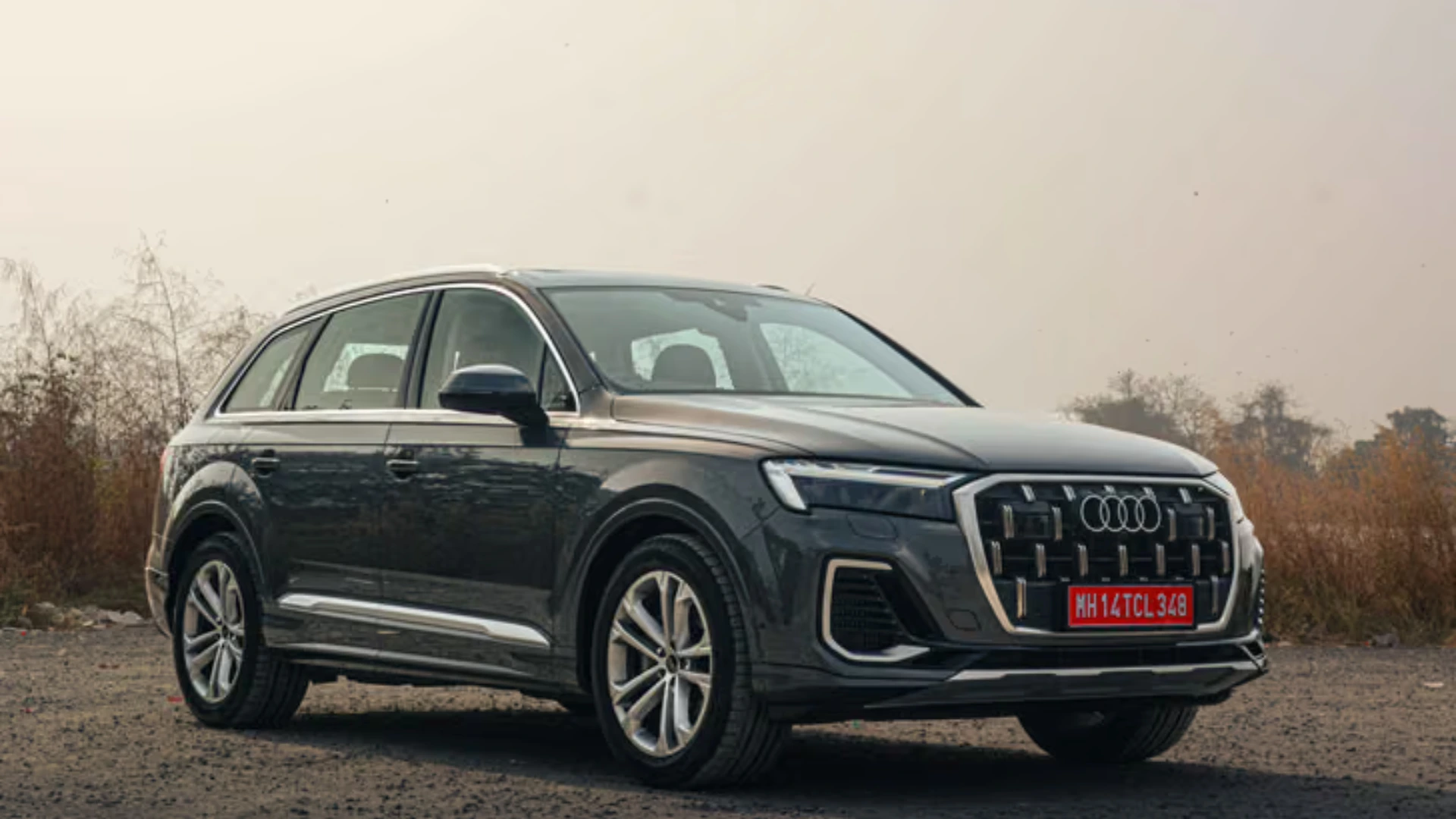
- Audi A4, A6, Q3, Q7
Fastest depreciators:
- BMW 7 Series, Audi A8 flagship sedans lose value the hardest
- Volvo S90, XC90 are excellent cars, but the limited service network outside metros hurts the used-car price significantly
What Actually Protects Your Resale Value
- A complete authorized service history, can add 10–15% to resale price
- Popular colours: White , Silver, and Pearl White they sell the fastest across most Indian markets.
- Mileage under 15,000 km per year, if you want it simpler.
- No aftermarket modifications
- Sunroof a luxury car without one is genuinely harder to move in the used market
Also worth knowing: BMW's 360° Programme and Mercedes-Benz's STAR Agility / Agility+ are OEM buyback schemes that lock in a minimum residual value at the end of 2–5 year ownership tenures. For buyers who do not plan to keep the car beyond five years, these programmes are worth taking seriously, they remove the biggest financial uncertainty of luxury car ownership.
GST on Luxury Cars in India 2026: Simpler, but Still Significant
Post the 56th GST Council meeting in September 2025, India's luxury car tax structure got a meaningful overhaul under what is now broadly called GST 2.0.
|
Vehicle Category |
GST Rate 2026 |
Compensation Cess |
|---|---|---|
|
Small Cars (petrol ≤1200cc, diesel ≤1500cc) |
18% |
Nil |
|
Luxury & Large Cars (petrol >1200cc, diesel >1500cc) |
40% |
Removed |
|
Electric Vehicles (all segments) |
5% |
Nil |
The headline GST rate on luxury cars went up from 28% to 40%, yes. But the removal of the compensation cess, which previously ran up to 22%, means the effective overall tax burden has actually come down for several luxury vehicle categories and become more predictable. A luxury SUV at ₹50 lakh ex-showroom now attracts ₹20 lakh in GST, taking the on-road base to ₹70 lakh, with no cess on top of that.
For buyers considering a luxury EV, the 5% GST rate makes it the most tax-efficient entry into premium car ownership in India today, by a considerable margin.
Is a Luxury Car Actually an Investment: Four Honest Answers
|
Type of Investment |
Verdict |
What It Means |
|---|---|---|
|
Financial / Capital Returns |
Poor |
Sharp depreciation; no capital appreciation |
|
Lifestyle Quality |
Excellent |
Comfort, safety tech, prestige, genuine daily value |
|
Business Asset |
Strong |
Credibility, client confidence, 15% WDV income tax benefit |
|
Collector / Enthusiast |
Niche |
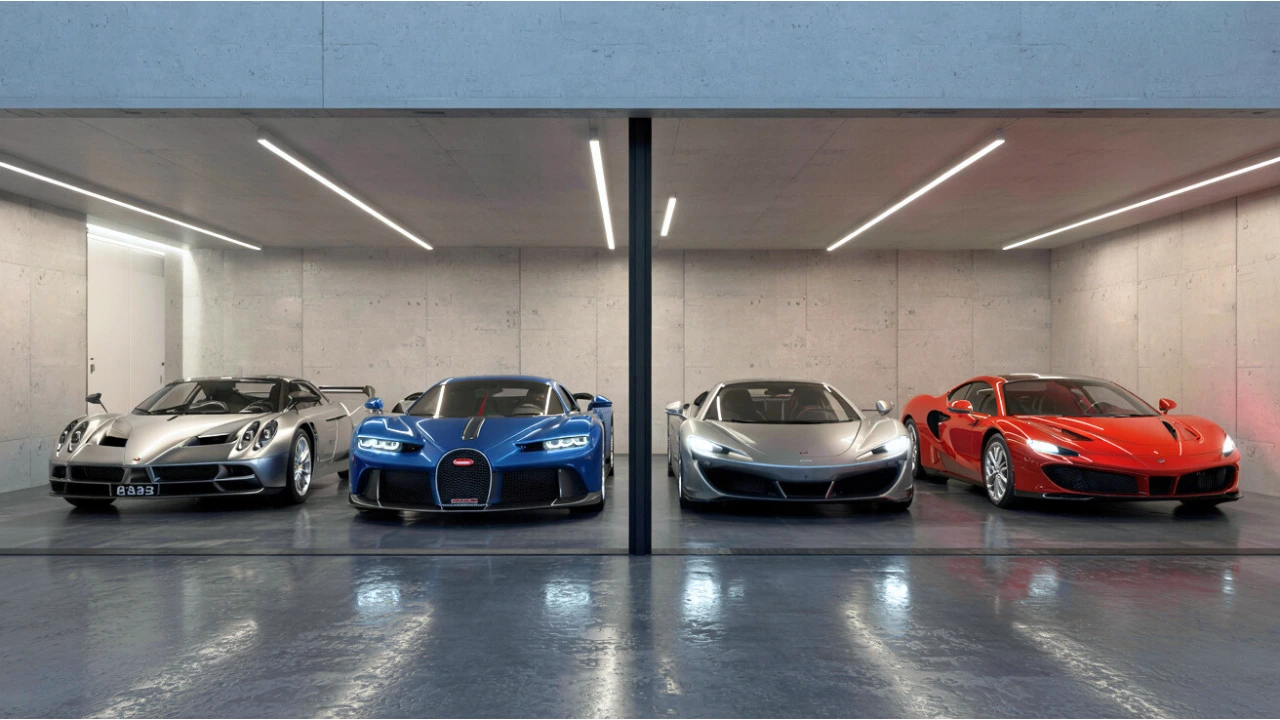
Limited-edition Porsche, Ferrari, Rolls-Royce can appreciate globally |
The honest answer is this: if you are expecting a luxury car to grow your money the way real estate or equities do, it will not. But if you are a business owner who clocks serious kilometres, needs to project credibility, and plans to register the vehicle under a company, the 15% written-down value depreciation benefit under the Income Tax Act for FY 2025–26 can make the purchase considerably more efficient.
Also Read: BMW 7 Series vs Mercedes S-Class: Which Luxury Flagship Wins in 2026 India?
When Does Buying a Luxury Car Actually Make Sense in 2026?
Not every luxury car purchase is the same decision. Here is when it genuinely holds up financially:
- Certified Pre-Owned (CPO): basically the first owner takes the hit on the steepest depreciation. With CPO programmes from Mercedes-Benz, BMW and Audi you usually get manufacturer-backed warranties, plus a verified service record, and that at around 30–50% under the price of a brand new car. So yeah, that’s often where the real value sits for most buyers.
- Luxury EV: with only 5% GST and far lower running expenses, it’s easy to see why cars like the BMW iX or Mercedes-Benz EQS make a compelling argument for premium electric ownership in 2026 . It feels like the math is doing most of the talking.
- CKD-Assembled Models: when the luxury car is locally assembled, CKD for short , it can help you sidestep the heavy customs duties that typically follow fully imported CBU models, and that cost gap is pretty significant especially on vehicles priced above ₹50 lakh
- Growing Tier-2 Cities: Delhi NCR holds 29.42% of India's luxury car market, but Hyderabad, Bengaluru, Ahmedabad, and Pune are seeing genuine brand ecosystem growth, buying in these markets in 2026 is less of a risk than it was three years ago
Key Risks to Factor In Before You Sign
- Currency volatility: EUR/INR has stayed above ₹100 through 2025, Mercedes-Benz, BMW, and Audi have all implemented quarterly price increases as a direct result, and that is not going away soon
- Maintenance costs: Authorised servicing for a German luxury car in India costs significantly more than mass-market vehicles, parts, labour, and specialist diagnostics all command a premium
- Insurance: Comprehensive zero-depreciation coverage on a ₹90 lakh car runs ₹70,000–₹90,000 per year, and skipping zero-dep coverage to save that money is a false economy
- Limited service reach outside metros: Volvo and Lexus both make excellent cars; the resale market has a different opinion because buyers outside metros cannot find service centres easily
- CBU import costs: Fully imported luxury models attract IGST calculated on assessable value plus basic customs duty, the on-road price can be 40–50% above ex-showroom for some CBU models
Conclusion
A luxury car in India in 2026 is not a traditional financial investment, and it does not really pretend to be one. What it is, though, is a genuine lifestyle upgrade, a credible business tool, and for the right buyer with the right plan, something that makes a lot of sense when you go in with both eyes open. The market is growing at 10.71% CAGR. Brands are expanding beyond the usual metros. OEM buyback programmes are taking the sting out of depreciation. And the certified pre-owned and luxury EV segments offer entry points that were not as mature or as well-supported three or four years ago.
Frequently Asked Questions
Karan Bhatia
Karan Bhatia is an automobile expert and reviewer with 8+ years of experience test-driving cars, bikes, and EVs. He provides honest, detailed, and practical reviews that highlight performance, design, safety, and value for money. His expert insights help readers make confident choices when buying their next vehicle.