Table of Content
▼- The Market Nobody Saw Coming
- FY2026 Luxury EV Sales: The Scoreboard
- BMW's Game Plan: The iX1 LWB That Changed Everything
- Why the iX1 LWB works so well in India right now:
- Mercedes-Benz: Premium by Choice or Caught Off Guard?
- Where Mercedes-Benz is still ahead:
- Where the pressure is real:
- The Historic Q1 2026 Shift
- Two Brands, Two Completely Different Bets
- What's Coming Next: The Pipeline Battle
- Conclusion
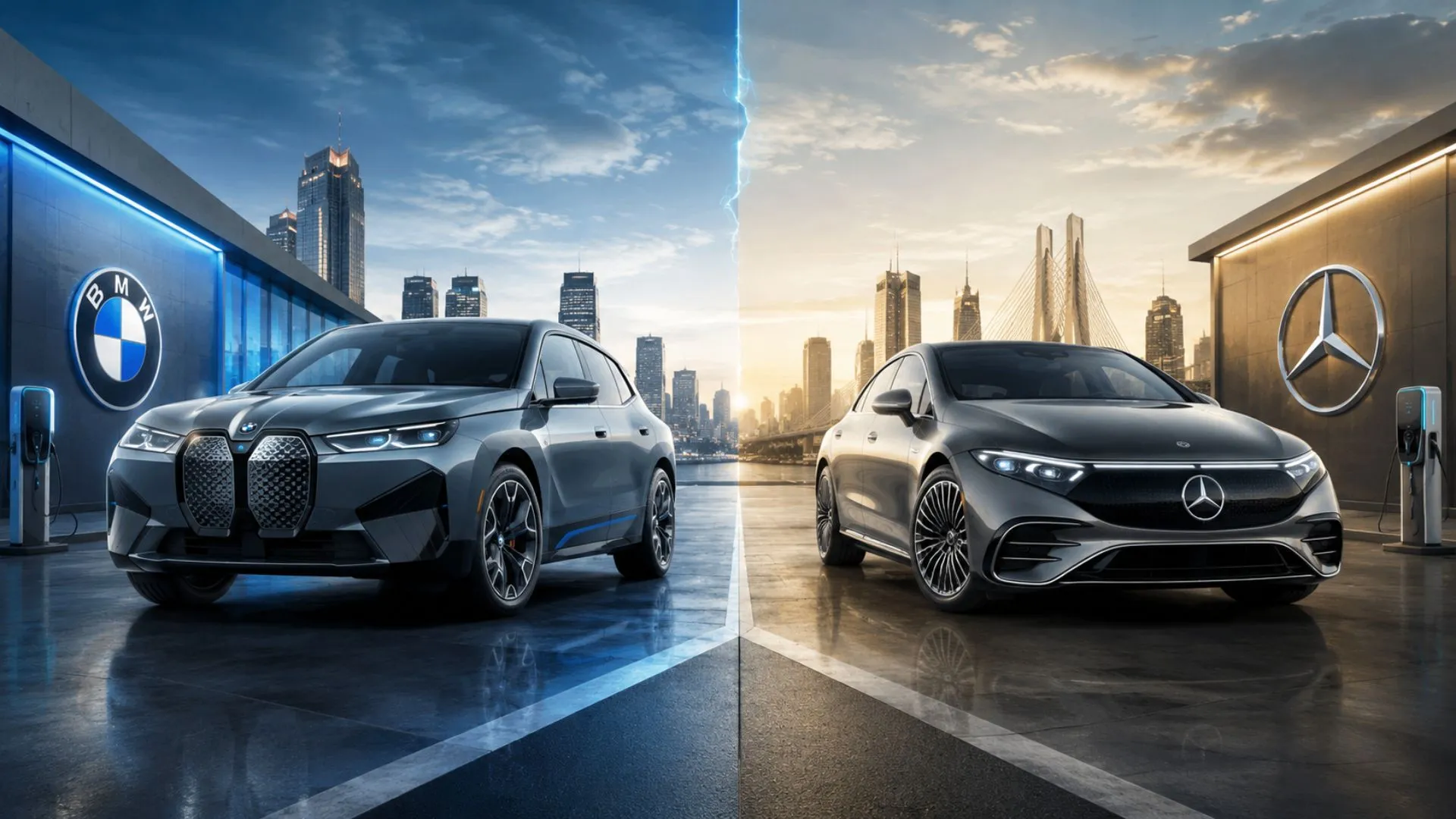
BMW and Mercedes-Benz has always been India’s most closely watched automotive rivalry, it’s like this decades-long duel between two German brands that both want to own the same customer and the same parking spots, and honestly, the same dinner table talk in South Delhi and Bandra. But somewhere in 2026, it changed, first quietly at first and then, kind of loudly once the FY2026 numbers landed. The luxury EV segment, which was barely a blip like five years ago, has turned into the real battleground, and on that particular battlefield, the results are not even remotely close.
India's luxury EV market posted an all-time high of 5,404 units in FY2026, a 61% year-on-year jump from 3,357 units in FY2025. That number on its own is remarkable enough. But what it does not tell you at first glance is that one brand is almost single-handedly responsible for the surge, and it is not the one that has been sitting at the top of India's luxury car sales charts for the last decade, you know.
The Market Nobody Saw Coming
India's luxury EV story is still in its early chapters, kind of. The segment accounts for just 2.71% of the broader EV market in FY2026, down slightly from 3.08% the year before, which tells you something important: the mass-market EV wave is growing faster than the luxury one, yes. But that shrinking share percentage sits against a backdrop of record absolute volumes, which makes it a genuinely interesting time to be in the game.
Both BMW and Mercedes-Benz have been navigating this transition very differently, and those differences are showing up starkly in the sales data right now.
Also Read: What It Actually Costs to Own a Mercedes-Benz E-Class in India
FY2026 Luxury EV Sales: The Scoreboard
Here is the full picture, laid out cleanly:
|
Metric |
BMW |
Mercedes-Benz |
|---|---|---|
|
EV Units Sold (FY2026) |
3,537 |
~1,046 |
|
YoY EV Sales Change |
+124% |
−10% |
|
Luxury EV Market Share |
65%+ |
19.35% |
|
Overall Luxury Car Sales |
~17,000 |
19,363 |
|
Q1 2026 Retail Units |
4,944 |
4,863 |
|
Top-Selling EV Model |
iX1 LWB |
EQS SUV |
|
Entry EV Price |
₹49 lakh |
₹75 lakh+ |
BMW outsold Mercedes-Benz in the luxury EV segment by more than three times. Its EV market share went from just over 47% in FY2025 to well over 65% in FY2026. Mercedes, on the other hand, sold 110 fewer EVs than the previous year, and its share dropped from 34.49% to 19.35%, the sharpest decline among all luxury EV players, which is a number that probably deserves a longer conversation inside Mercedeshaus Stuttgart, actually.
BMW's Game Plan: The iX1 LWB That Changed Everything
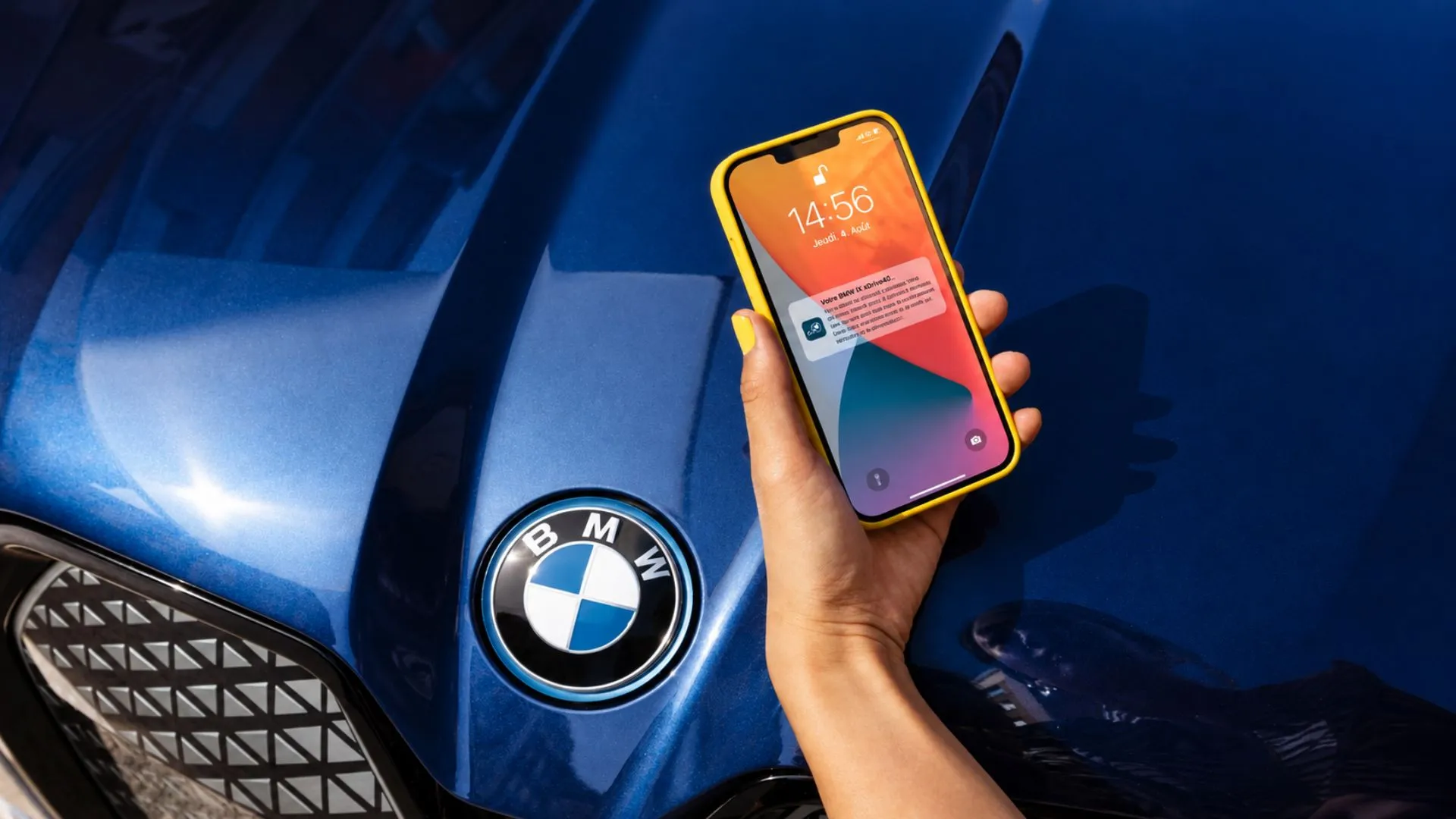
If BMW's 2026 EV story has one name written across it, it is the iX1 Long Wheelbase. Assembled locally at BMW's Chennai facility and launched at Auto Expo 2025, this one product accounted for roughly 3,200 of BMW's 3,537 EV units in FY2026. That is nearly 90% of BMW's entire luxury EV volume coming from a single model, which is either a vulnerability depending on how you look at it, or a very clear sign that BMW found exactly what Indian buyers were waiting for.
Why the iX1 LWB works so well in India right now:
- Price: Starting at ₹49 lakh (ex-showroom), it sits at a price point where a luxury badge actually becomes reachable for the first time in the EV space
- Local Assembly: Built in Chennai, which means no CBU import duties eating into the cost structure
- LWB Body: The long wheelbase is not a marketing add-on here, it genuinely addresses how Indian luxury buyers actually use their cars, with a driver and a passenger in the rear, both with expectations
- Range: 531 km (MIDC) on one single charge, which handles a Delhi–Agra–Delhi run pretty comfortably, like no sweat
- Fast Charging: 120 km of range came back in 10 minutes on a 130 kW charger
- Cabin: Dual curved displays, Harman Kardon audio with 12 speakers, M Sport interiors, a panoramic sunroof, and front seats that are electrically adjustable with massage function, all of this sitting under ₹55 lakh
In Q1 2026 specifically, BMW sold 1,185 EVs across BMW and Mini models combined, an 83% jump year-on-year, holding a 70% luxury EV market share for that quarter alone.
Also Read: BMW vs Mercedes-Benz Buyback Plans India 2026 Ultimate Guide
Mercedes-Benz: Premium by Choice or Caught Off Guard?
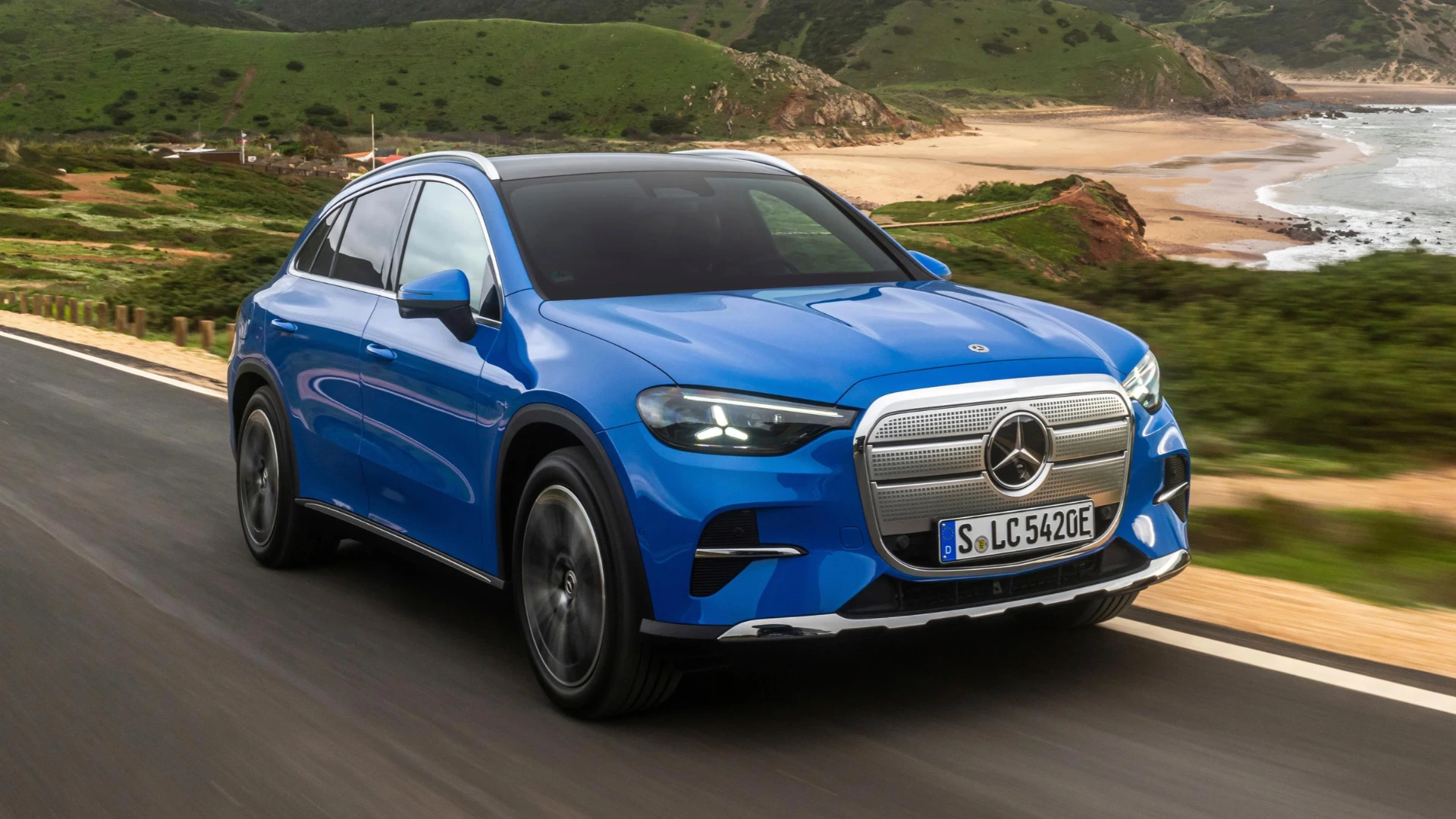
Mercedes-Benz is very deliberately not playing the volume game, and it says so openly enough. The brand's "value over volume" strategy means its EV focus sits firmly at the ₹1 crore and above end of the market. Its top-end portfolio now accounts for 27% of all Mercedes sales in India, AMG performance models grew by 34% in the previous year, and the EQS SUV, starting at ₹1.34 crore, is where most of its EV attention is currently pointed.
Where Mercedes-Benz is still ahead:
- Annual luxury car sales leader at 19,363 units for FY2026
- E-Class LWB remains the single best-selling luxury car in India overall
- Revenue per unit is at a record high, which is a different kind of winning, kind of
- Strong brand equity in the ₹1 crore-plus segment where it faces very little direct competition from BMW on EVs
Where the pressure is real:
- Entry-segment car sales fell 18% YoY in FY2026, and that is a significant number
- Two consecutive price hikes in 2026, a 4% increase and then an additional 2–4% in Q2, citing freight costs, euro-rupee movement, and geopolitical disruptions, are making its lineup progressively less accessible
- The sub-₹70 lakh luxury EV space, the fastest-growing tier in the segment, currently has no Mercedes answer on the market
The upcoming CLA Electric, expected at ₹55–60 lakh, is Mercedes's answer to the iX1 LWB. It has not launched yet as of May 2026, and every month it stays in the pipeline is another month BMW compounds its first-mover advantage, so.
The Historic Q1 2026 Shift
For context, Mercedes-Benz was ahead of BMW by 1,734 units in Q1 2023 . Then by Q1 2025, that difference had become pretty much tiny, only 39 units . And in Q1 2026 , BMW tallied 4,944 units , while Mercedes-Benz came in at 4,863 . That 81-unit quarterly lead pretty much closed the door on what had been a long and steady stretch at the summit for the three-pointed star.
The EV performance was the deciding factor. BMW registered 1,047 EV registrations in that quarter. Mercedes logged approximately 241. That is not a gap that gets closed through brand reputation alone, you know.
Two Brands, Two Completely Different Bets
|
Dimension |
BMW |
Mercedes-Benz |
|---|---|---|
|
Core Strategy |
Volume + Electrification |
Exclusivity + Premium Margin |
|
EV Price Entry Point |
₹49 lakh (iX1 LWB) |
₹75 lakh+ (EQB) |
|
Target Buyer |
Aspiring luxury + EV-first buyers |
Established ultra-premium loyalists |
|
Local EV Manufacturing |
Yes, iX1 LWB, i5 LWB (upcoming) |
Limited |
|
2026 EV Pipeline |
iX3, i5 LWB, Mini Aceman EV |
CLA Electric (awaited) |
|
Primary Risk |
Margin compression at entry tier |
Market share erosion in growth segment |
What's Coming Next: The Pipeline Battle
BMW has announced 23 new model launches in India by end of 2026. That includes the i5 LWB electric sedan, locally assembled at Chennai, expected in the ₹90 lakh–₹1 crore bracket. The iX3 follows later in the year. The Mini Aceman EV adds another entry point for the group's EV push overall.
Mercedes-Benz's answer hinges almost entirely on the CLA Electric. If that car arrives on time, at ₹55–60 lakh, with the right equipment and range numbers, Mercedes can re-enter the entry luxury EV conversation in a meaningful way. If it is delayed, or lands above ₹65 lakh, the window gets significantly harder to reclaim, honestly.
India's luxury EV market is forecast to grow at a 21.98% CAGR through 2031. Both brands are making long-term bets here, not just quarterly plays.
Conclusion
BMW vs Mercedes-Benz in India's luxury EV market 2026 tells you everything about where this industry is heading. BMW made luxury EVs reachable, built them locally, and priced them smartly, and the market responded with 65% share. Mercedes-Benz is still the annual overall leader, the revenue story is intact, and the brand equity is undeniable. But the EV gap is wide, the CLA Electric is still missing from showrooms, and the momentum is clearly with the propeller right now, not the star.
Frequently Asked Questions
Karan Bhatia
Karan Bhatia is an automobile expert and reviewer with 8+ years of experience test-driving cars, bikes, and EVs. He provides honest, detailed, and practical reviews that highlight performance, design, safety, and value for money. His expert insights help readers make confident choices when buying their next vehicle.