Table of Content
▼- Why Colour Choice Matters More in the Luxury Segment
- Luxury Car Depreciation in India: The Baseline
- The Colour Hierarchy: Best to Worst for Luxury Resale
- 1. Pearl White
- 2. Silver and Grey Metallic
- 3. Black
- 4. Navy Blue and Deep Blue
- 5. Red, Orange, Yellow
- 6. Matte Finishes
- Luxury Car Colour vs. Resale Value: Complete 2026 Reference
- Regional Colour Preferences: Where Your Car Will Sell
- Colour Rules by Luxury Segment
- How to Protect Your Luxury Car's Colour Value
- Conclusion
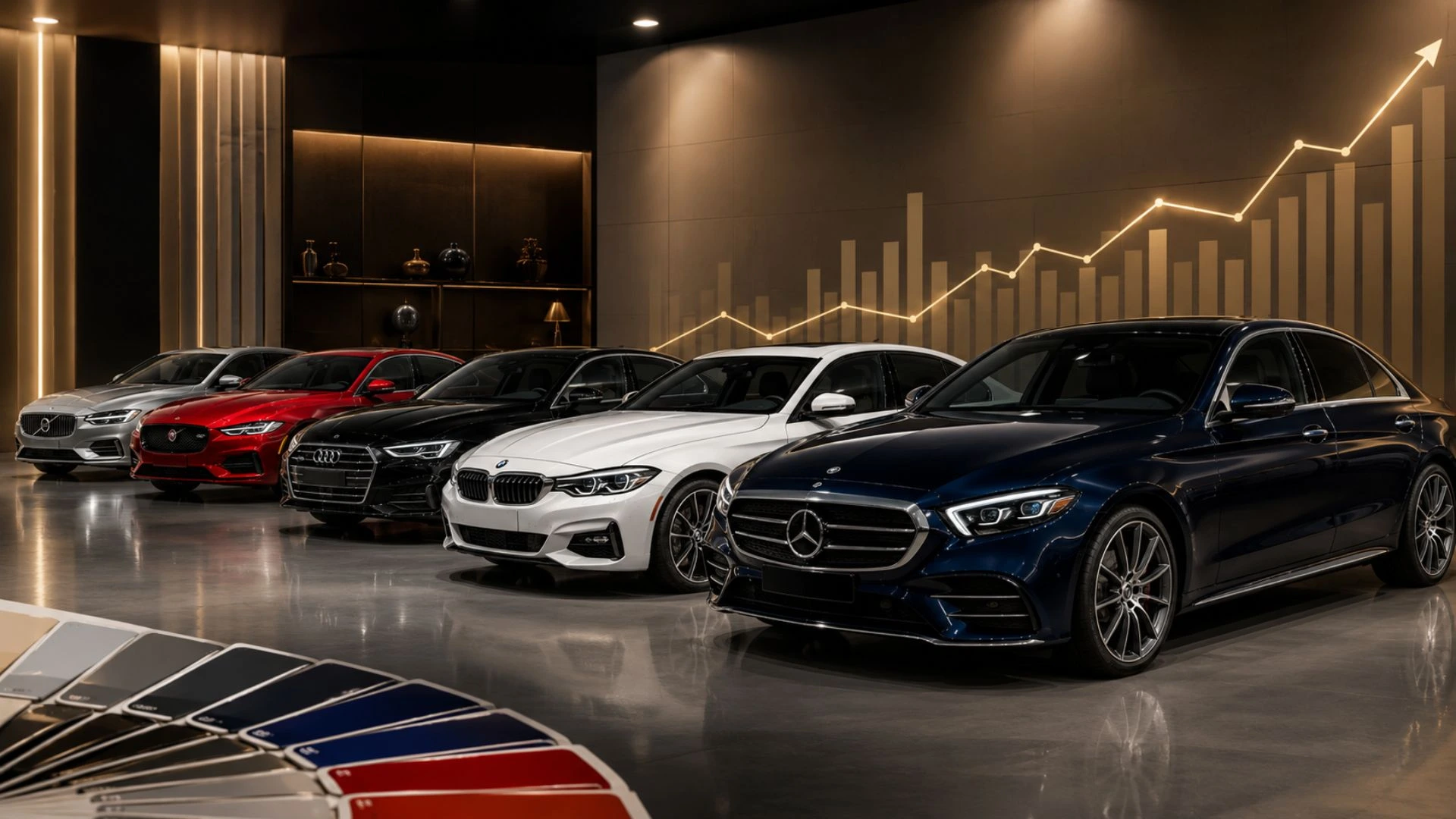
Colour choice impacts luxury car resale value more than most buyers realise and in India's booming premium segment, the wrong shade can quietly cost you ₹3–10 lakh at the time of sale. While most luxury buyers spend months agonizing over trim levels and engine variants, the colour decision often takes five minutes. That impulse can be an expensive one.
India's used luxury car market is maturing fast. With the high-end segment valued at USD 4.99 billion in 2026, today's second-hand buyers are sharper, more data-driven, and far less forgiving of a colour that limits their options. This guide tells you exactly which shades protect your capital, and which ones quietly erode it.
Why Colour Choice Matters More in the Luxury Segment
At the mass-market end, colour is a style preference. At the luxury end, it is a financial decision. Here is why the stakes are higher:
- Luxury cars depreciate at 22–28% in Year 1 alone, a colour penalty on top of that compounds quickly
- The used luxury buyer pool in India is smaller than the mainstream market, meaning niche colours find fewer takers
- Tier-2 resale markets for luxury cars are thin, colour liquidity drops sharply outside metros
- A complete authorised service history adds 10–15% to resale price; a good colour choice adds another layer of protection
In one line: In India's luxury segment, the colour you choose at purchase is effectively the resale price you set for the future.
Also Read: E20 vs E85 vs E100: Which Fuel Works Best for Indian Drivers 2026
Luxury Car Depreciation in India: The Baseline
Before discussing colour, understand the depreciation landscape you are dealing with:
|
Ownership Period |
Depreciation Range |
Colour Effect on Resale |
|---|---|---|
|
Year 1 |
22–28% |
Maximum impact, colour drives buyer psychology hardest here |
|
Years 2–3 |
48–54% cumulative |
Bold colours begin narrowing the buyer pool noticeably |
|
Years 4–5 |
60–68% cumulative |
Only white, silver, and black retain wide enough demand |
To put a real number on it: a Mercedes-Benz GLE bought at ₹95 lakh could fetch just ₹33–34 lakh five years later, a loss of over ₹60 lakh. Colour is one of the few variables you can control at the point of purchase.
The Colour Hierarchy: Best to Worst for Luxury Resale
1. Pearl White
White accounts for nearly 40% of all car sales in India and consistently tops used-car demand charts. In the luxury segment, Pearl White goes one step further, it reads as exclusive without sacrificing liquidity. White cars typically sell 10–15% faster in the used market. Its heat-reflective properties, low-maintenance appeal, and broad cultural acceptance (Vastu-friendly, auspicious) make it the single safest colour pick across all geographies and all luxury sub-segments.
|
Best suited for
|
Not ideal for
|
2. Silver and Grey Metallic
Silver is the second-most-preferred colour in India and for good reason, it hides road dust, minor scratches, and swirl marks better than almost any other shade. In India's heat and grime, that matters enormously at resale because the car looks maintained even when it has not been detailed in weeks. Dark graphite and Space Grey metallic variants hold resale value nearly as well as white and are increasingly preferred by executives who want something understated but premium.
|
Best suited for
|
Not ideal for
|
3. Black
Black signals luxury authority and professionalism, so it pretty much ends up leading the premium reservations in Delhi, Mumbai, and Bengaluru. But black luxury cars can also pull in around 5–10% less when you resell them in hot and dusty markets, because second hand buyers often weigh in the day-to-day maintenance cost, like it’s part of the deal. Black absorbs heat, shows every speck of dust and every micro-scratch, and demands frequent detailing, costs that a Jaipur or Nagpur buyer will deduct from their offer without hesitation.
|
Best suited for
|
Not ideal for
|
4. Navy Blue and Deep Blue
Navy and deep blue are kind of coming up among younger luxury buyers, and they are getting more and more popular as a premium city choice. Still, their pull seems to live mostly in metros and within one rather specific buyer set. Outside tier-1 cities the resale liquidity starts to get noticeably weak. Like, a navy BMW X5 in Delhi sells in weeks, but the same vehicle when listed in Lucknow or Bhopal can linger for months, and then the seller feels the pressure straight in that final pricing.
5. Red, Orange, Yellow
Bold shades look sensational at delivery and feel genuinely exciting for the first year. The resale reality is harsher: non-neutral colours like red, bright orange, and yellow sell at a 3–10% discount relative to the same car in white or silver. For a luxury car priced at ₹80 lakh–₹1 crore, that is a direct ₹2.4–10 lakh hit at the time of sale. The only exception is purpose-built performance cars like BMW M Series, Porsche 911,where rare factory colours can command an enthusiast premium.
6. Matte Finishes
Matte wraps and factory matte options have surged in luxury deliveries through 2024–25.The issue is kind of structural: matte paint cannot really be machine-polished, so it needs specialised products, and even minor damage shows up more unforgivingly than it would on gloss. Most Indian resale buyers arent set up, or just not interested, to take on that ongoing maintenance burden. Metallic and pearl finishes, seem to do better pretty consistently at resale time. And if you still want that distinctive vibe, go for a deep metallic shade instead of a factory matte finish.
In one line: Matte looks premium at delivery. The Indian used-car buyer does not want to pay for the complexity.
Also Read: Luxury Car in India 2026: Smart Investment or Expensive Mistake
Luxury Car Colour vs. Resale Value: Complete 2026 Reference
|
Colour |
Resale Rating |
Resale Impact |
Verdict |
|---|---|---|---|
|
Pearl White |
Excellent |
Sells 10–15% faster |
Buy without hesitation |
|
Silver / Grey Metallic |
Very Good |
Hides dust, strong demand |
Safe long-term pick |
|
Black |
Moderate |
5–10% less outside metros |
Best for city-only use |
|
Navy / Deep Blue |
Moderate |
Metro niche only |
Moderate risk |
|
Red / Orange / Yellow |
Poor |
3–10% resale discount |
Avoid if resale matters |
|
Matte Finish |
Poor |
Shrinks buyer pool significantly |
High risk |
Regional Colour Preferences: Where Your Car Will Sell
Colour is not just a national preference, it is a hyperlocal one. The same colour that commands a premium in South Delhi can drop your asking price in Ahmedabad:
|
Region |
Top Colour Choices |
Colours to Avoid |
|---|---|---|
|
North India (Delhi, UP, Rajasthan) |
White, Silver |
Black, Deep Blue |
|
South India (Bengaluru, Chennai) |
White, Silver, Bright Blue |
Matte finishes |
|
Metro cities (pan-India) |
Black, Pearl White, Grey |
Neon, Custom |
|
Tier-2 & Rural Markets |
White, Silver |
Black, Matte, Bold |
|
Gujarat / Ahmedabad |
White, Silver |
Black, Dark Blue |
Colour Rules by Luxury Segment
The correct colour really also depends on what kind of luxury car you are grabbing, like what is actually inside the buyers head at the time.
- Luxury sedans: Mercedes E-Class, BMW 5 Series, Audi A6, Black, Silver, and Pearl White seem to pull the widest set of people in. These shades signal a kind of professionalism, and yes they get actively chased by chauffeur- driven owners.
- Luxury SUVs: BMW X5, Mercedes GLE, Audi Q7, Pearl White and Silver tend to win the resale game. Black works fine in big cities, but it can take a climate related hit in tier-2 markets, so the value drops a bit sooner.
- Flagship limousines: BMW 7 Series , Mercedes S-Class. These models take the biggest hit in depreciation, no matter the color. But still, White and Black are basically the only tones with real used-car liquidity, the rest are kind of thin compared to that.
- Performance cars: BMW M Series, Porsche, AMG. Here the rules flip, honestly. A rare factory colour (Frozen Orange, Python Green, Aventurine Red) can end up asking more money from enthusiasts over the usual neutral shades, where demand is more generic.
How to Protect Your Luxury Car's Colour Value
Choosing the right colour is step one. Protecting it is step two:
- Apply Paint Protection Film (PPF) at delivery, it preserves the factory finish and is a proven selling point for resale buyers
- Use ceramic coating on top of PPF for UV protection, especially critical for black and dark colours
- Park in covered or shaded areas as UV fading on red, blue, and orange accelerates depreciation faster than mechanical wear
- Maintain original factory paint as an aftermarket repaint immediately signals an accident history to experienced used-car buyers
- Keep a full authorised service history combined with the right colour, this can add 10–15% to your final resale price
Conclusion
Colour choice impacts luxury car resale value in ways that compound silently over every year of ownership. The buyer who picks Pearl White or Silver Metallic is not making a conservative choice, they are making a financially intelligent one. In India's luxury segment, where depreciation already strips 22–28% of value in Year 1, adding a colour penalty on top is a preventable loss. Buy in white or silver if broad resale liquidity matters. Choose black only if you are staying in a metro and parking indoors. Avoid matte finishes and bold shades unless you are buying a performance car for enthusiast appeal, and you are comfortable holding it until the right buyer comes along. The right colour does not just protect your resale value. It protects your entire ownership investment.
Frequently Asked Questions
Karan Bhatia
Karan Bhatia is an automobile expert and reviewer with 8+ years of experience test-driving cars, bikes, and EVs. He provides honest, detailed, and practical reviews that highlight performance, design, safety, and value for money. His expert insights help readers make confident choices when buying their next vehicle.
_1790319921.webp)