Table of Content
▼- What Is Collision Coverage Insurance?
- How Does Collision Coverage Insurance Work in India?
- 3 Policy Types and Which One Covers Collision?
- What Collision Coverage Insurance Includes and Excludes
- Covered
- Not Covered
- IDV and Premium Calculation for 2026
- Depreciation Table (IRDAI Standard, 2026)
- 6 Add-Ons That Make Collision Coverage Insurance Actually Powerful
- When Should You Buy Collision Coverage Insurance?
- How to File a Collision Insurance Claim in India
- Conclusion
Your car moves on Indian roads. Collision coverage insurance keeps your wallet protected.
With over 4.5 lakh road accidents reported every year in India, driving without collision protection is not a calculated risk, it is a financial disaster waiting to happen. One wrong turn, one slippery road, one distracted moment, and the repair bill hits you harder than the impact.
This guide breaks down exactly what collision coverage insurance means in India’s 2026 regulatory framework, how it is structured under IRDAI rules, and which add-ons actually make it worth buying.
What Is Collision Coverage Insurance?
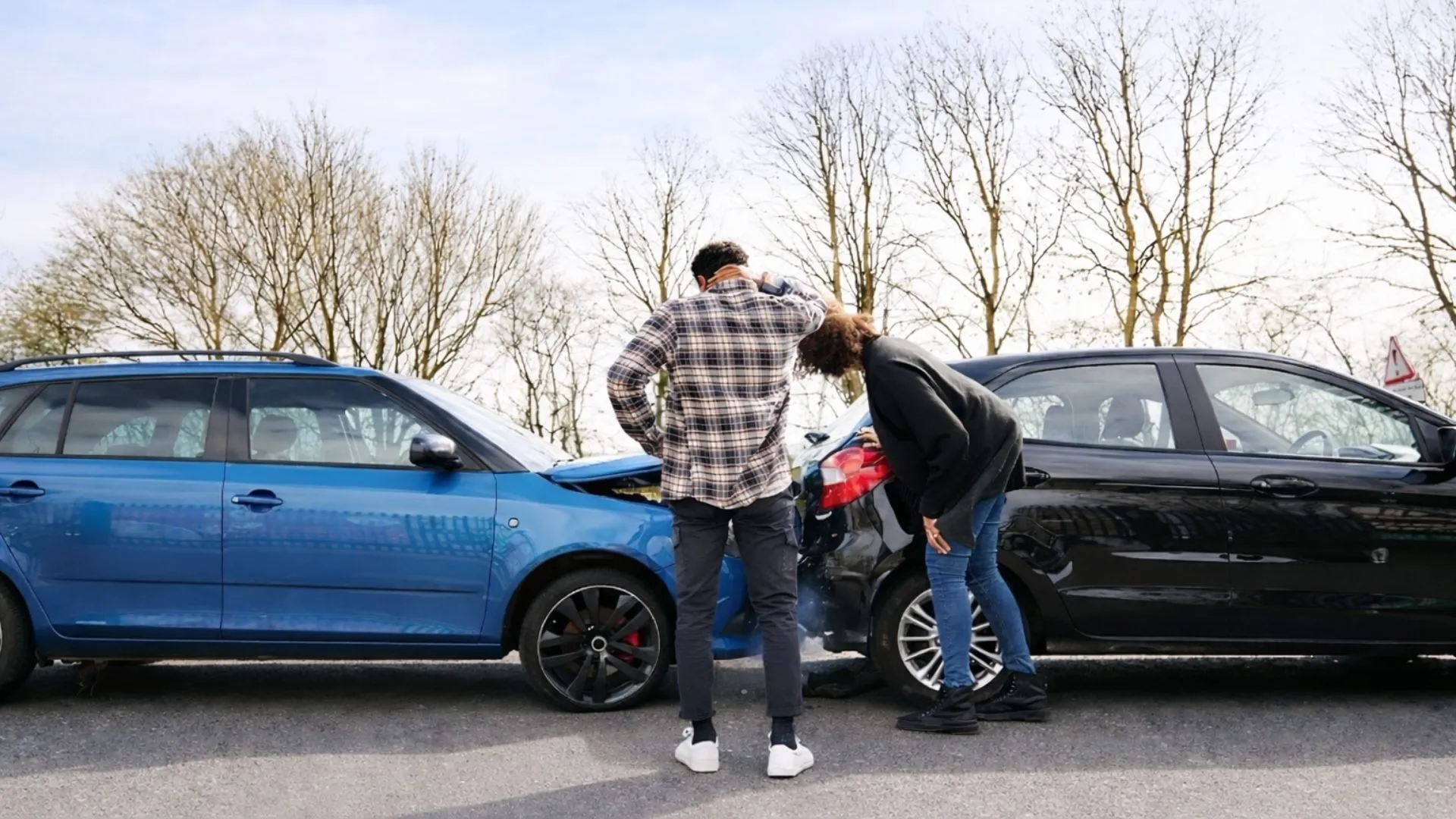
Collision coverage insurance pays for repair costs when your vehicle sustains damage from hitting another vehicle or a stationary object like a wall, divider, pole, or tree, regardless of who caused the accident.
At-fault or not, your repair costs are covered.
Key Fact for Indian Car Owners:
- Collision coverage is not available as a standalone policy in India.
- It sits inside the Own Damage (OD) component of either a standalone OD plan or a comprehensive car insurance plan, both regulated by IRDAI.
How Does Collision Coverage Insurance Work in India?
When your insured vehicle sustains collision damage, your insurer pays for repairs or part replacements up to the vehicle’s Insured Declared Value (IDV), minus accumulated depreciation and your applicable deductible.
Real Example
Your car collided with a pole while you were reversing it into the parking area. The rear bumper of the car shows scratches and broken sensors, and a dent exists on one side of the car. The total cost for repairs amounts to ₹22,000. The insurance company pays for repairs through a cashless network garage when the driver uses OD collision coverage. You pay only the deductible.
That is how collision coverage insurance works, fast, direct, and without requiring you to prove who was at fault.
Also Read: How To File A Complaint Against Wrong Traffic Challan in 2026
3 Policy Types and Which One Covers Collision?
|
Feature |
Third-Party Only |
Standalone OD |
Comprehensive |
|---|---|---|---|
|
Collision Coverage |
No |
Yes |
Yes |
|
Third-Party Liability |
Yes |
No |
Yes |
|
Theft & Natural Disasters |
No |
Yes |
Yes |
|
Add-Ons Available |
No |
Yes |
Yes |
|
Legally Mandatory |
Yes |
No |
No |
|
Best For |
Old/low-value cars |
Flexible buyers |
New/high-value cars |
Important: Third-party-only insurance is the one every Indian car owner is legally required to hold and covers zero collision damage to your own vehicle. You need OD or comprehensive coverage for that.
The comprehensive plan stands as the most suggested choice. The policy offers combined protection, which includes collision coverage and theft protection and natural disaster coverage and third-party liability.
What Collision Coverage Insurance Includes and Excludes
Covered
- Vehicle collision with another vehicle
- Vehicle impact with a non-moving object
- Single-car accidents which involve vehicles losing control due to skidding
- Rollover accidents
- Traffic incidents which involve drivers being responsible for the crash and drivers who share no blame for the accident
Not Covered
- Third-party death or injury
- Accidents which involve drivers under the influence of alcohol or unlicensed drivers
- Damage which results from normal usage or equipment breakdown
- Damage which occurs outside the territory of India
- War-related events and nuclear incidents and radioactive incidents
IDV and Premium Calculation for 2026
The Insured Declared Value (IDV) is your car’s current market value and the maximum your insurer will pay in case of total loss or theft. Get the IDV wrong and you either overpay on premiums or get shortchanged on a claim.
Formula: OD Premium = (IDV × Rate) + Add-on Costs − Applicable Discounts
Depreciation Table (IRDAI Standard, 2026)
|
Vehicle Age |
Depreciation Rate |
|---|---|
|
Up to 6 months |
5% |
|
6 months – 1 year |
15% |
|
1 – 2 years |
20% |
|
2 – 3 years |
30% |
|
3 – 4 years |
40% |
|
4 – 5 years |
50% |
The IRDAI standard deduction rules for vehicle insurance establish a ₹1,000 deduction for vehicles with engine capacities up to 1500cc and a ₹2,000 deduction for vehicles with engine capacities beyond 1500cc. The total loss status of a vehicle is determined when repair expenses reach 75% of its insured declared value.
Also Read: How to Register for Bharat Series (BH) Plates in 2026 Step-by-Step Guide
6 Add-Ons That Make Collision Coverage Insurance Actually Powerful
Basic OD collision coverage does the job. The right add-ons make it bulletproof.
- Zero Depreciation Cover
Eliminates depreciation deductions on replaced parts. Highly recommended for cars under 5 years old. A bumper repair that would cost ₹18,000+ out of pocket becomes fully cashless.
- Engine Protection Cover
The cover protects engines from damage that occurs during waterlogging and hydrostatic lock events. Cities that face frequent flooding need this equipment which is essential for their safety.
- Return to Invoice Cover
In case of total loss, you receive the original on-road purchase price, not the depreciated IDV. Critical for new car owners with an active bank loan.
- NCB Protection Cover
Preserves your no-claim bonus, up to a 50% discount on renewal, even after filing a collision claim. Without this, one claim resets your bonus to zero.
- Roadside Assistance
The service provides coverage for towing services with emergency repairs and breakdown assistance which follows a vehicle collision. The service provides its most beneficial assistance to users who drive on highways and through areas with low light conditions.
- Consumables Cover
Pays for nuts, bolts, engine oil, coolant, and other consumables replaced during post-collision repairs, costs that standard OD policies exclude.
When Should You Buy Collision Coverage Insurance?
- Your car is financed through a bank loan, lenders often require OD cover
- You drive a new or high-value vehicle
- You commute regularly in high-traffic metro areas
- You are a new driver or recently relocated to a new city
- Your car is parked in crowded, unguarded, or basement areas overnight
If any one of these applies to you, collision coverage is not optional, it is necessary.
How to File a Collision Insurance Claim in India
|
Step |
Action |
|---|---|
|
Step 1 |
Inform your insurer immediately, via app, website, or helpline |
|
Step 2 |
Document everything, photos and videos of all damage at the scene |
|
Step 3 |
File an FIR if required, it is mandatory for major accidents |
|
Step 4 |
Take the vehicle to a cashless network garage or authorised workshop |
|
Step 5 |
The insurer appoints a surveyor within 24–72 hours (IRDAI mandate) |
|
Step 6 |
The claim is settled within 30 days of receiving complete documentation |
Conclusion
The year 2026 requires vehicle owners to have collision coverage, which provides essential accident financial protection. You need to select either standalone own-damage (OD) coverage or comprehensive coverage from an IRDAI-approved insurer while verifying your IDV value and adding zero depreciation and NCB protection. People must examine policy information in detail before they make a signature because accidents will happen on Indian roads and financial problems will follow an accident.
Also Read This |
|
|---|---|
|
Renault Duster vs Kia Seltos vs Hyundai Creta Best SUV Under 20L |
Tata Sierra vs MG Hector vs Kia Seltos Which SUV Is Best Under 15 Lakh |
Frequently Asked Questions
Aakash Mehra
Automotive Journalist & Car Reviewer. Aakash Mehra is a seasoned automotive journalist with over 9 years of experience in car journalism and consumer-focused reviews. Having test-driven more than 550+ vehicles, he delivers detailed comparisons, expert insights, and unbiased advice to help readers confidently choose the right car.