Table of Content
▼- The Reality Of Roadside Breakdowns
- Essential Medical And Visibility Gear
- First Aid Kit Essentials
- Flashlights And Warning Signals
- Important Vehicle Repair Equipment
- Portable Jump Starter
- Flat Tire Kit
- Supporting Repair Tools
- Survival And Comfort Supplies
- Drinking Water And Nonperishable Food
- Climate Control Equipment
- Navigation Tools
- Conclusion
- Also Read This
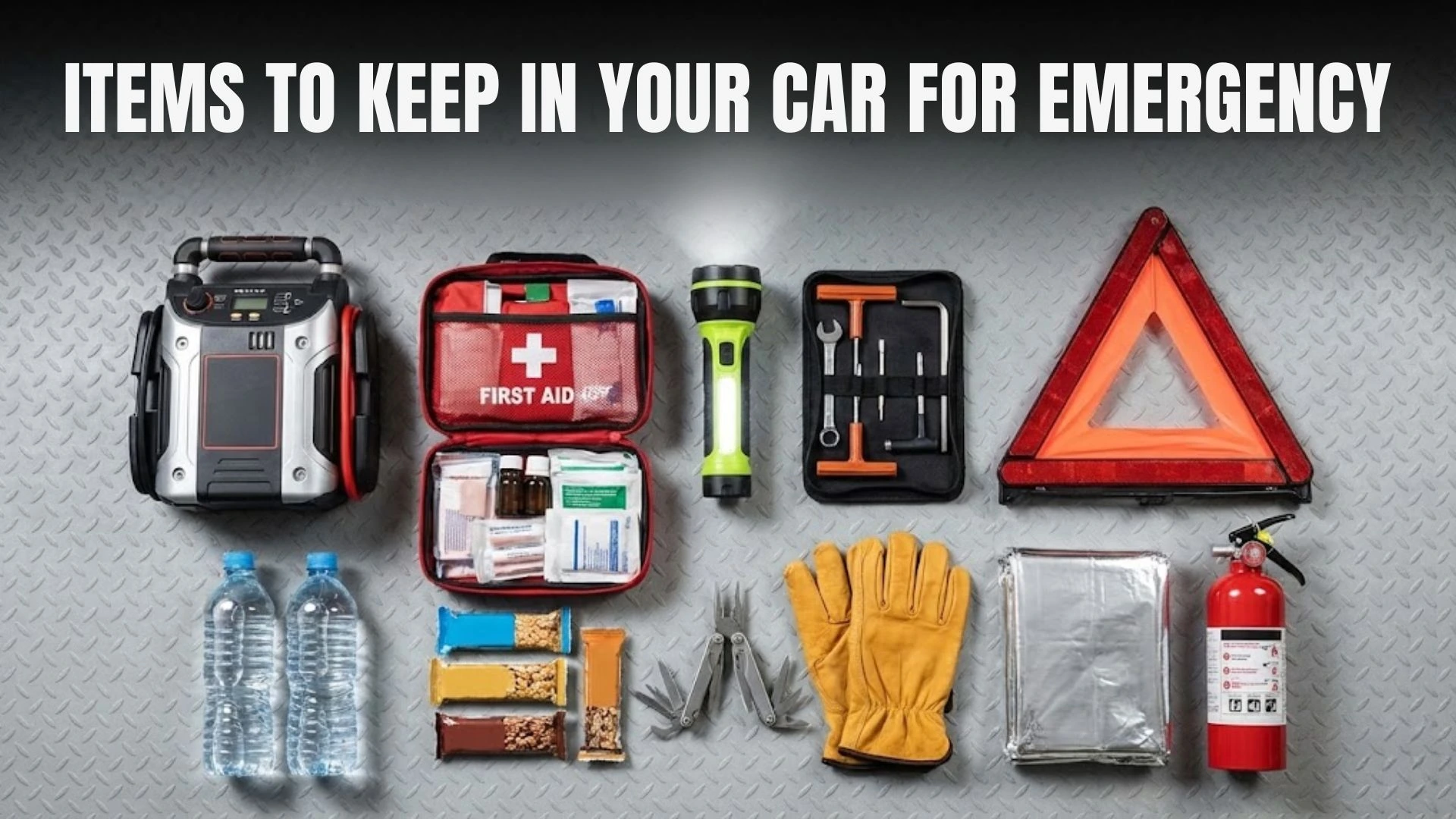
If you are wondering about the best items to keep in your car for emergency, the absolute essentials include a well stocked first aid kit, a portable jump starter, flashlights, a flat tire kit, and drinking water. Packing these items to keep in your car for emergency ensures you remain safe, warm, and fully prepared to handle any unpredictable roadside situation.
The Reality Of Roadside Breakdowns
You are driving down a lonely road in the middle of nowhere. All is going well until the engine sputters. The car slows to a crawl, and then it stops outright. Smoke rises from the hood, the cabin gets colder, and your cell phone battery is dying.
While this sounds like a common nightmare, it is a statistical reality for millions of drivers. Data shows that drivers in the United States experience approximately 69 million vehicle breakdowns annually, which translates to about 189,000 incidents every single day. These breakdowns cost Americans nearly 44 billion dollars each year. Older vehicles are especially prone to mechanical failures, but even brand new cars can suffer from flat tires or dead batteries. Thankfully, you can avert a disaster simply by keeping an emergency kit in your vehicle.
Essential Medical And Visibility Gear
The foundation of any good roadside kit starts with personal safety and visibility.
First Aid Kit Essentials
Every vehicle emergency kit needs a comprehensive first aid kit. You will never know what kind of injury you may sustain during a roadside emergency. You could cut yourself while working on your car engine, or you could suffer minor injuries in a collision. First aid kits have materials that treat mild to severe injuries until professional medical care arrives.
A reliable kit should include:
- Adhesive bandages of varying sizes
- Sterile gauze pads and medical tape
- Antiseptic wipes and antibacterial ointment
- Aspirin or similar pain relievers
- Tweezers and scissors
- Nitrile safety gloves
Flashlights And Warning Signals
It is highly possible that your vehicle breaks down at night or in a secluded area with very little sunlight. A reliable LED flashlight is a necessity if you need to inspect dark nooks and crannies under the hood. Using a dedicated flashlight prevents you from draining your car battery by using the interior cabin lights. Furthermore, you must alert other passing vehicles to your presence. Glow sticks, reflective warning triangles, and LED road flares are the best ways to ensure you remain visible in the darkness.
Important Vehicle Repair Equipment
The next category of items to keep in your car for emergency focuses on getting your vehicle back on the road.
Portable Jump Starter
A dead battery is one of the most common reasons a vehicle will not start, often because the interior lights or air conditioning were left running. While standard jumper cables are great, they require a second vehicle to work. If you are stranded in a secluded area, a portable jump starter is a far superior alternative. It acts as an independent portable battery, allowing you to jump start your car without relying on another person.
Flat Tire Kit
A flat tire kit is basically a kit within your main emergency kit. Most modern vehicles come with these tools, but you should always verify they are present and in good condition.
Your flat tire setup must include:
- A properly inflated spare tire
- A sturdy lug wrench
- A vehicle jack
- The vehicle owner manual to locate the correct jacking points
Supporting Repair Tools
Other mechanical tools can provide immense value during specific situations.
|
Essential Tool |
Primary Purpose During Emergencies |
|
Tow Straps |
Helps another vehicle pull your car out of mud or a ditch |
|
Fire Extinguisher |
Crucial for putting out small engine fires before they consume the vehicle |
|
Multitool |
A versatile device useful for cutting seatbelts or making minor mechanical adjustments |
|
Duct Tape |
Provides excellent temporary fixes for leaking hoses or cracked windows |
Survival And Comfort Supplies
If you are unable to call for a rescue truck, you might be stranded for hours or even an entire day. Survival items are critical in these extreme scenarios.
Drinking Water And Nonperishable Food
Always store plenty of fresh water in plastic or collapsible bottles to stay hydrated. For sustenance, pack nonperishable foods that boast a long shelf life. High energy items like trail mix, unsalted nuts, protein bars, and dried fruit will provide the most energy reserves while you wait for assistance.
Climate Control Equipment
Losing access to your vehicle heater or air conditioning can quickly become dangerous. To combat cold weather, pack thermal space blankets, warm gloves, beanies, and heat packs. For extreme heat, include portable battery operated fans, extra drinking water, and sunscreen.
Navigation Tools
We often rely entirely on smartphones for directions, but cellular service is not guaranteed in secluded areas. A traditional paper map and a basic compass are vital items to keep in your car for emergency. These analog tools will help you find the nearest town if your GPS fails.
Conclusion
Nobody wants to imagine being stranded on the side of a lonely highway. However, investing time to gather these items to keep in your car for emergency guarantees that you are prepared for the worst. Store all these items together inside a durable, waterproof bag in your trunk. By building a proper roadside kit, you can confidently navigate flat tires, dead batteries, and harsh weather conditions, ensuring you and your passengers stay safe until help arrives.
Also Read This |
|
|---|---|
|
Is the Tata Sierra Bigger Than the Hyundai Creta? |
|
|
Checklist and Documents to Verify When Buying a Second-Hand Car |
|
Karan Bhatia
Karan Bhatia is an automobile expert and reviewer with 8+ years of experience test-driving cars, bikes, and EVs. He provides honest, detailed, and practical reviews that highlight performance, design, safety, and value for money. His expert insights help readers make confident choices when buying their next vehicle.