Table of Content
▼- What DPF Actually Does to Your Diesel Engine
- Common DPF Problems on BS6 Diesel Cars
- How DPF Regeneration Works
- Warning Signs of a Clogged DPF
- A Dashboard Indicator
- Less Efficiency
- Loss of Power
- Rough Idling or Limp Mode
- Elevated Idle RPM
- DPF Cleaning Cost in India
- Mineral Habits vs. Highway Habits: What Actually Protects a DPF
- Conclusion
DPF cars stand as one of the most misunderstood parts of modern diesel ownership in India, yet in 2026, ignoring how this filter works will result in expenses that exceed a basic service cost.
Ever since BS6 emission regulations were put into effect, all diesel vehicles sold in India have been equipped with a Diesel Particulate Filter. The DPF works quietly, without any signs of malfunctioning until the day it fails. Soot from combustion builds up in the filter, and if it does not burn off, the filter becomes clogged, resulting in increased backpressure and loss of engine power. The damage does not occur suddenly, but gradually, with each short drive.
This guide describes the purpose of the DPF, the problems that can arise if it is neglected, and the correct way to maintain it.
What DPF Actually Does to Your Diesel Engine
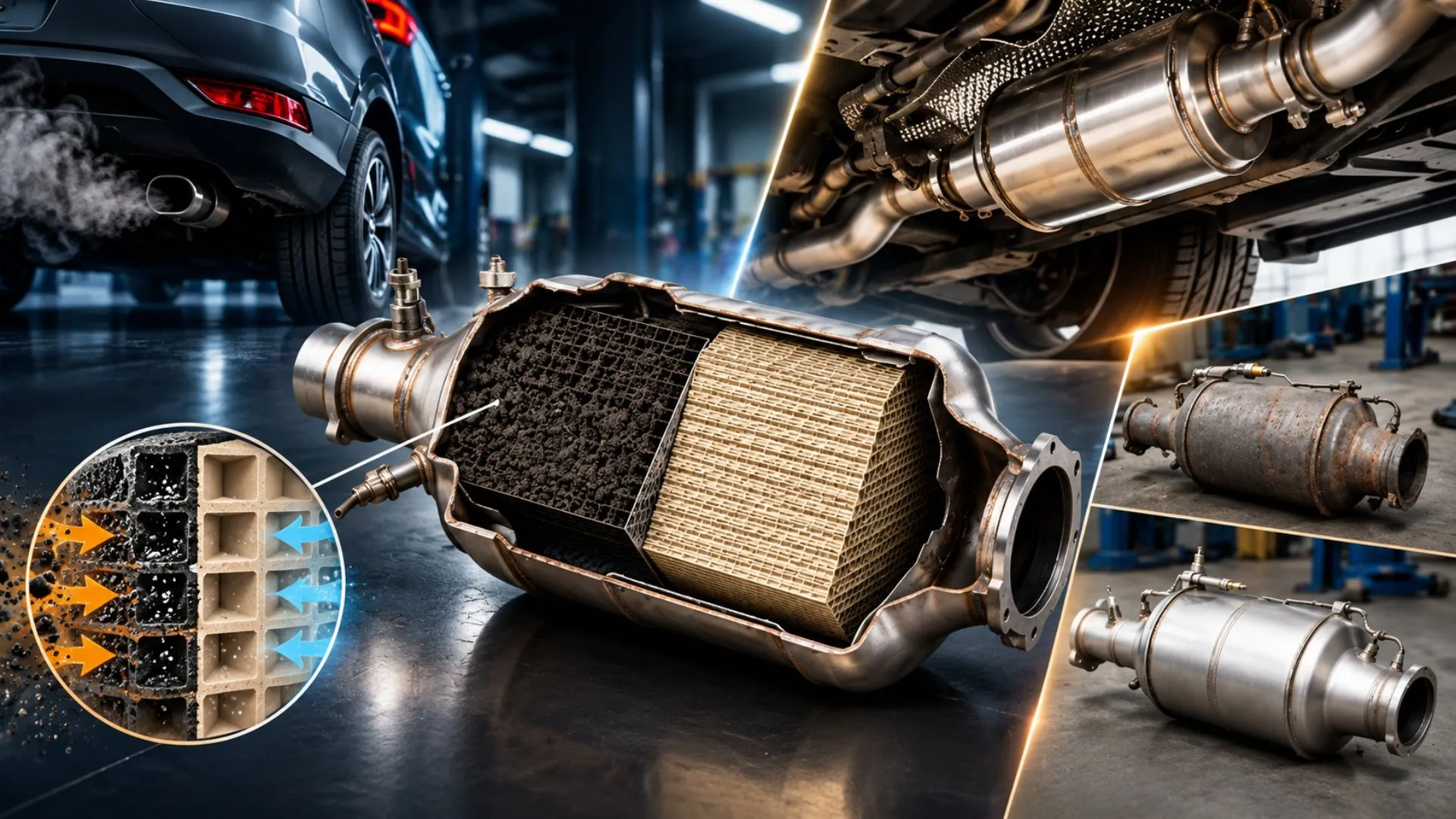
DPF owners tend to think of it as just another filter like oil filter or air filter. This misconception causes them to overlook the true complexity of the DPF because it is built quite differently and has to endure high exhaust temperatures while capturing particles that are smaller than small:
- Ceramic honeycomb core: DPF is produced from cordierite or silicon carbide which can withstand the heat of exhaust, and maintain a tight hold of the particles at temperature level that would damage anything made of rubber and fabric.
- Wall-flow trapping: It is the process of pushing exhaust gases through porous walls; bigger particles are caught on the wall as soot.
- Efficient: The working DPF is able to catch more than 95% of soot long before it leaves the tailpipe.
- Required since BS6: All diesel cars in India starting from 2020 and on must carry this device.
- Limited capacity: A DPF cannot be simply replaced like an air filter; it has to be cleaned periodically to keep its working ability.
For a better understanding of DPF, you can think of it as a sponge that cannot soak anything up if you do not wring it out once in a while.
Also Read: Best Engine Oil for E20 Bikes in 2026 Problems & Protection Guide
Common DPF Problems on BS6 Diesel Cars
These situations cannot be considered isolated cases as they reflect genuine problems faced by owners of diesel vehicles in India where driving in the cities is predominant.
- Incomplete regeneration: Short journeys of less than 10 kilometers usually do not bring the exhaust to the right temperature for burning the particles of soot.
- Exhaust backpressure: The greater the amount of soot in the filter, the more effort and energy the engine needs to put into pushing exhaust gases out through the restricted filter.
- Ash accumulation: Even when regeneration is successful, ash deposits remain in the filter and with time reduce its effectiveness.
- Sensor confusion: Some pressure and temperature sensors may malfunction and send false warnings or interrupt regeneration when it is operating properly.
- Oil-related clogging: Using non-suitable engine oil compounds leads to more rapid accumulation of ash and a shorter time between clean-ups.
Most of the problems do not emerge overnight. They begin to develop in course of several thousands of kilometers of stop-and-go driving and often become permanent even before anyone discovers them.
How DPF Regeneration Works
Match your driving pattern against what each regeneration type actually requires:
|
Regeneration Type |
Trigger Condition |
Duration Needed |
Best Suited For |
|---|---|---|---|
|
Passive Regeneration |
Sustained exhaust heat at highway speed |
20-30 minutes above 60 km/h |
Regular highway or long-commute drivers |
|
Active Regeneration |
ECU-triggered fuel injection and timing changes |
Automatic, runs in background |
City drivers, but often interrupted mid-cycle |
|
Manual Regeneration |
Dashboard switch or menu-triggered cycle |
Vehicle-specific, per owner's manual |
Hyundai, Toyota, Mahindra models with the feature |
|
Forced Regeneration |
Performed at a service center with diagnostic tools |
30-45 minutes |
Severely clogged filters that missed multiple cycles |
Also Read: Car Modification Parts in India 2026: Ultimate Guide
Warning Signs of a Clogged DPF
A Dashboard Indicator
This is the most recognizable indication offered. If the indicator remains on after a simple journey, it could be time for a proper trip.
Less Efficiency
When the filter is blocked, the engine must exert much more effort to push the exhaust, which translates into costs.
Loss of Power
The backpressure in the blocked DPF makes the engine unresponsive, which can be especially important in the case of overtaking another vehicle on the highway.
Rough Idling or Limp Mode
In particularly bad cases, the ECU will limit engine performance in order to limit damage, a fact that many drivers would point out as an indication that the vehicle is not working well.
Elevated Idle RPM
This usually indicates the ECU is attempting a forced regeneration cycle on its own, worth acting on before it fails repeatedly.
DPF Cleaning Cost in India
|
Service Type |
Approximate Cost |
When It Applies |
|---|---|---|
|
Highway Self-Regeneration |
Free |
Warning light just appeared, filter moderately loaded |
|
Professional DPF Cleaning |
Rs. 8,000 - Rs. 15,000 |
Warning persists after highway drives |
|
Full DPF Replacement |
Significantly higher, vehicle-dependent |
Filter damaged, oil-soaked, or cracked |
Mineral Habits vs. Highway Habits: What Actually Protects a DPF
|
Feature |
City-Only Driving |
Regular Highway Driving |
|---|---|---|
|
Regeneration Completion |
Frequently interrupted |
Completes naturally |
|
Clogging Risk |
High |
Low |
|
Warning Light Frequency |
Common |
Rare |
|
Long-Term Filter Life |
Shortened |
Extended |
|
Best Practice |
Occasional 30-minute highway run |
Maintain steady speed monthly at minimum |
Conclusion
In 2026, owning a diesel car with a DPF is not a one-time decision to understand and forget. It is something that depends on your driving pattern every single week, because BS6 emission rules have permanently changed what a diesel engine needs to stay healthy on Indian roads.
Owners who drive highways regularly will barely notice their DPF exists. Owners who stick to short city trips will eventually feel it, in reduced power, rising fuel bills, and service costs that could have been avoided. Before the warning light appears, make it a habit to take your DPF Cars on an occasional highway run. Small habit, big difference.
Frequently Asked Questions
Deepika Chauhan
Auto Care Specialist & Vehicle Maintenance Advisor Deepika Chauhan is a car care expert with 8+ years of experience in authorized service centers and independent garages. Her articles focus on DIY maintenance, service schedules, and tips that help car owners keep their vehicles in top condition.