Table of Content
▼- Child Safety Car Seat Care & Maintenance
- 1. How to Clean Each Part Without Causing Damage
- 2. Safety Checks That Most People Skip
- 3. Car Seat Replacement: Quick Reference
- Vehicle Upholstery Car Seat Care
- Leather Seat Cleaning & Conditioning
- Fabric / Cloth Car Seat Cleaning
- Leather vs. Fabric: Maintenance Comparison
- Conclusion
Car seat care is one of those things that looks simple, until something quietly goes wrong.
Most car owners scrub off a stain and move on. But using the wrong cleaner on the wrong part can strip the flame retardant fabric on the child seat, weaken car seat webbing tensile strength, or warp the plastic shell entirely. That all-purpose spray under your sink? It has no business near a child seat's harness straps.
This car seat care guide covers everything from harness strap cleaning tips, buckle fixes, expiry checks, post-crash replacement rules, and how to maintain leather or fabric upholstery the right way. Good car seat care also directly affects your car's interior resale value. Simple steps. Big difference.
Child Safety Car Seat Care & Maintenance
1. How to Clean Each Part Without Causing Damage
The Harness Straps
Car seat harness strap cleaning tips start with one rule, treat these like the safety-critical component they are. They are the last line of defence between your child and a crash.
- Never machine wash, bleach, or iron the straps, agitation silently degrades car seat webbing tensile strength.
- Spot clean only: warm water and mild baby soap for car seat straps is the safe standard.
- Always air dry the car seat cover and straps. Never use a dryer or direct heat.
The Buckle
Car seat buckle not clicking properly? Food debris or dried liquid is almost always the cause. Here is the right fix, without damaging the mechanism.
- Submerge only the buckle mechanism, not the straps, in warm water and agitate gently.
- Can WD-40 damage a plastic car seat buckle? Yes. Avoid all lubricants, they attract more dirt and degrade the plastic over time.
- Use a soft toothbrush or cotton swab for stubborn spots inside the buckle.
The Fabric Cover
- Most covers are removable and safe for child car seat gentle cycle washing.
- Use cold water and mild detergent only, no bleach, no harsh chemicals.
- Always air dry the car seat cover heat causes shrinkage, making reinstallation a struggle.
The Plastic Shell
- Wipe with a damp cloth and mild soap, no abrasive scrubbers or petroleum-based solvents.
- Keep away from prolonged sunlight, UV exposure makes the plastic brittle over time.
2. Safety Checks That Most People Skip
- Check the Expiration Date: How long is a car seat good for? Typically 6 to 10 years from the manufacture date. To find the car seat expiry sticker location, check the back or bottom of the seat. How to find the car seat manufacture date: it is printed on the same label. Expired plastic is compromised plastic, even when it looks fine.
- Post-Crash Protocol: Per NHTSA car seat crash guidelines, replace the seat after any moderate or severe crash, even with no visible damage. Car seat structural integrity after a crash may already be internally compromised.
- Avoid Used Seats with Unknown History: Used car seat unknown crash history is a genuine safety risk. You cannot see internal damage, never assume a seat is safe without verified records.
- Register Your Seat: Always register with the manufacturer after purchase. For a car seat recall check in India, visit the manufacturer's official website directly to receive recall notices.
3. Car Seat Replacement: Quick Reference
|
Situation |
Action |
|
After a moderate or severe crash |
Replace immediately — NHTSA guidelines, no exceptions |
|
After a minor crash |
Check the manual — may still be usable |
|
Past the expiration date |
Replace — plastic integrity is compromised |
|
Visible cracks, fraying, or damage |
Replace immediately |
|
Product recall issued |
Follow official recall instructions |
Vehicle Upholstery Car Seat Care
Your car's seat condition directly affects car interior resale value, and the daily comfort of everyone sitting in it. Getting the care right comes down to one thing: knowing your material.
Leather Seat Cleaning & Conditioning
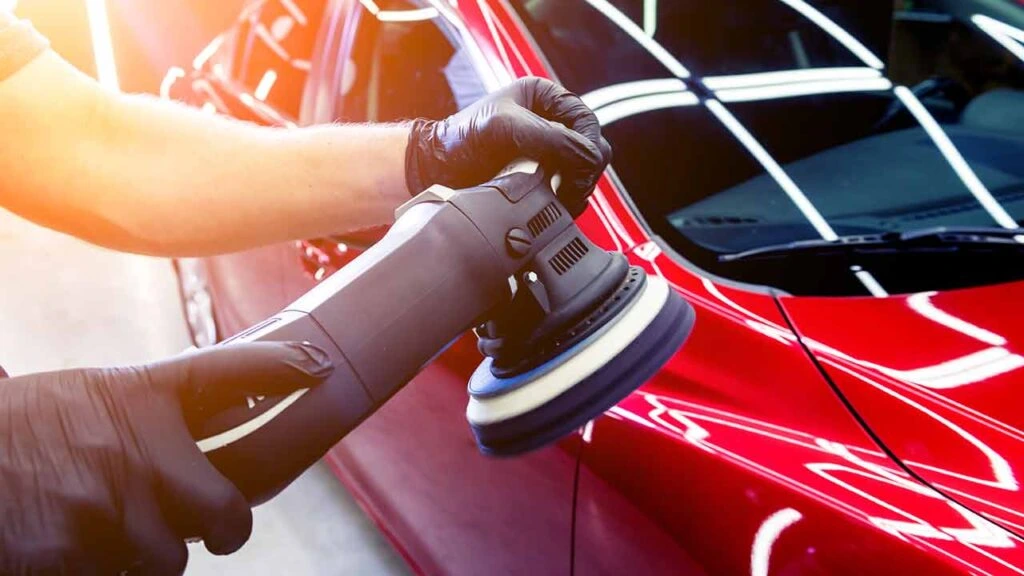
Leather car seat cracking prevention starts with consistency. Leave leather untreated and daily body oils, heat, and UV rays will dry it out, crack it, and age it fast. The question most people ask, how often should you condition leather car seats in India? The answer is monthly, minimum.
- Vacuum: Use a crevice tool along seams, debris acts like sandpaper against leather when you sit down.
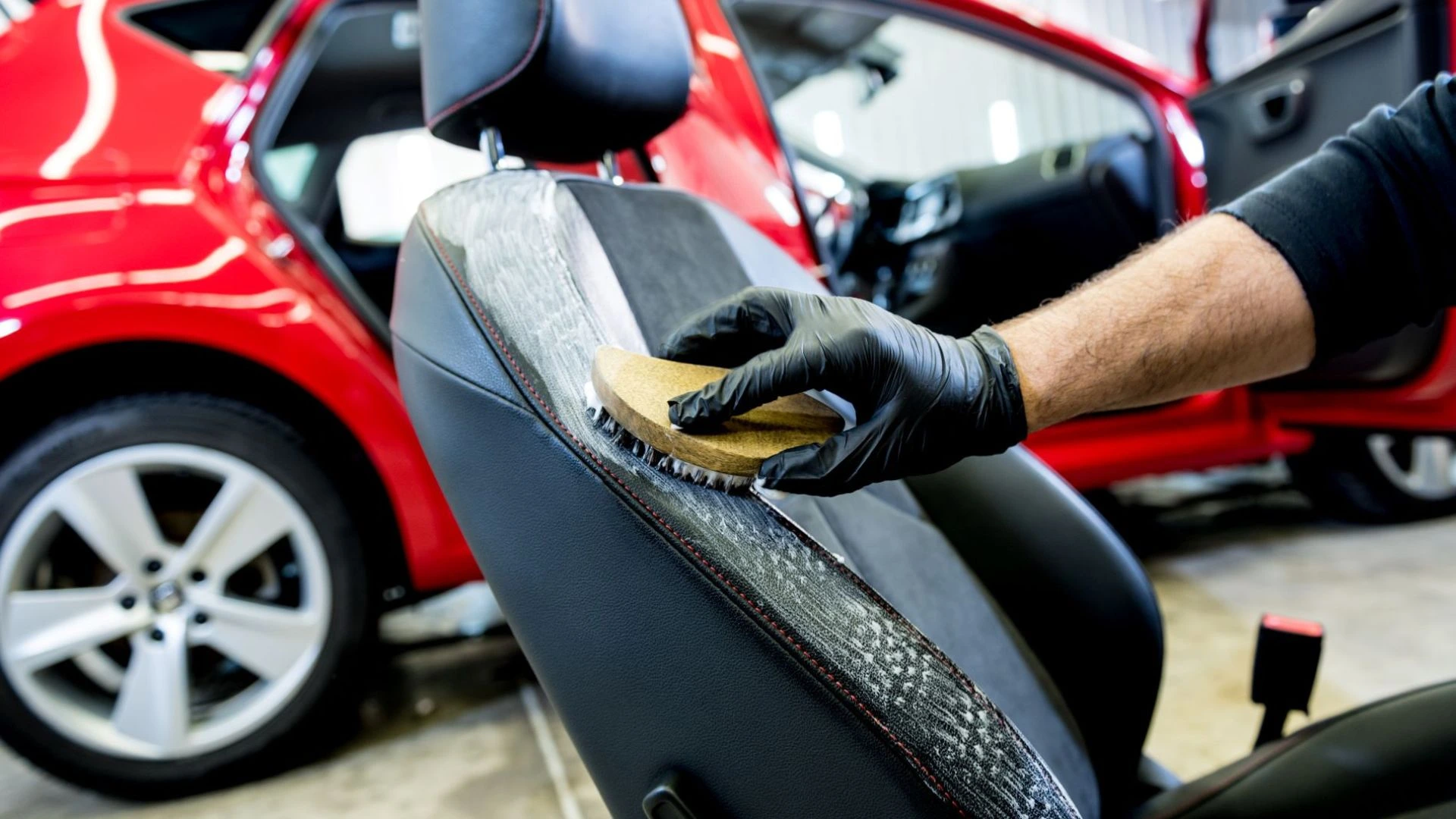
- Clean: Apply a pH-balanced leather cleaner car seat formula. Agitate gently with a soft horsehair brush for leather detailing to lift oils from the pores.
- Wipe: Remove the cleaner and suspended dirt with a clean microfiber towel for car interior use.
- Condition: Massage a leather conditioner with UV protection for cars into the surface, let it soak, then buff off the excess. This step is the core of leather car seat cracking prevention. Repeat monthly.
Fabric / Cloth Car Seat Cleaning
Water trapped in the foam cushion causes mold, never soak cloth seats. This is the single biggest mistake people make, and the stain remover dwell time for fabric seats compounds the problem when applied too heavily.
- Dry Brush & Vacuum: Vigorously brush with a stiff bristle to loosen dust and pet hair, then vacuum thoroughly.
- Spot Treatment: Spray upholstery stain remover on heavy stains. Let it dwell for 3 to 5 minutes, the correct stain remover dwell time for fabric seats, before working it in.
- Shampoo: Lightly mist with automotive fabric shampoo uses only, never soak. Car seat mold from wet foam is a real risk.
- Extract: Pull moisture and dirt out using a wet-dry vacuum cloth seat method or a carpet extractor.
- Protect: Apply a hydrophobic fabric guard for car seats, like Scotchgard car seat fabric protector — once fully dry. This repels future spills and is the most overlooked step in car seat upholstery cleaning frequency guide.
Leather vs. Fabric: Maintenance Comparison
|
Feature |
Leather Seats |
Fabric / Cloth Seats |
|
Primary Vulnerability |
Cracking, UV damage, drying out |
Staining, odor absorption, car seat mold from wet foam |
|
Cleaning Frequency |
Monthly (cleaning + conditioning) |
Bi-monthly (vacuum + spot clean) |
|
Required Tools |
Horsehair brush, pH-balanced cleaner, microfiber towel |
Stiff brush, wet-dry vacuum, automotive fabric shampoo |
|
Protection Method |
UV-blocking leather conditioner |
Hydrophobic fabric guard / Scotchgard |
|
Biggest Mistake |
Skipping monthly conditioning |
Soaking the seat — causes mold in foam |
Conclusion
Car seat care is not complicated, but it is exact. Using the wrong product on flame retardant fabric, missing the car seat expiry sticker, or skipping NHTSA car seat crash guidelines after an accident can quietly compromise a seat that looks completely fine from the outside.
For upholstery, leather needs monthly conditioning to prevent cracking, and cloth seats need careful shampooing, because car seat mold from wet foam is a problem you will not catch until it is already there. Get the method right and car seat care becomes one of the easiest habits to build, one that protects your child, preserves your car interior resale value, and gives you one less thing to second-guess on the road.
Frequently Asked Questions
Deepika Chauhan
Auto Care Specialist & Vehicle Maintenance Advisor Deepika Chauhan is a car care expert with 8+ years of experience in authorized service centers and independent garages. Her articles focus on DIY maintenance, service schedules, and tips that help car owners keep their vehicles in top condition.