Table of Content
▼- Why Are Fuel Prices Rising in India in 2026?
- Impact on Two-Wheelers
- The Most Fuel-Price-Sensitive Segment in India
- Impact on Passenger Vehicles
- Resilient at the Top, Pressured at the Bottom
- Impact on Commercial Vehicles
- The Hardest Hit Segment Across the Entire Industry
- City-Wise Fuel Price Comparison: 2024 vs 2026
- Rising Fuel Prices Are Turbocharging EV Demand
- How OEMs Are Responding
- Maruti Suzuki
- Tata Motors
- Hero MotoCorp and Bajaj Auto
- Ashok Leyland and Tata CV Division
- Policy Levers the Government Can Pull
- Key Takeaways for Car Buyers in 2026
- Conclusion
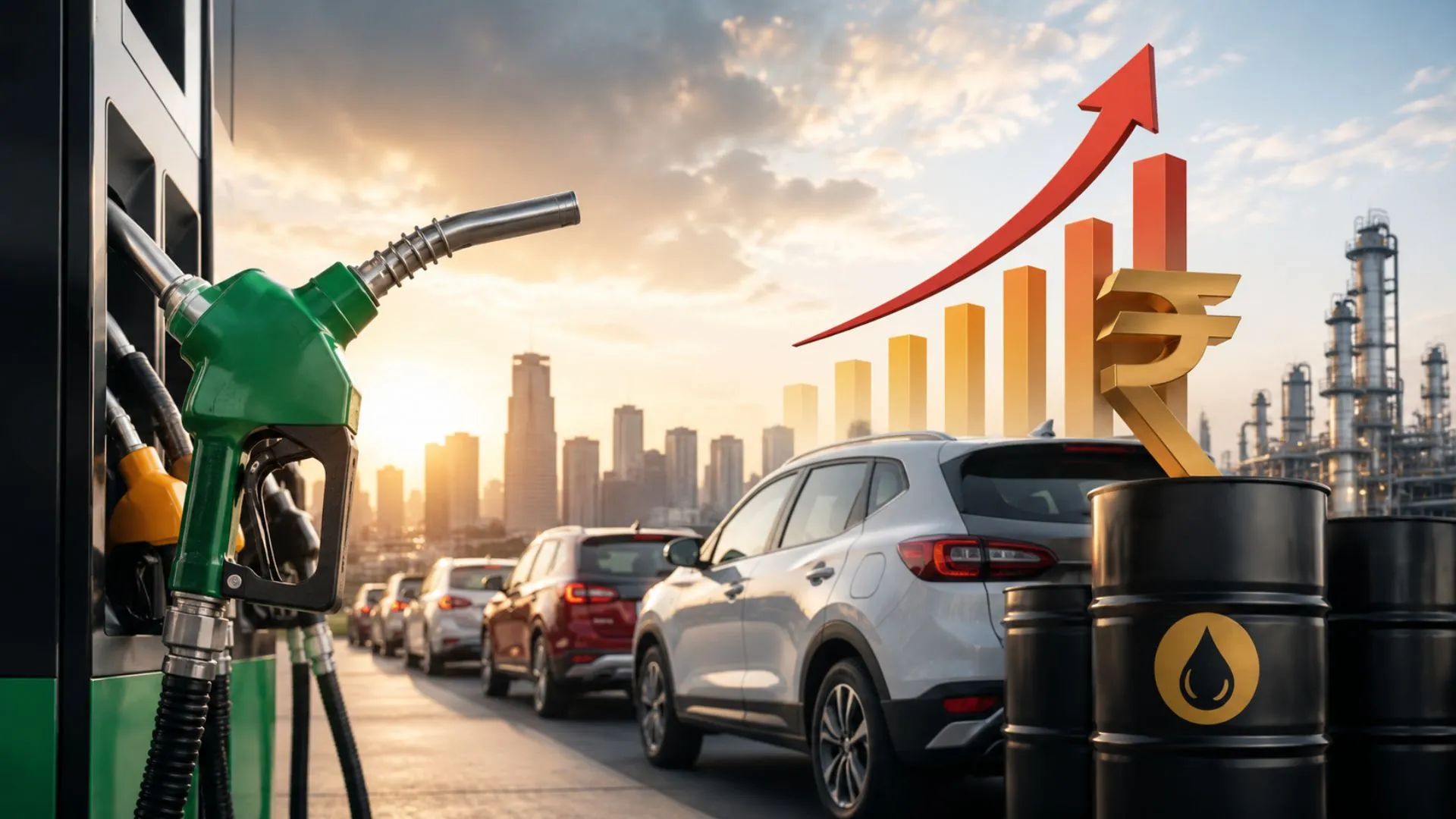
Rising fuel prices in India in 2026 seems like the biggest disruptive force thats hitting the automobile sector, and it has petrol just above ₹97–₹100 per litre, while diesel is moving past ₹90 per litre in most major cities. What’s driving it is global crude oil volatility, a softer rupee, and delayed price revisions by Oil Marketing Companies (OMCs) so, this spike in fuel costs is really reshaping how Indians buy, own and even think about vehicles. From the cheaper two wheeler space up to heavy commercial trucks, no segment is truly sheltered from the pressure, not even for a second.
Why Are Fuel Prices Rising in India in 2026?
Multiple interconnected factors are, sort of driving retail fuel costs higher across the country right now:
- Global crude oil volatility: Brent prices are staying pretty high, mostly because of West Asia tensions and those disruption things around the Strait of Hormuz, yeah
- Weakening Indian rupee: when the INR keeps sliding, the crude oil import bill for India goes up, inflates directly
- OMC under-recovery: Indian Oil, BPCL and HPCL basically absorbed losses for almost ten weeks, and only later passed the costs to retail consumers, finally
- Excise duty and state VAT burden: Taxes make up something like 50% of retail fuel prices, so the government relief space is pretty limited, and not much can be moved
- High import dependency: India imports more than 85% of its crude oil needs, so domestic prices get strongly tugged around by global swings
Impact on Two-Wheelers
The Most Fuel-Price-Sensitive Segment in India
Two-wheelers kind of represent India’s most fuel sensitive vehicle category. Their buyers are mostly middle and lower-income urban commuters, and they tend to go for running costs rather than the upfront purchase price, so this segment becomes the first one to feel the demand squeeze when petrol prices suddenly spike, it’s like a domino effect.
Key observations in this segment include:
- Entry-level commuter motorcycle sales soften sharply once petrol crosses ₹95 per litre
- Buyers are actively deferring new purchases and extending ownership cycles
- Electric two wheeler brands like Ola Electric , Ather Energy and Hero Electric saying they see a surge, in those walk in inquiries lately, like suddenly more people showing up in person.
- Meanwhile CNG powered two-wheelers, for example the Bajaj Freedom 125, are also picking up faster momentum in Tier 2 and Tier 3 cities, with more buyers curious about the whole thing.
Impact on Passenger Vehicles
Resilient at the Top, Pressured at the Bottom
|
Factor |
Impact Level |
Explanation |
|---|---|---|
|
Fuel cost per km |
Medium |
Higher but manageable for salaried urban buyers |
|
Purchase deferral |
Medium |
Entry-level buyers postponing decisions |
|
Segment shift |
High |
SUV buyers migrating to CNG and hybrid variants |
|
EV consideration |
High |
Tata Nexon EV and MG Windsor seeing record inquiries |
|
Financing cost |
Medium |
Rising EMIs compounding the fuel cost burden |
Premium SUV and executive sedan segments remain relatively resilient given higher disposable incomes among their target buyers. However, the entry-level hatchback category, heavily dependent on first-time buyers, is experiencing visible volume pressure, with purchase deferrals climbing across dealership networks.
Impact on Commercial Vehicles
The Hardest Hit Segment Across the Entire Industry
Diesel powers India’s entire freight logistics backbone, well like in a way that everyone feels. When diesel prices climb, the downstream economic consequences are instant n wide ranging , like you notice it everywhere, right away and for many reasons.
- Fleet operators face direct margin erosion as fuel expenses account for 35–40% of total operating costs
- Rising freight rates increase input costs across every supply chain vertical
- Food inflation is speeding up a bit, because transportation costs for vegetables,dairy and grains keep climbing.
- At the same time, new commercial vehicle purchases are being pushed back in a sort of, deliberate way, since fleet owners are leaning on cash preservation rather than spending right now.
- Leading CV manufacturers including Ashok Leyland and Tata Motors are reporting fresh demand headwinds in their quarterly retail data
City-Wise Fuel Price Comparison: 2024 vs 2026
|
City |
Petrol 2024 (₹/litre) |
Petrol 2026 (₹/litre) |
Diesel 2024 (₹/litre) |
Diesel 2026 (₹/litre) |
|---|---|---|---|---|
|
Delhi |
94.72 |
97.77 |
87.62 |
90.67 |
|
Mumbai |
103.44 |
106.50 |
89.97 |
92.80 |
|
Bangalore |
102.86 |
105.90 |
88.94 |
91.70 |
|
Chennai |
100.75 |
103.80 |
92.34 |
95.20 |
|
Kolkata |
104.95 |
107.90 |
91.76 |
94.60 |
Rising Fuel Prices Are Turbocharging EV Demand
Ironically, the fuel price crisis is delivering electric vehicles their most compelling sales argument yet. The running cost differential between a petrol car and an electric vehicle has never been more stark:
|
Parameter |
Petrol Car |
Electric Vehicle |
|---|---|---|
|
Fuel / Charging cost per km |
₹7–₹9 |
₹1–₹1.5 |
|
Monthly running cost (1,500 km) |
₹10,500–₹13,500 |
₹1,500–₹2,250 |
|
Annual savings with EV |
— |
₹1.08–₹1.44 lakh |
|
Break-even period vs petrol |
— |
3–4 years |
|
Government FAME incentive |
No |
Yes |
This compelling cost arithmetic is driving record showroom footfall at Tata Motors, Mahindra, and MG Motor dealerships. SIAM data confirms EV penetration in passenger vehicles crossed 5% in early 2026, a milestone that industry analysts are directly linking to sustained fuel price pressure on household budgets.
How OEMs Are Responding
India’s top vehicle makers are kind of recalibrating their product and promotion approaches in real time , sort of as situations change right away:
Maruti Suzuki
- Pushing CNG variant launches faster across the Alto K10, Swift, and Ertiga platforms
- CNG models now represent nearly 30% of total domestic monthly sales volume
Tata Motors
- Doubling down on its EV portfolio, like Nexon EV, Punch EV, and the upcoming Harrier EV, basically
- Actively using that fuel price narrative across all consumer facing communication too
Hero MotoCorp and Bajaj Auto
- putting more money into electric two-wheeler platforms, trying to keep that price-sensitive commuter set, you know the one.
- Meanwhile Bajaj’s Freedom 125 CNG motorbike is showing pretty strong retail momentum in non-metro places , lately.
Ashok Leyland and Tata CV Division
- fast tracking LNG and also CNG powered truck options, so fleet operators get real fuel cost relief, that’s kind of meaningful in the long run.
Policy Levers the Government Can Pull
|
Policy Action |
Potential Impact |
|---|---|
|
Excise duty cut on petrol and diesel |
Immediate retail price relief for consumers |
|
Expansion of FAME III EV subsidies |
Accelerates EV adoption across vehicle segments |
|
Increase in ethanol blending to 20% |
Reduces petrol import dependency meaningfully |
|
Aggressive CNG infrastructure expansion |
Enables broader CNG vehicle adoption in Tier 2 cities |
|
GST rationalization on EVs |
Lowers EV purchase price barrier for first-time buyers |
Key Takeaways for Car Buyers in 2026
Making a vehicle purchase decision in this elevated fuel price environment requires careful thought.
- CNG vehicles deliver the best running cost economics for high-mileage urban commuters right now
- Electric two wheelers tend to hit the fastest break-even period compared to basically all other alternate fuel options, so yeah it’s pretty appealing
- Hybrid SUVs like the Maruti Grand Vitara and Toyota Innova Hycross manage to keep an everyday usable range while still giving fuel savings you can actually feel
- Electric cars really do make strong financial sense when your everyday driving is over 40 km and you have home charging, available nearby
- Pure petrol entry-level vehicles carry the worst total cost of ownership equation in the current fuel price environment
Conclusion
Fuel prices going up in 2026 kind of feel like a permanent structural turn for India’s automobile space, not just a short lived disruption. Petrol and diesel costs are hitting at the same time, they seem to dampen two wheeler demand, nudge EV adoption faster, and push OEMs to urgently broaden alternate fuel roadmaps. The auto industry that comes out the other side of this pressure will look, cleaner maybe, more fuel diverse, and honestly more cost conscious too. For consumers, automakers, and even policymakers, fitting into this new fuel pricing reality is not optional anymore, it has turned into the defining opportunity of India’s automotive decade.
Also Read This |
|
|---|---|
|
Tata Tiago Revealed Ahead of Official Price Announcement on 28 May |
|
Neha Mehlawat
Neha Mehlawat is an automotive journalist and industry analyst with 10+ years of experience covering cars, bikes, and mobility trends. She tracks the latest launches, technology upgrades, and policy changes in the auto sector, delivering sharp insights that help readers stay ahead in the fast-evolving world of automobiles.