Table of Content
▼India is gearing up for a monumental leap in automotive safety. The Ministry of Road Transport and Highways (MoRTH) has issued a draft notification proposing that all new vehicles be equipped with Vehicle to Vehicle (V2V) communication systems starting October 1, 2028. This mandate covers two wheelers, passenger cars, and commercial goods vehicles. If finalized, India will become one of the first major global automotive markets to mandate connected mobility technology across such a wide range of segments.
What the V2V Proposal Means for New Vehicles
The draft proposes a phased implementation for the new automotive standard known as AIS 230. This gradual approach gives automakers and component suppliers ample time to develop the necessary hardware, software, and integration processes.
- Mandatory Implementation: From October 1, 2028, all newly manufactured vehicles in the L, M, and N categories must have factory fitted V2V technology.
- Voluntary Phase: Vehicles already equipped with V2V systems must comply with the prescribed standards starting a year earlier on October 1, 2027.
While buyers might not notice immediate physical changes to their vehicles, this backend technology will significantly impact everyday road safety and driver awareness over time.
Vehicle Categories Affected by the V2V Mandate
|
Category |
Vehicle Types Included |
Compliance Date |
|
L Category |
Two-wheelers and three-wheelers |
October 1, 2028 |
|
M Category |
Passenger cars, SUVs, and buses |
October 1, 2028 |
|
N Category |
Goods vehicles (Trucks, LCVs) |
October 1, 2028 |
|
Voluntary |
Any pre-existing vehicles with V2V |
October 1, 2027 |
How V2V Communication Actually Works
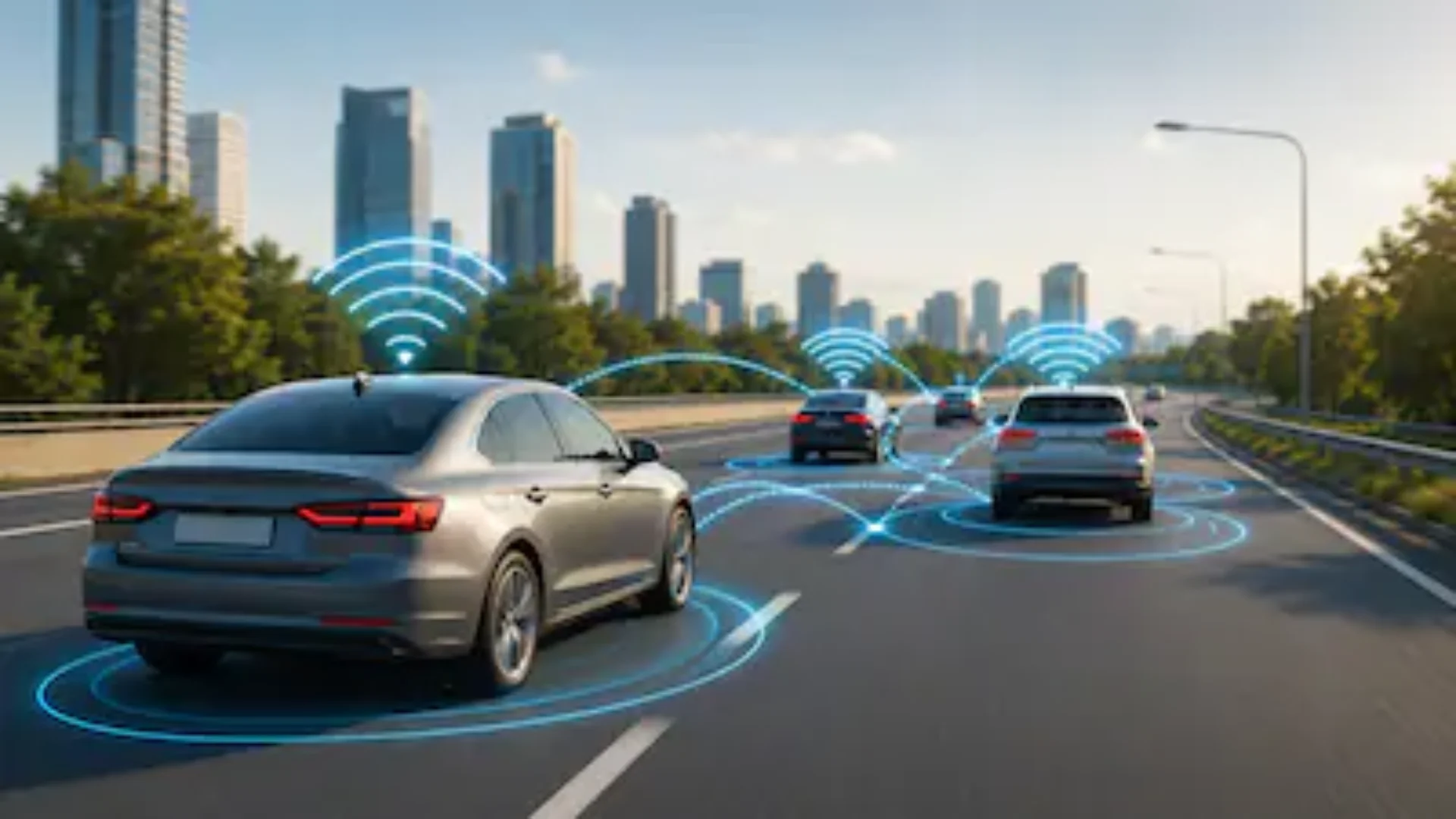
Unlike traditional Advanced Driver Assistance Systems (ADAS) that rely heavily on cameras and radar sensors, V2V communication uses secure wireless radio signals to let vehicles talk to one another in real time.
Vehicles will continuously broadcast encrypted data regarding their speed, exact position, direction of travel, and acceleration. Because the system uses radio frequencies, it can warn a driver of a hazard even if the danger is completely hidden around a blind corner or blocked by a large truck.
The Role of Supporting Infrastructure
To ensure this data is transmitted instantly without cellular network delays, the Department of Telecommunications has allocated a dedicated frequency band for V2V communication. Vehicles will use the 5.875 GHz to 5.925 GHz spectrum, ensuring ultra low latency for critical safety messages.
Key Road Safety Benefits
V2V technology is designed to support and complement existing safety features, giving drivers a crucial advantage in dangerous situations. Key practical applications include:
- Forward Collision Warnings: Alerts you if a vehicle several cars ahead suddenly slams on the brakes.
- Intersection Alerts: Detects vehicles running a red light or approaching too fast at blind junctions.
- Emergency Vehicle Approaching: Notifies drivers to clear the lane before they can even hear the siren of an approaching ambulance.
- Wrong Way Driving Alerts: Warns you instantly if a vehicle is driving on the wrong side of your lane.
India's Position on the Global Stage
Globally, connected mobility is gaining incredible momentum. Countries like Japan, the United States, and several European markets have been running extensive V2V and Vehicle to Everything (V2X) pilot projects for years. China currently leads the pack with rapid Cellular V2X adoption.
However, this draft notification is unique due to its sheer scale. By mandating this tech across two wheelers, commercial trucks, and passenger cars simultaneously, India is positioning itself as a global leader in mass market connected vehicle safety.
Conclusion
The MoRTH draft notification for mandatory V2V communication marks a revolutionary step toward safer Indian roads. By enabling vehicles to communicate seamlessly with one another, the country can dramatically reduce accidents caused by blind spots, sudden braking, and human error. As the proposal undergoes stakeholder feedback, the automotive industry will be watching closely to see how quickly this life saving technology becomes a standard feature in our daily commutes.
Neha Mehlawat
Neha Mehlawat is an automotive journalist and industry analyst with 10+ years of experience covering cars, bikes, and mobility trends. She tracks the latest launches, technology upgrades, and policy changes in the auto sector, delivering sharp insights that help readers stay ahead in the fast-evolving world of automobiles.