Table of Content
▼- What's New on the Outside
- Bigger Battery, More Power & AWD
- Powertrain Comparison: Facelift vs Outgoing Model
- 350 kW Fast Charging & V2L / V2V Technology
- Smarter Cabin & Technology Upgrades
- Key Interior Updates
- Safety & Structural Improvements
- Price & India Launch Date
- How It Stacks Up Against Rivals
- Conclusion
The upcoming launch of the Hyundai Ioniq 5 Facelift in India will bring an improved version of the vehicle that will replace its current model. The updated electric crossover has been seen testing on Indian roads with its minimal camouflage, which shows that it now comes with an 84 kWh battery and a class-leading 570 km WLTP range and 350 kW ultra-fast charging and an available AWD drivetrain and a completely redesigned interior. The facelift will launch in May 2026 with prices set to range between ₹60 lakh and ₹65 lakh to address all main deficiencies that customers found in the previous version.
What's New on the Outside
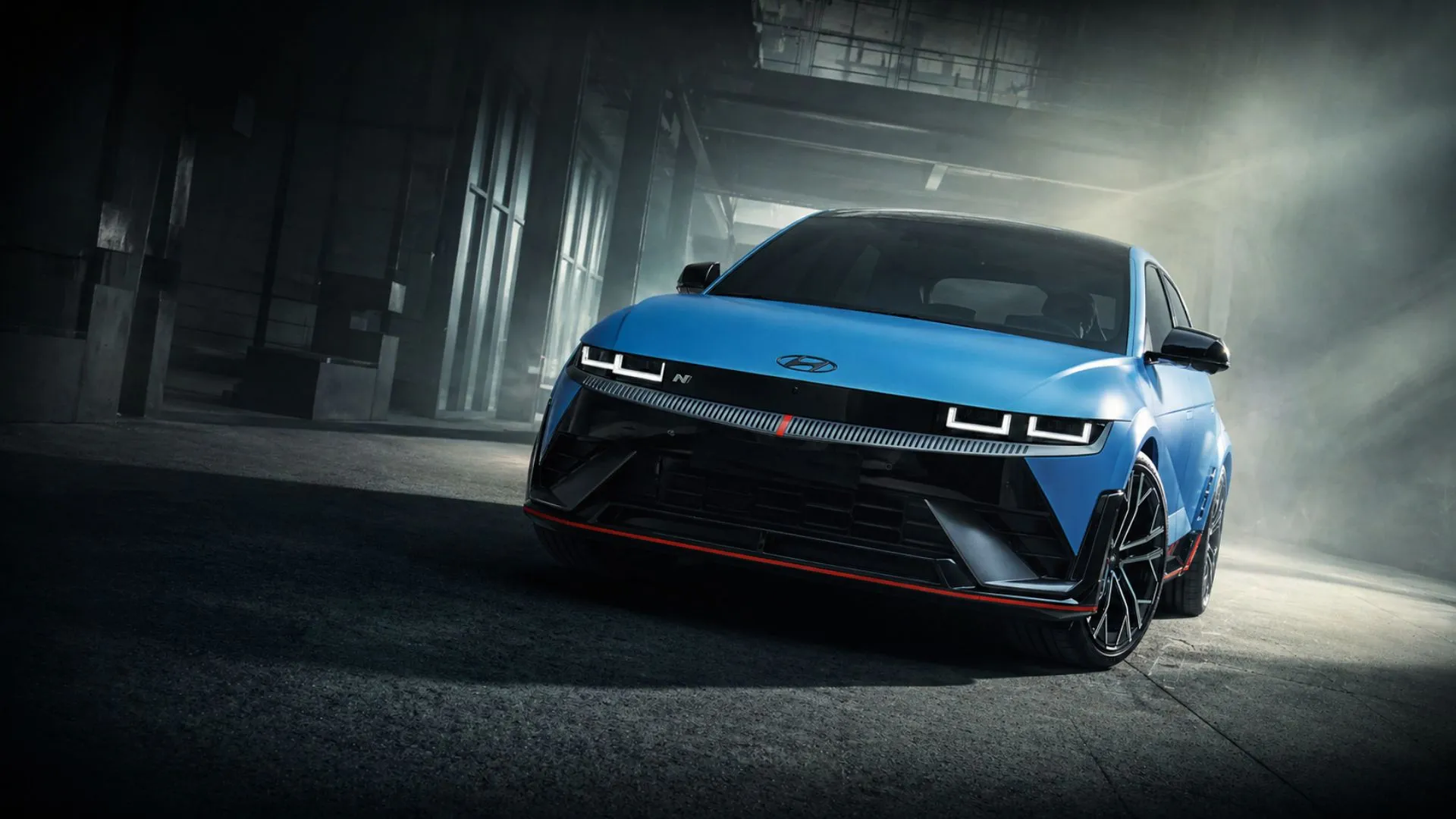
The Hyundai Ioniq 5 Facelift maintains its original retro-futuristic design while implementing multiple functional changes to its exterior appearance.
- The front bumper received an upgraded design that includes a broader air intake and a V-shaped trim element which creates a more dynamic appearance.
- The redesigned rear bumper now provides a better integration of two fog lights into its overall design.
- The roof spoiler now extends 50 mm beyond the previous model which enhances its aerodynamic performance.
- The new 20-inch aero-style dual-tone alloy wheels now replace the previous wheel design.
- The vehicle now includes door handles that sit flush with the bodywork to create an elegant appearance.
- The vehicle's length has grown to 4,655 mm, while its width and height and wheelbase measurements remain the same at 1,890 mm and 1,605 mm and 3,000 mm, respectively.
The India-specific version of the car maintains traditional exterior mirrors instead of using the international markets' camera-based mirror system. The top trim level of the vehicle provides three different interior color options like black, grey, and dark green.
Bigger Battery, More Power & AWD
The facelift achieves its biggest improvement at this location. The current India-specific model of Ioniq 5 operates with a 72.6 kWh battery that powers its 214 bhp RWD motor which delivers 350 Nm of torque. The facelift replaces this with a substantially more capable setup.
Powertrain Comparison: Facelift vs Outgoing Model
|
Specification |
Outgoing Ioniq 5 |
Ioniq 5 Facelift |
|---|---|---|
|
Battery Capacity |
72.6 kWh |
84 kWh |
|
Drive Layout |
RWD |
RWD / AWD |
|
Power Output |
214 bhp |
218 bhp (RWD) / 321 bhp (AWD) |
|
Torque |
350 Nm |
350 Nm (RWD) / 605 Nm (AWD) |
|
0–100 kmph |
~8.5 seconds |
7.5 seconds (RWD) |
|
WLTP Range |
~631 km (claimed) |
570 km (WLTP-certified) |
|
Length |
4,635 mm |
4,655 mm |
The all-wheel-drive model of the Ioniq 5 operates with identical powertrain components used by Kia EV6 GT which generates 321 bhp and 605 Nm of torque. The implementation of five-link rear suspension system together with paddle shifters for regenerative braking control creates new features that enhance the driving experience..
While Hyundai is likely to offer the RWD setup in India at launch, AWD availability remains possible at a later stage.
350 kW Fast Charging & V2L / V2V Technology
The Ioniq 5 Facelift expands its charging capacity beyond the existing model which already displays strong performance while introducing new bidirectional energy functionalities.
|
Charging Specification |
Detail |
|---|---|
|
Peak DC Fast Charging |
350 kW |
|
30–80% Charge Time |
18 minutes |
|
AC Charging Time |
7 hours 35 minutes |
|
Vehicle-to-Load (V2L) |
Yes, power external devices |
|
Vehicle-to-Vehicle (V2V) |
Yes, reverse charging capability |
|
Wireless Charging Pad |
Repositioned to upper centre console |
The Ioniq 5 Facelift introduces Vehicle-to-Vehicle (V2V) reverse charging which enables the electric vehicle to charge other compatible EVs, a feature that makes it different from all other electric vehicles in its price range for Indian markets.
Smarter Cabin & Technology Upgrades
Hyundai developed its interior design after obtaining actual user feedback from customers. The most positive improvement for the vehicle occurs when the designers bring back physical buttons to the center console which control essential functions.
Key Interior Updates
- The brand new three-spoke steering wheel features interactive pixel lights which function as an upgrade to the previous two-spoke design.
- The system now includes physical buttons that control both heated and ventilated seat functions and heated steering capabilities and park assist features.
- The system maintains its dual 12.3-inch displays, which show one display for the instrument cluster and one display for infotainment.
- The ccNC system now includes an enhanced graphics package together with support for over-the-air updates.
- Users can now use wireless Android Auto and Apple CarPlay because the system supports these features without requiring an adapter.
- The Head-Up Display (HUD) system has been added to the equipment list as a new feature.
- The system provides powered tailgate operation together with electric lumbar support for front-seat passengers.
- The system includes three features from the previous model which are a panoramic sunroof and a Bose audio system together with a 360-degree camera.
- The system provides 527 litres of boot space which users can expand by folding down the rear seats.
The wireless charging pad has been moved to the upper section of the centre console which allows users to access it more easily than they could with the previous configuration.
Safety & Structural Improvements
Hyundai was genuinely mindful while performing the facelift to cover most of the structure's NVH concerns.
- The design includes reinforced doors and B-pillars together with body structures, which create enhanced rigidity throughout the system.
- The new model provides better protection against side impacts than the previous version.
- The new dampers help to minimize vibrations that affect the driver's steering wheel.
- The team enhanced the rear end and underbody system through dual reinforcement to achieve reduced road noise.
- The system now provides improved soundproofing around the rear motor.
- The ADAS Level 2 system includes forward collision avoidance, lane-keeping assist, and adaptive cruise control functions.
- The system retained all three safety features, which included six airbags, all-round disc brakes, and ESC.
- The system maintained its 360-degree camera system and advanced parking assist.
The new cabin is quite a bit quieter, safer, and cosier than the one in the pre-facelift model.
Price & India Launch Date
|
Model |
Expected India Price |
|---|---|
|
Hyundai Ioniq 5 Facelift (RWD, 84 kWh) |
₹60.00 – ₹62.00 Lakh (est.) |
|
Hyundai Ioniq 5 Facelift (AWD, 84 kWh) |
₹63.00 – ₹65.00 Lakh (est.) |
|
Current Ioniq 5 (72.6 kWh, RWD) |
₹46.30 Lakh (ex-showroom) |
- Expected India launch: May 2026 (Q2 2026)
- Testing status: Advanced, spotted multiple times with minimal camouflage
- Platform: E-GMP (Electric Global Modular Platform)
- Production: South Korea; imported as CBU for India
- Rivals: Kia EV6, BMW iX1 LWB, BYD Sealion 7, Volvo EX30, Mercedes-Benz EQA
How It Stacks Up Against Rivals
|
Feature |
Ioniq 5 Facelift |
Kia EV6 |
BMW iX1 |
BYD Sealion 7 |
|---|---|---|---|---|
|
Battery |
84 kWh |
77.4 kWh |
66.5 kWh |
82.56 kWh |
|
Max Range (WLTP) |
570 km |
~528 km |
~440 km |
~502 km |
|
Peak DC Charging |
350 kW |
240 kW |
130 kW |
150 kW |
|
AWD Option |
Yes |
Yes |
Yes |
Yes |
|
V2L |
Yes |
Yes |
No |
Yes |
|
V2V Charging |
Yes |
No |
No |
No |
|
Est. India Price |
₹60–65 Lakh |
₹60.97 Lakh |
₹66.90 Lakh |
₹49.99 Lakh |
With respect to charging speed, no direct rival in India enhances as well as V2V assistance by the Ioniq 5 Facelift.
Conclusion
The Hyundai Ioniq 5 Facelift existing model upgrades its design elements through complete improvements which solve actual problems faced by the previous version. The 2026 update delivers its strongest Ioniq 5 performance through its 84 kWh battery which provides 570 km WLTP range and 350 kW ultra-fast charging and V2V reverse charging and its smarter cabin with physical controls and its improved safety features throughout all areas. The premium electric crossover market in India between ₹65 lakh and ₹65 lakh price range now includes this vehicle as one of its most appealing choices.
Frequently Asked Questions
Neha Mehlawat
Neha Mehlawat is an automotive journalist and industry analyst with 10+ years of experience covering cars, bikes, and mobility trends. She tracks the latest launches, technology upgrades, and policy changes in the auto sector, delivering sharp insights that help readers stay ahead in the fast-evolving world of automobiles.